


ProductContent Strategy
Strategy Behind This Post: Why SparkVox Shows Its Work
Transcript quote, funnel job, distinctiveness score, column brief, and learned voice rules - what the Strategy behind this post drawer shows before you approve.
The decision to read or scroll past your post happens in under two seconds. Here's how to write a first line that earns the click every time.

The LinkedIn feed moves fast. A user scrolls past hundreds of posts in a single session, and the decision to stop or keep scrolling happens in under two seconds. That decision is made entirely on your first line, before they read anything else, before they see your credentials, before they know what the post is about.
A hook is not a title. It is not a summary. It is a single sentence that creates enough tension, curiosity, or recognition that the reader taps "see more." Here is how to write one that actually works.
A good hook does exactly one of these three things:
Notice what is absent from all three: context, background, and warm-up. Great hooks drop the reader into the middle of something, not the beginning.
Most weak hooks fall into a small number of patterns. Learning to recognize them in your own drafts is half the work.
Write your post first. Get the whole thing out, the idea, the evidence, the takeaway. Then go back to the beginning and ask: what is the single most interesting sentence in this entire post?
Move that sentence to the top. Rewrite the rest to follow from it. In most cases, your best hook is already buried somewhere in the body of your draft.
If nothing stands out, try one of these forcing functions:
Your hook should be one line. Two at most. LinkedIn previews roughly 200-220 characters before the "see more" break on desktop, and less on mobile. A single punchy sentence fits comfortably. Two short sentences can work. A three-sentence paragraph almost never does - you have already lost the reader before the cut-off.
Stop every time you tap "see more" on someone else's post and ask: why did I click that? What did that first line do? Over a few weeks of doing this consciously, you will internalise what works without ever reading a framework.
The other shortcut: speak your hook before you type it. If you were telling someone the core idea of this post in one sentence, what would you say? That spoken sentence is almost always tighter and more direct than anything you would write cold.
SparkVox
Upload a call, podcast, or interview. SparkVox extracts moments and drafts up to 15 LinkedIn posts in your voice. You review every draft before anything publishes.
Start 14-day Pro trial →Free to sign up. Card required for full access.
No charge until day 15.
Transcript quote, funnel job, distinctiveness score, column brief, and learned voice rules - what the Strategy behind this post drawer shows before you approve.
How SparkVox curates moments, ranks two hook candidates per post, checks distinctiveness, and compounds voice from approvals, edits, and discards.
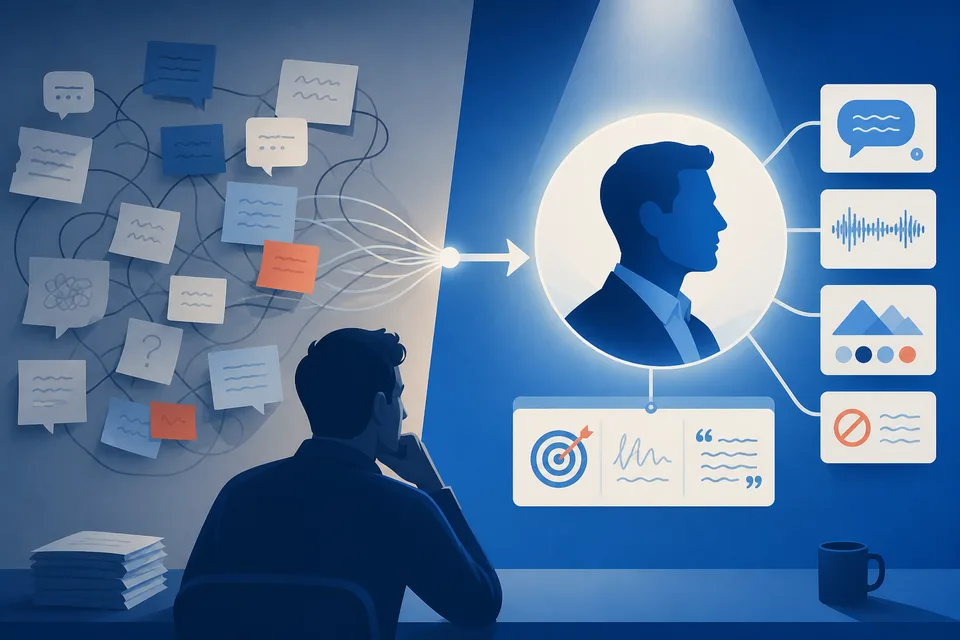
The optional one-sentence claim steers moment pick, evidence framing, and distinctiveness checks - separate from your long Brief Sparky and your voice profile.
Your calls and interviews are already the content. SparkVox writes the posts in your voice - upload one recording and see the drafts before you're charged.
Start 14-day Pro trial →Free to sign up. Card required for full access. No charge until day 15.