On this page
I have sat across from over 300 founders. Some were pre-revenue, some had exited for hundreds of millions of dollars, and most were somewhere in the messy middle. I was not looking for LinkedIn advice when I started. I was looking for business insight, product wisdom, the kind of hard-won knowledge that only comes from building something from scratch.
But a pattern kept emerging. The founders who were growing fastest, closing deals fastest, hiring best, and staying top of mind with their communities were almost always doing something specific on LinkedIn. And the ones who were struggling with visibility, pipeline, or fundraising were almost always ignoring it entirely.
This is what I learned.
The founders who win on LinkedIn are not the ones with the best writing. They are the ones willing to be the most honest.
I noticed early on that the posts getting the most traction were not polished announcements or thought leadership essays. They were confessions. A founder admitting they almost ran out of money. Someone sharing the email they sent when a key hire quit. A CEO posting the spreadsheet they used to decide which customers to fire. The vulnerability was not a tactic. The ones doing it were genuinely scared to post. But they did it anyway, and the response was always overwhelming.
LinkedIn audiences are largely professionals who have been conditioned to perform competence. When someone breaks that pattern and says something real, the contrast is jarring in the best way. It earns attention because it is rare.
Specificity is the only thing that separates forgettable from shareable
I cannot count how many founders told me something like "we improved customer retention significantly by changing our onboarding." That is interesting in a conversation. On LinkedIn, it disappears. The founders who built real audiences said things like "we reduced churn from 8.3% to 2.1% in 90 days by adding a single phone call on day 7. Here is the script we used."
The number. The timeframe. The mechanism. The artifact. That combination is what makes someone stop scrolling.
Every time a founder told me a story in an interview and I thought "that is an incredible LinkedIn post," the thing that made it incredible was a specific detail. The exact dollar amount they almost could not make payroll. The name of the customer who changed everything. The precise moment they decided to pivot. Specificity is proof. Proof earns trust. Trust builds audiences.
This one surprised me the most. I expected the high-engagement founders to have content strategies, editorial calendars, and systems. Some of them did. But the best ones used LinkedIn to think out loud. They posted questions they were genuinely wrestling with. They shared frameworks they were actively testing, not ones they had already validated. They wrote about decisions they had not made yet.
This created a fundamentally different kind of engagement. Instead of people commenting to say "great post," they were commenting to offer perspectives, share their own experiences, challenge assumptions. The post became a conversation. The founder became a node in a thinking network rather than a broadcaster.
Several founders told me directly that LinkedIn had become their best advisory board. They would post a hard strategic question and within 24 hours have responses from people who had faced the same thing. It was faster and more relevant than most formal mentorship.
Nobody builds an audience by posting about their product
I interviewed a founder whose company makes compliance software. Not the sexiest category. But he had 40,000 engaged followers and a waitlist of enterprise customers. I asked him what he posted about. He said he almost never posted about compliance software. He posted about what it felt like to sell to large organizations. About the absurdity of procurement processes. About the specific personality type of the person inside a company who actually gets things done and how to find them.
He had built an audience of enterprise sellers and champions. Exactly the people who bought his software. But they followed him because he articulated something they all felt but had never seen written down.
The mistake most founders make is treating LinkedIn as a product marketing channel. The ones who grow fast figure out the perspective they hold that their ideal customer also secretly holds, and they post about that instead.
Short posts with a single idea outperform long essays almost every time
I know this runs against the instinct of people who think depth equals value. But the founders who had figured out LinkedIn distribution were ruthless about this. One idea. One post. Get in, get out.
The long-form posts that performed well had something else in common. They were structured as lists. Not because lists are a hack, but because a list post signals to the reader that they can get value by skimming. It respects their time. The posts that tried to build a nuanced argument over 800 words almost always underperformed.
The founder who taught me this most clearly had a background in advertising. She said the goal of every post was not to communicate everything you know. It was to communicate one thing so clearly that the reader could repeat it to someone else. If you write a post and the person reading it cannot explain the main point to a colleague in one sentence, the post failed.
The hook is not a trick. It is a promise.
I watched dozens of founders get frustrated that their posts were not getting traction. When I looked at what they were writing, the problem was almost always the first line. It was either a context-setting sentence that started with "I" or a vague statement that required reading further to understand why it mattered.
The founders who had cracked distribution led with the most interesting or provocative or counterintuitive thing they had to say. Not a teaser. Not a mystery. The actual point, stated in a way that made you need to know more.
The distinction I started explaining to founders was this: a bad hook creates curiosity by withholding information. A good hook creates curiosity by delivering a surprising piece of information that makes the reader realize they need context. One manipulates. The other rewards.
Consistency beats quality, but quality compounds
Every founder I interviewed who had built a real LinkedIn presence over time said the same thing about the early days. Their early posts were not good. They did not know what their audience wanted. They did not know how to write for the platform. They were figuring it out in public.
But they kept going. And somewhere around the 30th or 50th or 100th post, something clicked. They found the topics that resonated. They found the format that fit their voice. The quality improved because they had the reps. And then the quality started to compound. Each good post built credibility that made the next post more likely to be read.
The founders who waited until they had something worth posting never started. The ones who started before they were ready built something worth reading.
Your distribution is other people's credibility
One thing that surprised me was how much the fastest-growing founder accounts relied on engagement from other people rather than follower counts. LinkedIn's algorithm responds to comments, and a comment from someone with a large or relevant following carries enormous weight.
The founders who understood this did not just post and wait. They spent time every day being genuinely useful in other people's comment sections. Not promoting themselves. Actually engaging. Answering questions. Adding context. Offering disagreement when they had a real point to make.
This had two effects. It built relationships with people who then engaged on their posts. And it put them in front of the audiences of those people, which drove follows from exactly the right people. The founders who tried to shortcut this by leaving generic comments like "great insights" or "love this perspective" were wasting their time. The algorithm is not fooled by empty engagement, and neither are people.
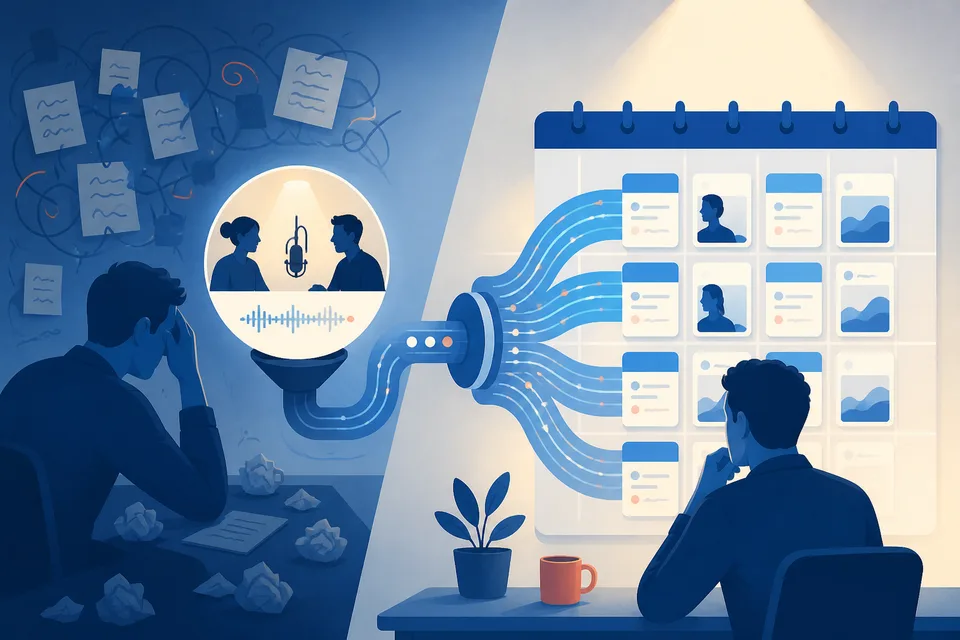
This is the most practical thing I took from 300 conversations. Most founders do not have time to sit down and write thought leadership essays. But all of them are doing interesting things every day. The decision about which market to enter. The conversation with a customer that changed their roadmap. The realization that a core assumption was wrong.
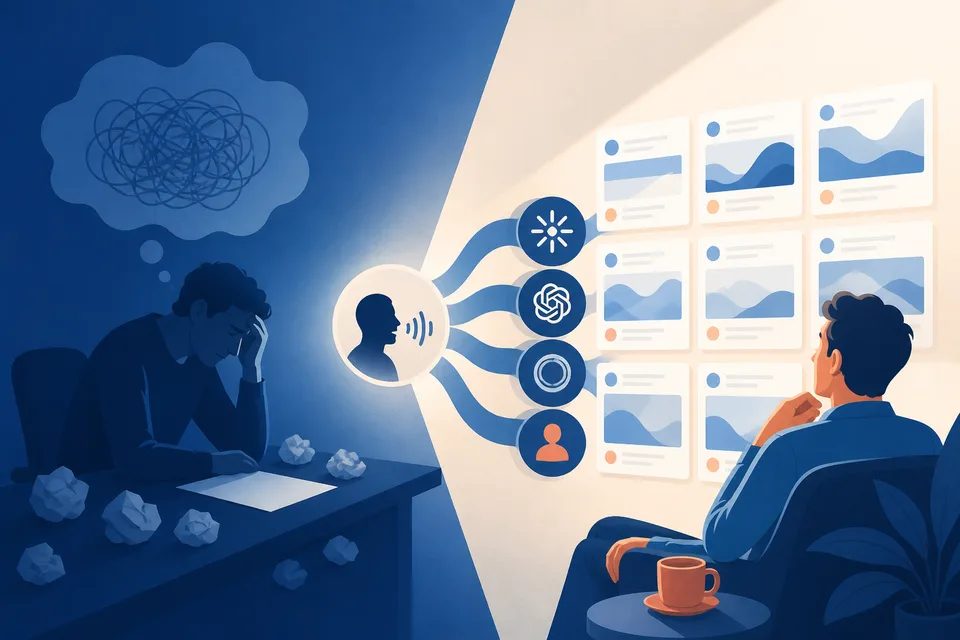
The founders with the best content were not creating something separate from their work. They were documenting their work as they did it. Taking a screenshot and writing three sentences about what they noticed. Sharing the actual email rather than describing what kind of email they sent. Using for a 90-second idea.
The raw material was always there. The question was whether they captured it or let it disappear.
The real reason most founders do not post is not time. It is fear.
I asked almost every founder I interviewed why they were not more active on LinkedIn, or why they had stopped after starting. The answer was almost always some version of embarrassment. Fear of being wrong publicly. Fear of oversharing. Fear that people in their industry would judge them. Fear that their competitors would see their thinking.
The founders who broke through this were not the ones who stopped being afraid. They were the ones who posted anyway. And then they discovered that the embarrassing post rarely embarrassed them. The too-personal post usually landed better than the polished one. The opinion they thought was too hot was actually the one people agreed with but had not said.
The fear was almost never validated by what actually happened. And once a founder experienced that a few times, it became easier to push through it. That is the real unlock. Not a strategy. Not a framework. Just the willingness to do it scared.
What it all adds up to
After 300 conversations, this is what I believe: LinkedIn is not a platform for broadcasting what you know. It is a platform for thinking out loud with people who care about the same things you care about. The founders who treat it that way build communities. The ones who treat it as a megaphone build nothing.
The content strategy is almost beside the point. What matters is whether you are willing to show what you actually think, learn, struggle with, and figure out. That is what audiences follow. That is what customers remember. That is what makes someone feel like they know you before they have ever met you.
That feeling is worth more than any ad spend. And it compounds in ways that are almost impossible to replicate through any other channel.
You just have to be willing to start.