

Content StrategyRepurposing
Distribution Is the Bottleneck, Not Content Creation
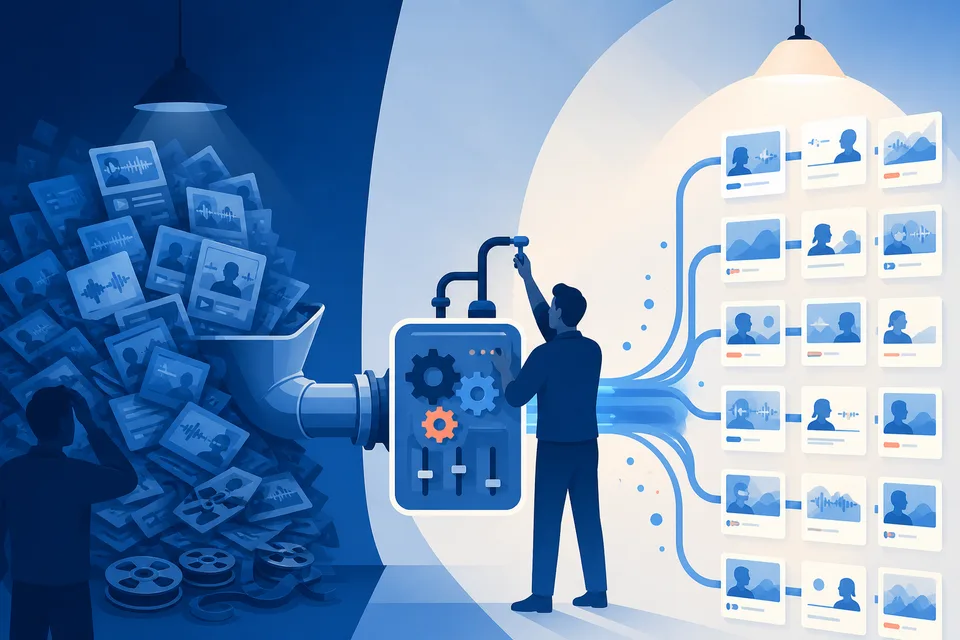
Creators have 90+ days of usable recordings that never got distributed. The gap between content and audience is a workflow problem - and fixing it beats creating more.
Upload a transcript or recording as a SparkVox project, extract moments into LinkedIn posts in your voice, and review everything in your project's LinkedIn content strategy before you publish.
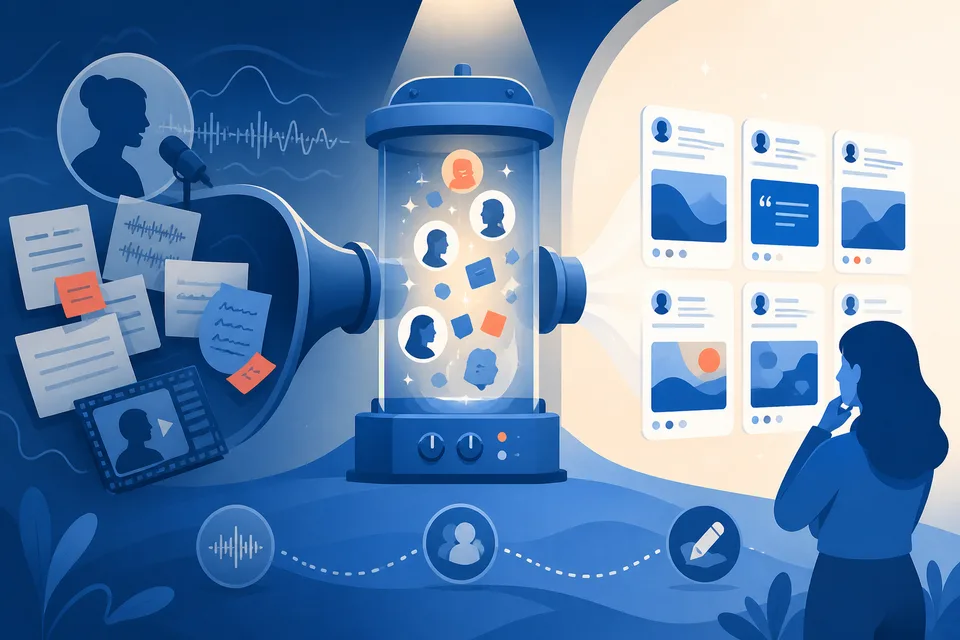
Most people think about content repurposing backwards. They finish a podcast, a webinar, or a long interview, then try to turn the whole thing into one LinkedIn post or a thin summary thread. The result captures none of the energy of the original, and they conclude repurposing is more work than it is worth.
The better model starts with the insight, not the format. A 45-minute conversation usually holds six to twelve standalone ideas. Each one can be its own LinkedIn post. Your job is not to compress the recording - it is to extract the moments that already work on their own, then shape them for the feed.
The fastest path is a project built on what was actually said. Upload the audio or video, paste a YouTube link, or drop in a transcript file (.txt or .srt) if you already have one from Descript, Otter, or your editor. SparkVox transcribes when needed, scans the full transcript for insight-rich segments, and drafts one LinkedIn post per moment in your voice.
Credits are charged per minute of content processed. Post generation and on-demand images in your project's LinkedIn content strategy are included in that fee - you are not paying per post on top of processing.
Moment extraction looks for the same things you would highlight if you were re-listening with a highlighter: a contrarian take, a short story with a clear lesson, a framework explained in plain language, a stat or claim worth debating, a line you would quote in a newsletter.
Up to 15 moments per project become drafts in your project's LinkedIn content strategy. Skip the drafts that feel thin. Approve the ones that still sound like you when you read them out loud.
When you create a project, source kind and perspective control whose words matter:
Transcript-only uploads support Full Conversation or Trainer only. If you already have a .txt or .srt export, you skip transcription and go straight to moment extraction.
Repurposing fails when drafts go straight to LinkedIn without a human pass. In SparkVox, every moment opens as its own draft: read the post, check the virality score if you want a second opinion, request a free 16:9 image, edit the hook or trim a paragraph, then approve. Nothing publishes until you say so.
Each draft also gets a suggested first comment. Review that on the same screen before you approve - it queues a few minutes after publish to signal early engagement.
SparkVox learns your lexicon, cadence, and hooks from every project transcript you process. Voice Confidence in Settings shows how much material it has learned from (0-100%). Your role and goals from onboarding shape the angle of each post. The output should read like you on the mic, not like a summary written by someone who was not in the room.
If a draft is close but not quite right, edit before you approve. Meaningful edits can teach SparkVox style corrections for the next project.
LinkedIn is not a blog and not a transcript dump. Even strong moment drafts need a quick check: first line visible before "see more," short paragraphs, a clear ending. Your project's draft review is where you do that pass once, then publish directly to LinkedIn in one batch.
Repurposing stops being "how do I cut this down?" and becomes "what did we actually say that deserves the feed?" That question has a much better answer when the transcript is the source. For a foundational overview of what content repurposing means in B2B, see what is content repurposing. For a step-by-step breakdown of the podcast episode workflow - including funnel-stage grouping and a worked example - see how to repurpose a podcast episode into LinkedIn posts. For technical detail, see how projects work or the full feature overview.
SparkVox
Upload a call, podcast, or interview. SparkVox extracts moments and drafts up to 15 LinkedIn posts in your voice. You review every draft before anything publishes.
Start 14-day Pro trial →Free to sign up. Card required for full access.
No charge until day 15.
Creators have 90+ days of usable recordings that never got distributed. The gap between content and audience is a workflow problem - and fixing it beats creating more.
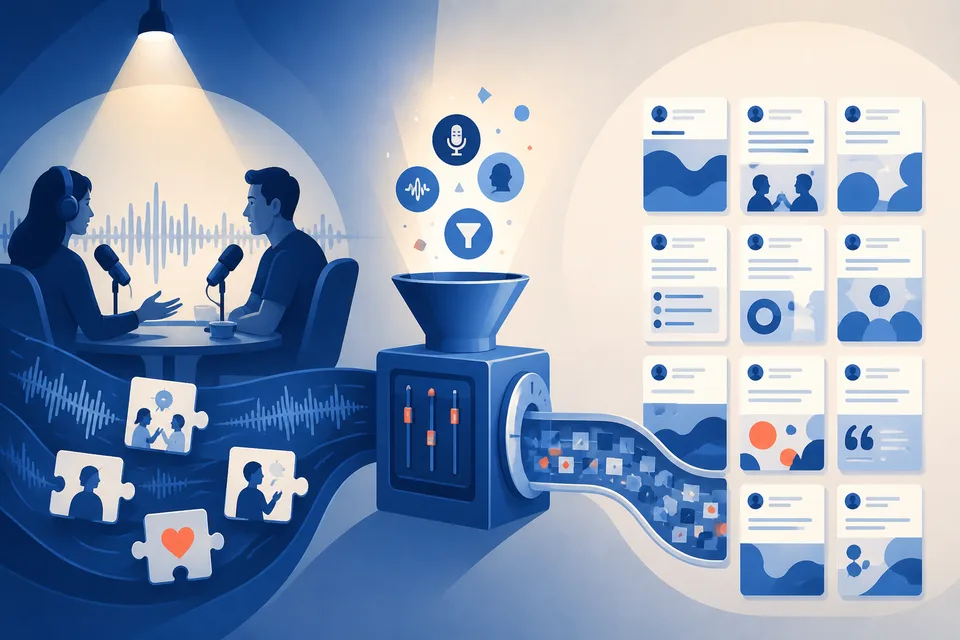
A podcast episode contains eight to fifteen standalone post ideas. Most founders extract zero. Here is the full workflow - manual extraction, the voice problem, funnel-aware repurposing, and a worked example.

Same sales call, podcast, or internal session - two angles, two channels. How to route founder posts to your personal profile and proof posts to your company page without doubling your workload.
Your calls and interviews are already the content. SparkVox writes the posts in your voice - upload one recording and see the drafts before you're charged.
Start 14-day Pro trial →Free to sign up. Card required for full access. No charge until day 15.