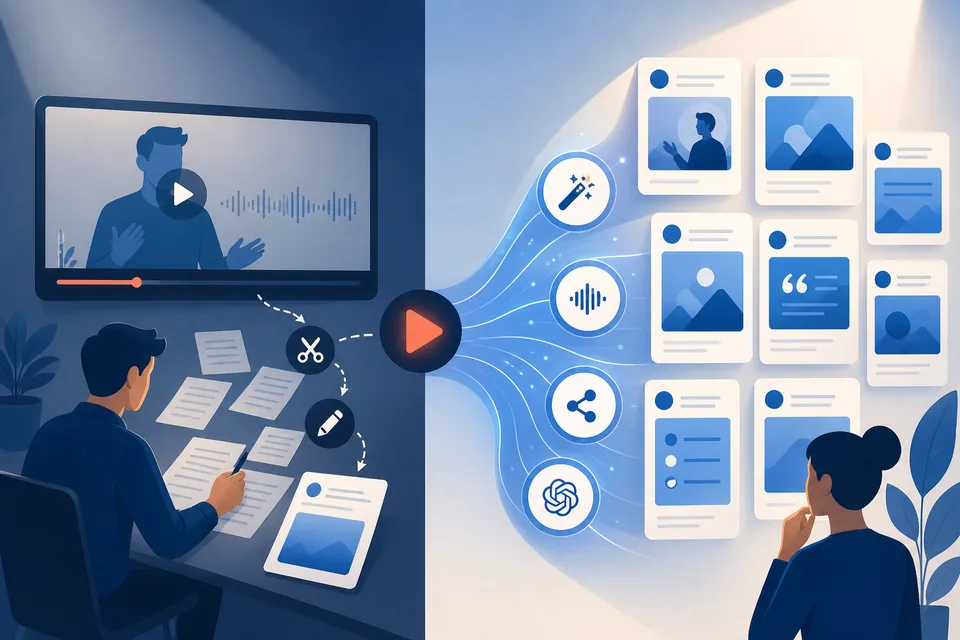
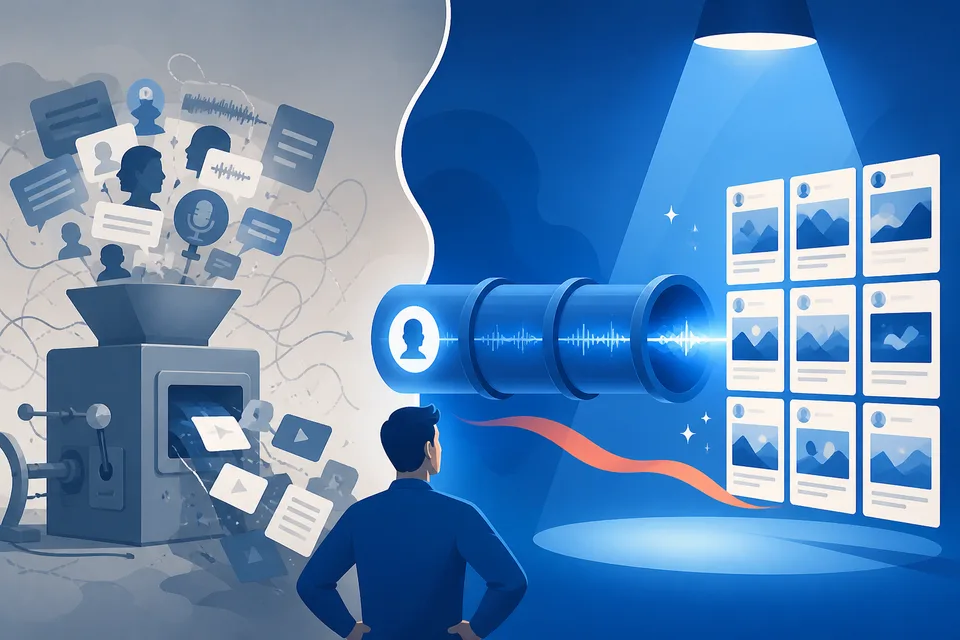
Sales calls are full of language most content plans never touch: the exact objection a prospect raised, the phrase they used to describe their problem, the moment a case study actually landed. Most of that gets discussed once, in the deal room, and forgotten. A separate category of tool - call intelligence platforms like Gong and Chorus - already mines these calls for deal signals and coaching. That is not the job here. This list is about the calls that never become anything public at all: LinkedIn posts written from what a prospect or customer actually said.
1. SparkVox
Upload a sales call - or connect Fireflies, Fathom, or Google Meet and let new recordings turn into projects automatically on higher plans - and Sparky extracts the moments worth publishing: an objection reframed as a common misconception post, a customer's exact language turned into a proof point, a story from the call turned into a case-study-style post. Every draft stays in your project until you approve it, so nothing with a client's specific details goes live without a human checking it first.
Best for: founders and sales-led teams who take calls every week and want that material to become a LinkedIn pipeline instead of disappearing after the deal closes. See how to turn sales calls into LinkedIn content and whether it's safe to put sales transcripts into AI.
2. Castmagic
Castmagic's MagicChat is genuinely strong for this specific input: power users run sales calls through custom prompts to pull next steps, pain points, and competitor mentions, and call it indispensable for understanding a deal. Where it stops short of this list's job is the output - MagicChat and custom prompts are built for internal analysis, not publish-ready LinkedIn posts, so several reviewers describe getting real insight from the call but never turning it into published content.
Best for: deal analysis and internal sales intelligence from calls. Where it doesn't fit: if the goal is a LinkedIn post, not a briefing doc. Full comparison: SparkVox vs Castmagic.
3. Otter.ai
Otter is a common default for sales teams because it can join the call live and produce a transcript with action items automatically. That transcript is a starting point, not a finished asset - and Trustpilot reviewers report speaker mislabeling and heavy manual cleanup on multi-party calls, which is exactly the situation a sales call usually is.
Best for: live call capture and internal search. Where it doesn't fit: going from transcript to LinkedIn post still requires a separate manual step.
4. ChatGPT
Paste the transcript, ask for a post about the strongest objection or proof point on the call, edit, publish. It works for a single standout call. It also requires you to remember to do it, to re-explain your voice every time, and to manually redact anything client- identifying before pasting a transcript into a general chat tool - a step worth taking seriously given how much sensitive detail lives in a real sales conversation.
Best for: a one-off post from a call you remember clearly. Where it struggles: as a consistent weekly habit across every call you take. Full comparison: SparkVox vs ChatGPT.
Whatever you pick, confirm two things first: that a human reviews every draft before anything with a client's language or identity goes public, and that you control which calls get processed at all. Sensitive deals, NDAs, or anything you would not want summarized by a third party should never enter the pipeline in the first place - the review step protects what publishes, not what gets uploaded.