

CompareLinkedIn
SparkVox vs Postwise vs AuthoredUp Compared
Postwise writes from a prompt. AuthoredUp lives inside LinkedIn's composer. Neither sources the idea itself. Here's how all three fit into a full LinkedIn content pipeline.
Recording the show is the easy part. Here's how SparkVox, Castmagic, Otter.ai, and ChatGPT stack up for turning a podcast catalog into a consistent LinkedIn presence - ranked for hosts, not editors.
 Sean Weisbrot- Founder, SparkVox

Podcast hosts have a strange problem: the content already exists, in volume, and most of it never leaves the podcast app. A 40-episode back catalog is 40 hours of guest expertise, stories, and arguments - and for most hosts, LinkedIn presence stays thin anyway, because turning an episode into a post is a separate job nobody has time for after the recording wraps. Here is how the main options handle that specific problem: episode in, LinkedIn presence out.
Not raw AI writing quality - most tools clear that bar. What matters is whether the tool handles a full episode (60-90 minutes, two speakers, tangents included) without you editing the transcript first, whether it can tag or credit a guest correctly, and whether it turns one episode into enough posts to cover the gap until the next one drops.
Upload an episode - or connect your podcast RSS feed and let new episodes turn into SparkVox projects automatically - and Sparky reads the full conversation, separates host from guest, and drafts up to 15 LinkedIn posts grouped by theme: host-perspective posts, guest-credit posts, and quotable moments. You review drafts in your project's LinkedIn content strategy before anything publishes. One 60-minute episode routinely produces two to three weeks of posts, which is the actual math that matters if you publish weekly and record biweekly.
Best for: hosts who want every episode to also become a LinkedIn presence, not just an audio file. See how to use your podcast as a content engine for the full breakdown, and how 320 interviews became a go-to-market strategy for what this looks like at volume.
Castmagic was built with podcasters in mind and it shows: show notes, timestamps, episode summaries, and social snippets all come out of one upload, and it supports multiple languages. Power users run interviews through custom prompts to pull specific angles. The tradeoff for a host focused on LinkedIn specifically is that social output is one of many formats it produces, and AppSumo reviewers rate written social copy around 70% ready - useful, but expect to edit before it goes live.
Best for: hosts who also need show notes, newsletters, and multi-platform snippets from the same upload. Full comparison: SparkVox vs Castmagic.
If you record interviews live over Zoom, Otter can sit in as a notetaker and produce a transcript with speaker labels while the conversation happens. That is useful if your editing workflow already starts from a clean transcript. It stops there, though - Otter does not draft LinkedIn posts, so you are back to copying the transcript into another tool once recording ends.
Best for: hosts who record live guest interviews over video call and want a transcript in real time.
Plenty of hosts already do this: export the episode transcript, paste sections into ChatGPT, ask for a LinkedIn post about the best moment, edit, publish. It works, but it is manual labor per episode - finding the moment worth quoting is on you, guest attribution is on you, and consistency depends on whether you actually do this every week after the recording high wears off.
Best for: hosts who enjoy the editorial process and want full manual control over which moments become posts. Where it struggles: at scale, across a growing back catalog, this is the step that gets skipped first.
Most shows are not short on content - they are short on distribution. A back catalog of interviews is a content engine that most hosts leave idle after the episode publishes. The tools above differ mainly in how much manual work sits between "episode recorded" and "LinkedIn post live." If that gap is the reason your show has more listens than LinkedIn followers, start with why distribution is the bottleneck, not content creation.
SparkVox
Upload a call, podcast, or interview. SparkVox extracts moments and drafts up to 15 LinkedIn posts in your voice. You review every draft before anything publishes.
Free to sign up. Card required for full access.
No charge until day 15.
Postwise writes from a prompt. AuthoredUp lives inside LinkedIn's composer. Neither sources the idea itself. Here's how all three fit into a full LinkedIn content pipeline.
Jasper and Copy.ai have both moved deeper into enterprise marketing and GTM automation. SparkVox stayed built for one person: a founder turning recordings into LinkedIn posts.
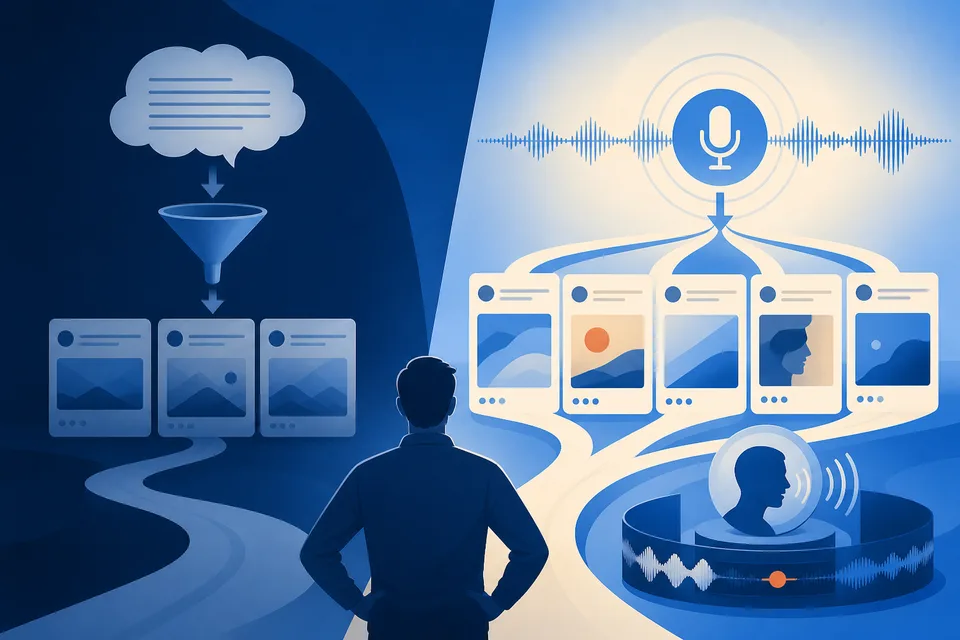
Taplio and Supergrow both start from a text prompt. SparkVox starts from a recording you already made. Here's how all three compare on features, pricing, and who each one actually fits.
Your calls and interviews are already the content. SparkVox writes the posts in your voice - upload one recording and see the drafts before you're charged.
Free to sign up. Card required for full access.
No charge until day 15.