Creating content is the easy part. The hard part is what happens after you hit record. I have watched creators, consultants, and podcasters spend hours building something worth sharing and then watch it disappear because distribution is a completely different skill set.
I had this problem for six years. The honest answer most people land on is hire an agency. That is thousands of dollars a month for something that should be table stakes, and most of the people who need it most cannot justify that number yet. So they post once, get crickets, and quietly decide the content was not good enough. It was not the content. Distribution is where audiences are won or lost.
The backlog nobody talks about
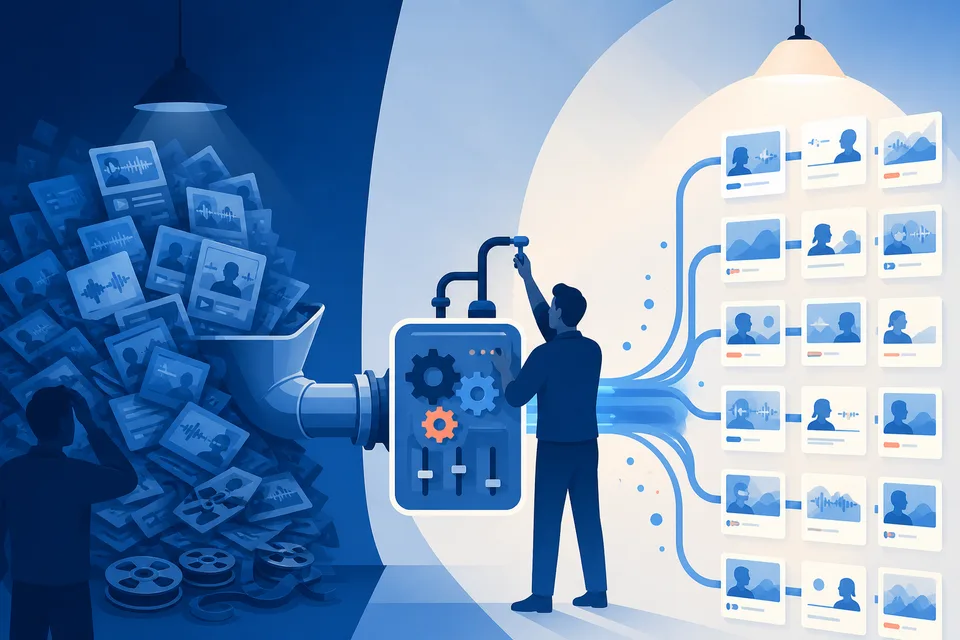
Most creators I talk to have 90-plus days of usable content already recorded that never got a second life beyond the original post. The bottleneck is almost never ideas or effort. It is the unglamorous work of repurposing: clipping, sequencing, matching format to platform, deciding what to cut versus what to keep.
The content exists. The audience exists. The gap between them is a workflow problem, not a talent problem. Until you fix the workflow, buying more recording equipment or booking more guests only grows the backlog.
Why writing from scratch makes it worse
Founders try to solve distribution by writing more. That doubles the bottleneck. You already have the insights in calls, podcasts, and internal sessions. Summarizing them manually is slow. Hiring a ghostwriter is expensive and still disconnected from how you actually talk.
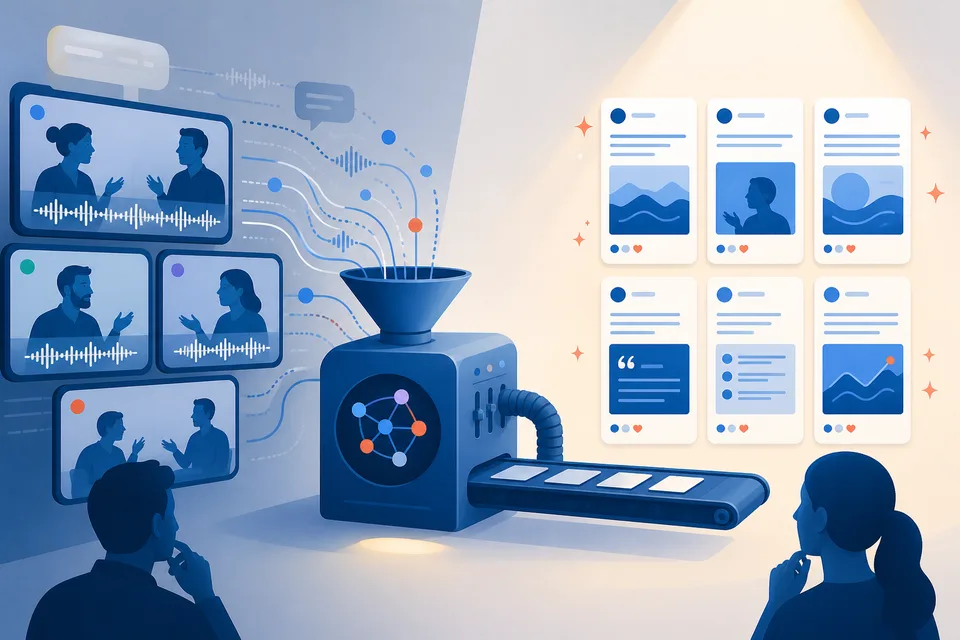
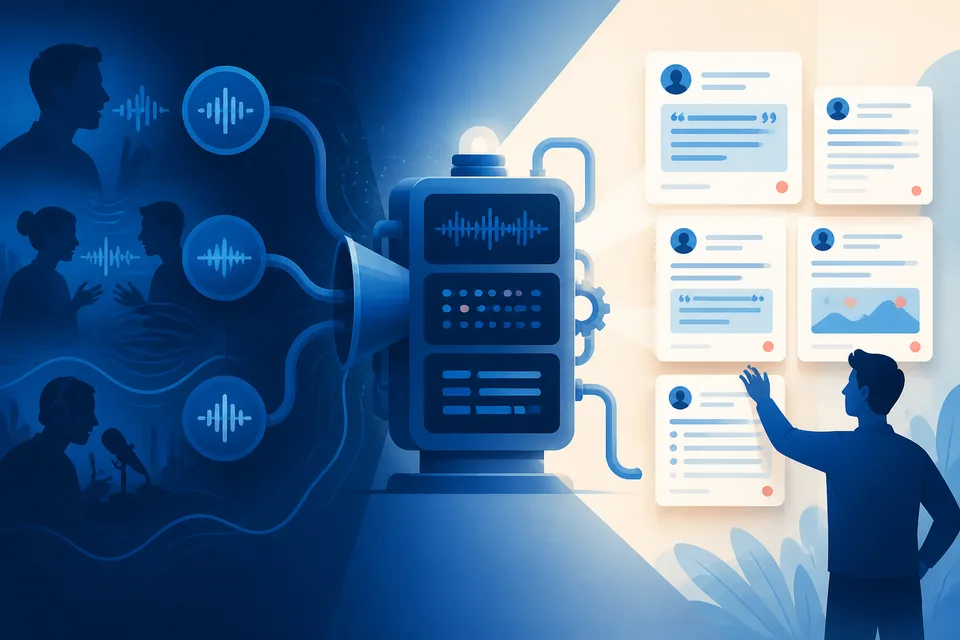
The capture-first model decouples insight from creation. You record what you are already doing. You review drafts instead of writing from a blank page. Distribution becomes a review habit, not a second job. That is the workflow content repurposing describes at a strategic level and what SparkVox automates at the execution level: one recording becomes multiple LinkedIn posts, balanced across funnel stages, in your voice.
What to fix first
- Audit the backlog. Count hours of recordings with zero LinkedIn output. That number is your real content deficit.
- Separate creation from packaging. Stop asking whether you have something to say. Ask whether you have a system to package what you already said.
- Measure distribution, not just publishing. One post per episode is not distribution. Six to ten standalone posts per recording, scheduled across weeks, is.
- Close the analytics loop. See how post analytics feeds your next batch of drafts so distribution learns from performance instead of repeating the same format blindly.
Your backlog is a distribution problem, not a content problem
If you are sitting on a backlog of recordings you never distributed properly, you do not have a content problem. You have a distribution problem. Fix that before you optimize hooks or posting times. The market rewards people who show up consistently with specific stories, not people who create once and hope the algorithm carries it.