On this page
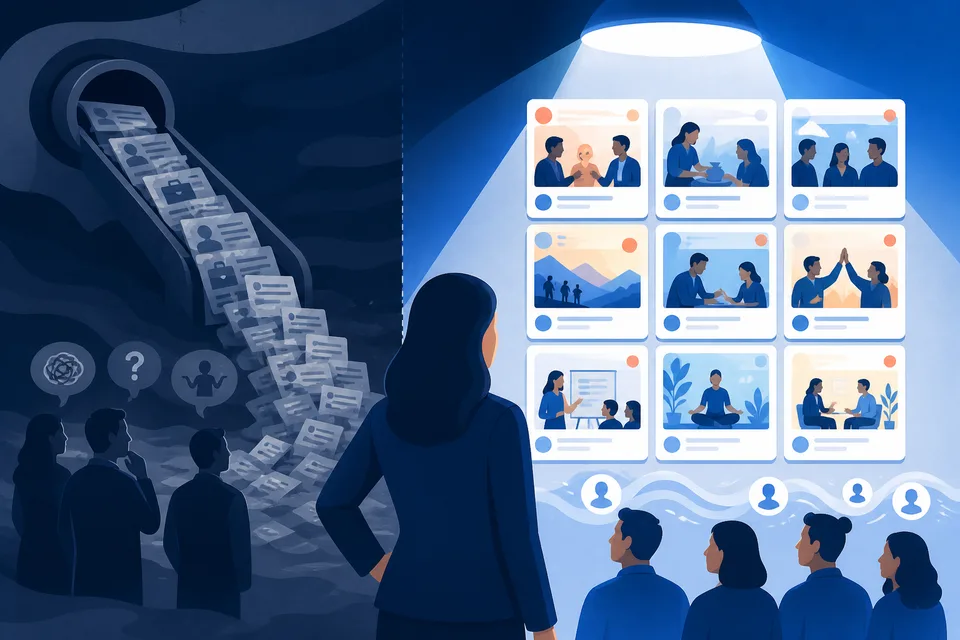
When a company starts hiring aggressively, the company LinkedIn page often becomes a job board: role, role, role, with an occasional team photo. Candidates who care about culture and craft scroll past those posts. The ones you want are checking whether real humans work there and whether the company says anything interesting about how work actually gets done.
Employer brand on LinkedIn is not a separate campaign from company page content. It is what you post when you are hiring - and what you should have been posting before you needed to fill roles.
What candidates look for on your company page
Before they apply, strong candidates look for signals of craft: how you make decisions, how you treat customers, what you expect from managers, whether leaders show up in public. A feed of hiring links without context reads as "we need bodies." A feed that teaches how you work reads as "you might want to work here."
Content types that build employer brand
How we work posts. Meeting norms, async practices, how you run retros, what you optimize for in tradeoffs. Pull from real internal discussions - anonymized if needed.
Team spotlights. Not "employee of the month" fluff. What this person shipped, what problem they owned, what they would tell someone considering the same role. Tag them when they are proud of it.
Learning and growth. Manager training snippets, onboarding frameworks, mentorship stories. HR training materials are an underused source - every onboarding session contains frameworks your market and your candidates are trying to learn.
Customer impact from the team's perspective. How engineering, CS, or design contributed to an outcome. Candidates want to know the work matters, not just that the logo is growing.
Honest hiring posts. When you post a role, add context: what the team is building, what success looks like in ninety days, what kind of person thrives. One paragraph of substance beats a bullet list of requirements.
What to keep off the company page
Founder's personal journey, hot takes on the industry, and vulnerable "I almost quit" stories belong on your personal profile. The company page can celebrate milestones but should not sound like a diary. See what performs where.
Cadence when you are hiring hard
Do not flood the feed with identical hiring graphics. A workable ratio: for every hiring post, publish two culture or craft posts that week. Candidates who discover you mid-search should see proof you are a place worth joining, not a place that only speaks when it has open reqs.
If volume is the bottleneck, repurpose internal sessions instead of writing from scratch. One leadership Q&A recording can become three company page posts and two personal posts from different angles.
Profile basics matter more when you hire
Update Careers, refresh the banner if you are in a hiring push, and pin a strong culture or team post in Featured. See how to optimize your company page profile.
SparkVox lets you publish employer-brand drafts to your company page while routing founder-angle posts to your personal profile - same project, different channel per draft. More guides at LinkedIn company pages.