On this page
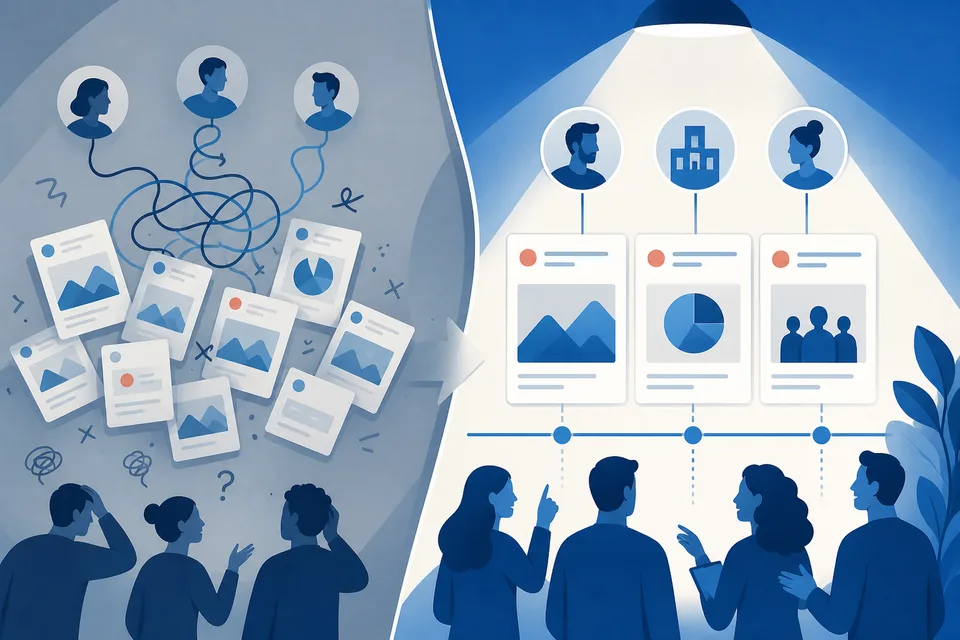
At five to fifty people, LinkedIn gets messy fast. The founder posts personally. Marketing wants the company page active. A sales lead has strong customer stories. HR wants hiring content. Everyone agrees LinkedIn matters. Nobody agrees who publishes what, where, or in whose voice. The result is either duplicate posts or a dead company page while the founder carries the whole channel alone.
Clarity beats volume. Assign channels by job, not by whoever has time Tuesday afternoon.
Channel ownership
Founder personal profile. Opinion, market takes, lessons from failure, investor and peer visibility. The founder is the face of thought leadership - not the default publisher for every customer win.
Company page. Customer proof, product outcomes with context, team craft, employer brand, milestone updates that include customer impact. Owned by marketing, ops, or content - with founder approval on sensitive wins.
Other executives and experts (optional). Functional leaders post personally on their domain - CTO on engineering craft, CRO on GTM - without copying the company feed. Their personal brands support the company; they do not replace it.
Who creates vs who approves
Create from recordings, not from blank docs. Sales and CS own source material on calls. Marketing or an EA uploads recordings and manages draft review. Founders approve personal drafts; marketing lead approves company drafts; legal or CS reviews customer names when needed.
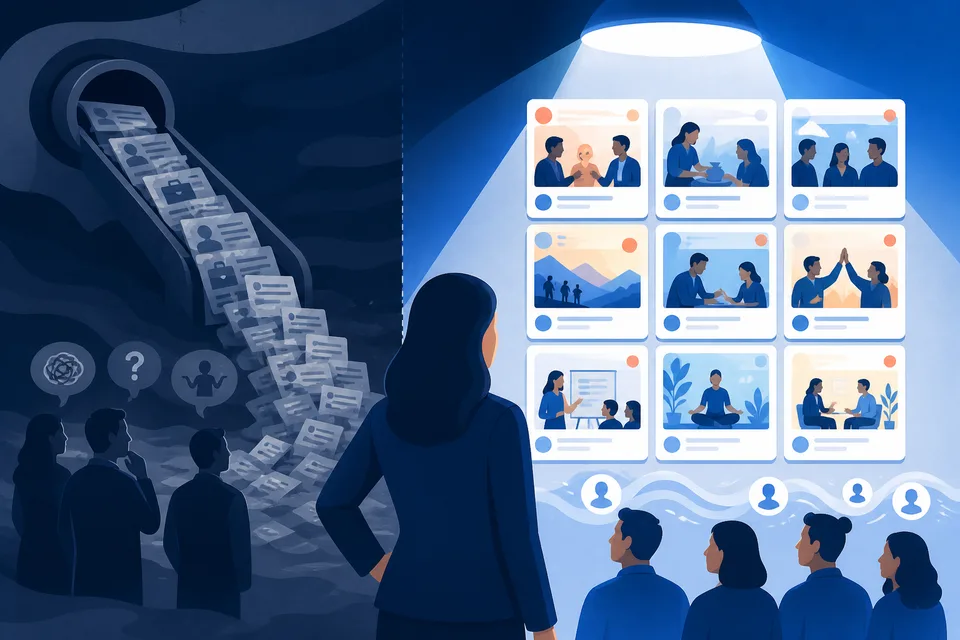
One recording, routed twice. The founder approves a personal-angle draft. Marketing approves a company proof draft from the same project. No duplicate writing sessions.
Employee advocacy without chaos
Employees do not need to post as themselves unless they want to. They amplify company posts with substantive comments - especially on wins they contributed to. Founders and managers comment first. See employee advocacy for company reach.
Weekly standup question
Ask once a week: what did we learn externally (personal) and what proof do we have internally (company)? If the answer to company is nothing, you are not recording enough customer conversations - not that you need more writers.
Use the weekly calendar template as the default schedule. Tune with channel-scoped analytics after a month.
Agencies and operators
Agencies often run personal profiles for founders and neglect client company pages. Each client author account in SparkVox can publish to personal and enabled company identities - one seat per client, channel picked per draft. See SparkVox for agencies and company page publishing.
Strategic split: what performs where. Full hub: LinkedIn company pages.