On this page
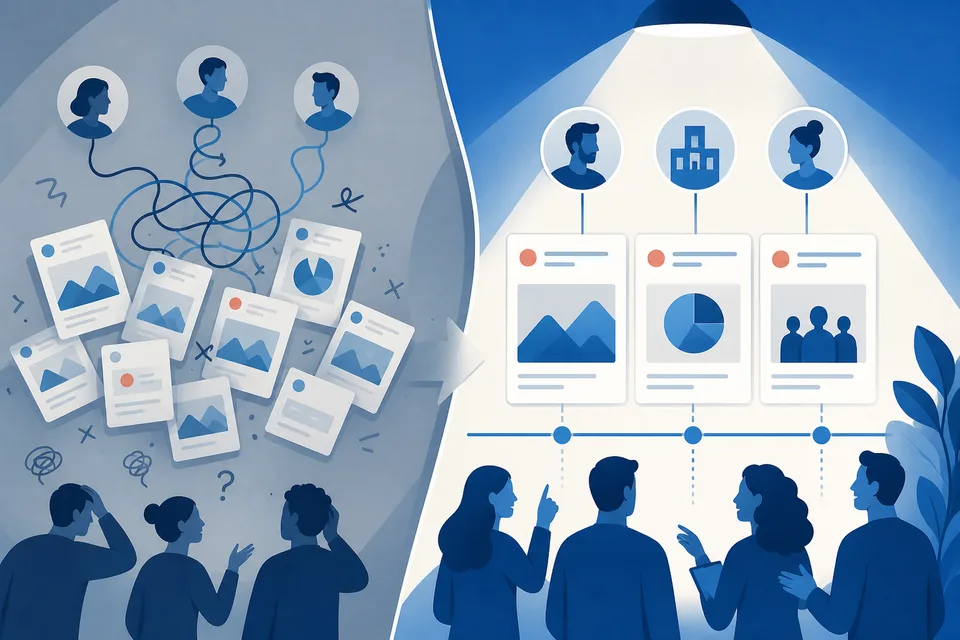
A founder's personal profile gets most of the attention. Then a prospect, candidate, or partner clicks through to your company page and finds a logo from three years ago, an About section written once at launch, and a feed of product screenshots with twelve likes each. The personal brand did its job. The company page undid it.
Optimizing a LinkedIn company page profile is not the same exercise as optimizing a personal profile. Nobody follows a logo for hot takes. They follow it for proof that the business is real, active, and worth trusting. This checklist covers what to fix on the page itself - before you worry about posting cadence.
Logo and banner: first impression at organization scale
Your logo should match how you show up everywhere else - website, decks, product UI. A blurry or outdated mark signals neglect. The banner is your only visual storytelling space on a company page. Use it for one clear message: who you serve, what category you own, or a single proof point ("Trusted by 200+ B2B teams" only if it is true).
Avoid stock photography of handshakes and skylines. A clean product screenshot, a team photo with real faces, or a simple typographic statement all outperform generic corporate imagery because they feel specific to you.
Company name and tagline
The tagline under your company name is searchable text. Do not waste it on "Innovating the future of work." Say what you do in plain language a stranger would understand in five seconds. If your category is crowded, add the niche: "CRM for independent financial advisors" beats "Customer relationship platform."
About section: proof, not poetry
Company About sections should answer four questions: who you serve, what problem you solve, why you are credible, and what to do next. Lead with the customer, not the founding story. Include one or two concrete proof points - customers served, years in market, a notable outcome - and end with a single CTA: visit the site, book a demo, or view open roles.
Unlike a personal About section, this is not the place for founder vulnerability or contrarian opinions. Save that for your personal profile. The company page confirms the business is legitimate.
Services, specialties, and completeness signals
LinkedIn treats incomplete pages differently from complete ones. Fill in Services, specialties, company size, founding year, and headquarters. These fields are boring to update and valuable to leave accurate. They also help LinkedIn categorize your page for search and recommendations.
If you are hiring, keep the Careers section current. A stale job listing from eighteen months ago tells candidates the page is unmaintained.
Featured section: your best proof on repeat
Pin your strongest assets: a flagship case study post, a product launch with customer context, a culture post that performed well, or a talk from your CEO that represents how you think. Update Featured when you publish something that earns substantive engagement. Visitors who land cold rarely scroll deep into your feed - Featured is your curated storefront.
Point the custom button at one destination: demo booking, product signup, or careers. Match the CTA to what you want from company page visitors - usually pipeline or hiring, not newsletter signups unless employer brand is the primary goal. Ensure the website URL is correct and uses HTTPS.
The feed is part of the profile
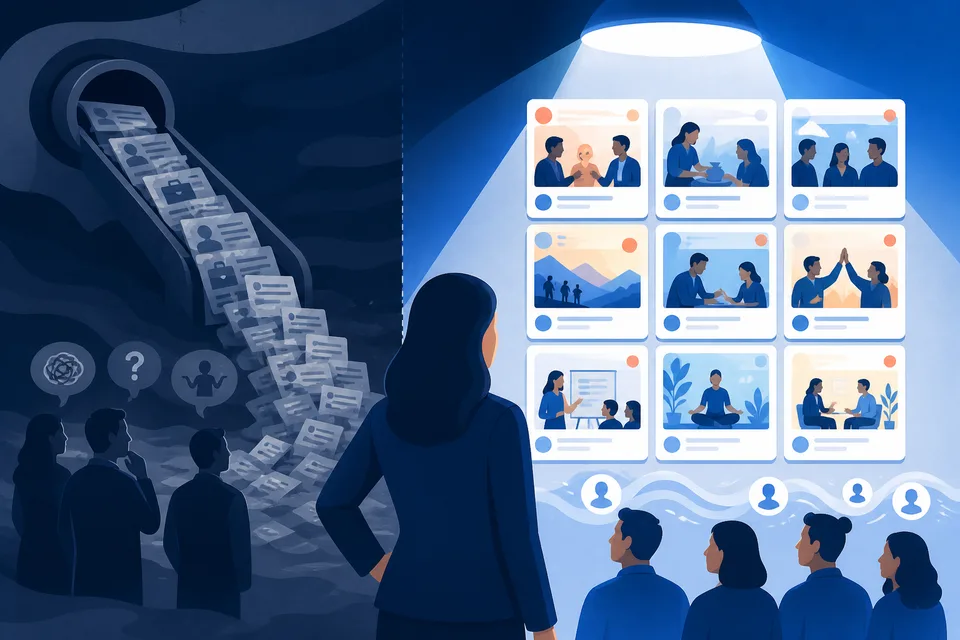
An optimized static profile with a dead feed still reads as dormant. What to post on your company page matters as much as the fields above. Aim for one to two company posts per week on customer proof, team craft, and category education - not product screenshots alone.
For the personal profile checklist, see how to optimize your LinkedIn profile in 2026. For running both channels from one workflow, see LinkedIn company pages on SparkVox or SparkVox for LinkedIn for per-post channel selection.