


AI ToolsWriting
AI-Generated vs AI-Assisted LinkedIn Content
One produces content that sounds like everyone else. The other produces content that sounds like you, faster - and why AI is material to sculpt, not a finished product to accept.
A practical profile checklist for 2026: banner, headline, About, Featured, and experience that match what you post about - plus the posting habit that keeps your profile alive for humans and AI research.
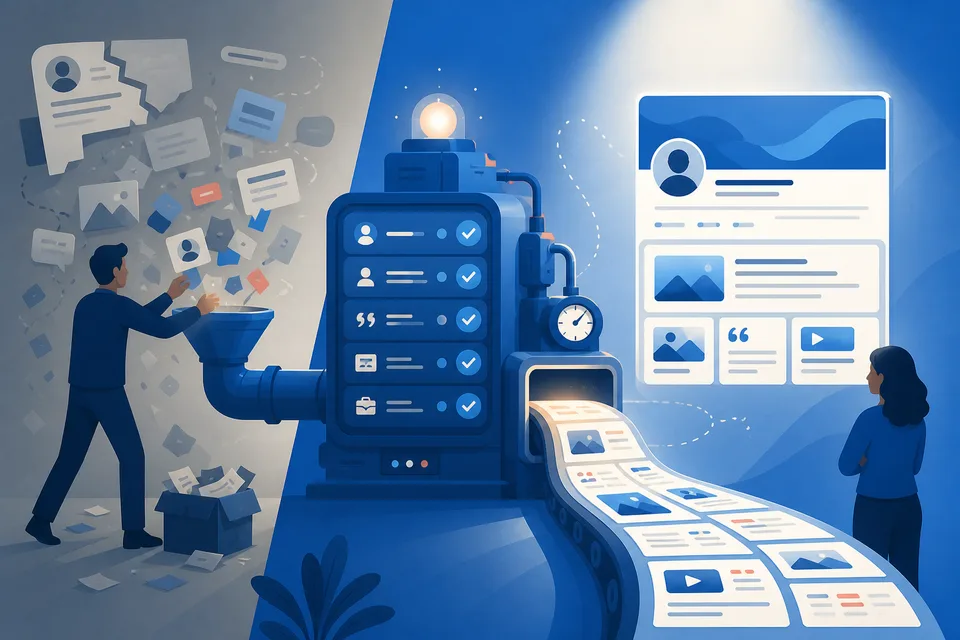
Most LinkedIn profile advice still treats your page like a static CV: polish the headline, rewrite the About section, add skills, and wait. That worked when humans occasionally visited your profile. It is incomplete now. People and AI assistants research you before meetings, and LinkedIn's ranking model reads your profile together with your recent posts. A profile that looks fine but has gone quiet reads as dormant - and dormant profiles do not earn engagement when someone finally lands on them.
Optimizing your profile in 2026 means making the page worth clicking through to, and keeping it alive with content that proves you are still active in the topics you claim. This is a practical checklist in that order: first impressions, then depth, then the posting habit that makes everything else compound.
You have roughly three seconds. Banner, photo, headline, and the first line of your About section are the whole decision for most visitors. They are also what AI tools surface when someone asks for an expert in your space.
Profile photo: Clear face, neutral background, recent enough that someone who meets you in person is not surprised. No logos, no group shots cropped tight, no sunglasses. Trust starts here.
Banner: Use it for one clear message - who you help, what you talk about, or a single proof point. Not a stock city skyline. Not six logos squeezed together. One idea a stranger can parse in one glance.
Headline: Skip the formula everyone uses. "I help X do Y through Z" signals nothing because it signals the same thing as ten thousand other profiles. Lead with specificity: a result, a niche, or a point of view. "Founder who turned 300 sales calls into a LinkedIn content system" beats "Passionate about helping leaders scale."
Most people will not read your About section first. They will read your posts for weeks, then visit your profile to confirm you are worth following or replying to. Your About section should close the loop: reinforce the topics you post about, add one or two concrete proof points, and make the next step obvious.
Write in first person. Mention real numbers, real years, real outcomes where you can. Open with the problem you care about, not your job title history. End with a single CTA: follow for X, DM me about Y, or read Z on your site. One CTA, not five.
For how AI systems use this material, see why your profile is your most valuable asset in the AI age. Recency and topic consistency matter as much as the words in the About block.
The Featured section is the only part of your profile you control like a mini landing page. Pin three to five items: your strongest posts, a case study, a talk, or a lead magnet. Update it when you publish something that performed well or represents the work you want more of.
Visitors who land cold will scroll Featured before they dig into your activity feed. Give them your highest-signal work, not your oldest announcements. A post that earned substantive comments beats a press release every time.
LinkedIn's algorithm weighs whether your posts align with your stated expertise. If your headline says "B2B SaaS founder" but you only post about unrelated hobbies, distribution suffers. Your Experience entries and top Skills should mirror the two or three topics you actually publish on.
Trim outdated roles that pull your narrative sideways unless they still support your positioning. Order matters: lead with the chapter that matches what you want to be known for now. Skills are secondary social proof - pick the ten that a prospect would expect, not every tool you have ever touched.
Add a custom button if you have one primary destination: newsletter, booking link, or product. Do not split attention across three buttons. The goal is to make it effortless for someone who already trusts you from your content to take the next step.
Open messages to connections or everyone, depending on your volume tolerance. A profile optimized for engagement but closed to inbound messages sends mixed signals. If you are building an audience, make replying possible.
None of the above sustains itself without posting. Your activity feed is the living version of your bio. Consistent posting trains both humans and the algorithm that you are active in your claimed topics. Profile views spike after strong posts; strong posts are easier to write when you repurpose recordings instead of staring at a blank page.
A practical rhythm: audit your profile once a quarter, update Featured when you have a new winner, post two to three times a week on the same narrow themes. Hooks that stop the scroll get people into the post; a clear profile converts that attention into follows, DMs, and replies.
SparkVox fits the posting side of this equation: upload a call or interview, review drafts in your project's LinkedIn content strategy, publish to your personal profile or a company page you manage. The profile audit is one afternoon. The posting habit is what makes it pay off for years.
SparkVox
Upload a call, podcast, or interview. SparkVox extracts moments and drafts up to 15 LinkedIn posts in your voice. You review every draft before anything publishes.
Start 14-day Pro trial →Free to sign up. Card required for full access.
No charge until day 15.
One produces content that sounds like everyone else. The other produces content that sounds like you, faster - and why AI is material to sculpt, not a finished product to accept.
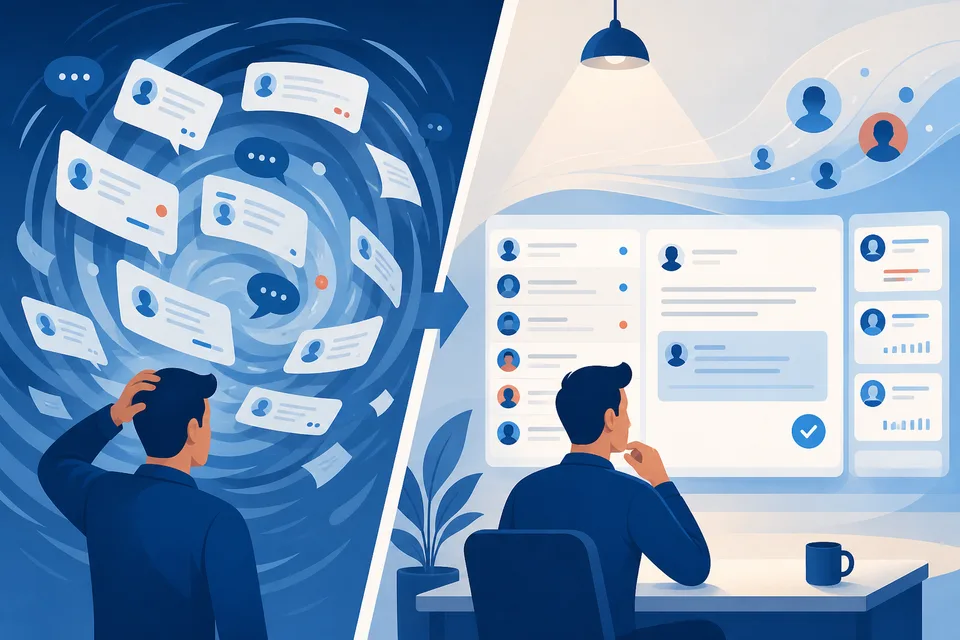
Engage syncs comments on SparkVox-published posts into one inbox - reply, mark done, and find top engagers without hunting through the feed. Legitimate API engagement, not auto-comment bots.

Repeat commenters are your highest-signal relationships on LinkedIn. SparkVox Engage People tab ranks top engagers with funnel filters and CSV export - here is how to use the list without spamming DMs.
Your calls and interviews are already the content. SparkVox writes the posts in your voice - upload one recording and see the drafts before you're charged.
Start 14-day Pro trial →Free to sign up. Card required for full access. No charge until day 15.