On this page
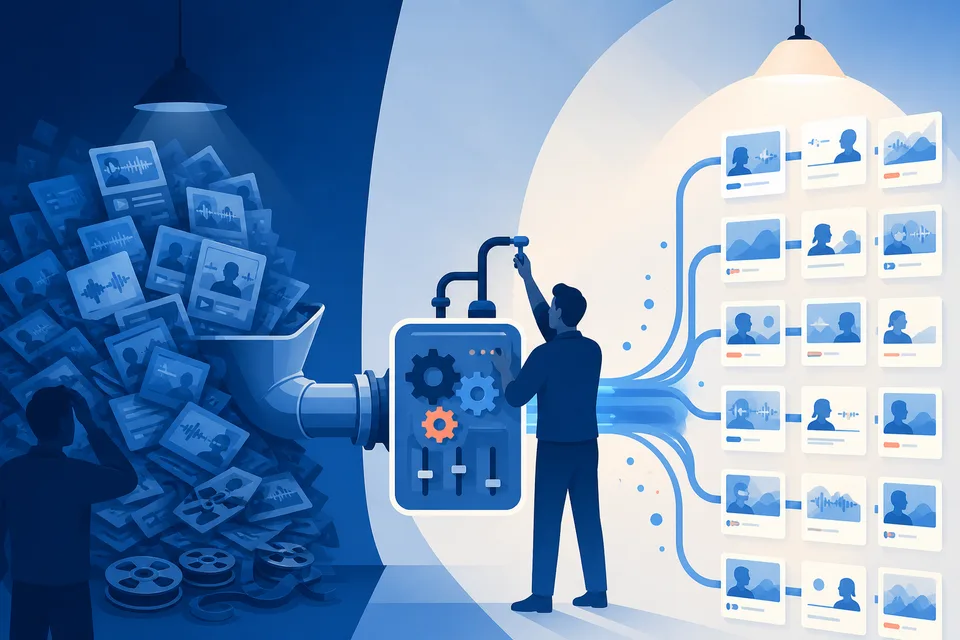
Every quarter, your company runs sessions that would make outstanding LinkedIn content. Onboarding workshops. Manager training. Culture discussions. Leadership development programmes. The frameworks you have built over years of figuring out how to make good people work well together.
Almost none of it ever leaves the building.
That is a missed opportunity, but it is also a solvable one. The content already exists. You just have not connected the recording to a LinkedIn post yet.
Why your internal frameworks are thought leadership externally
Think about what you cover in a new manager training. How you run performance conversations. How you handle conflict between team members. What good feedback actually looks like. How you decide who is ready to be promoted.
Every one of those is a topic that thousands of people on LinkedIn are genuinely trying to figure out. Not in a theoretical way. In a "I have a difficult conversation on Monday and I do not know how to approach it" way.
The frameworks you have developed through lived experience are more useful than most of the leadership content being published. You are not guessing. You have run these sessions, seen what happens when they work and when they do not, and refined your approach accordingly. That is expertise. It deserves to be public.
The employer brand case
There is a second reason to publish from your training materials that has nothing to do with thought leadership: it is the most credible employer brand content you can produce.
Any company can say "we invest in our people." Any job posting can claim "we have a culture of growth and learning." These phrases are so common they have become invisible.
But a post that says "here is how we run our new manager training - this is specifically what we cover on day one and why" is not a claim. It is evidence. Prospective hires read it and think: this is an organisation that has actually thought about this. That is where I want to work.
The candidates who respond to that content are also self-selected. They are not looking for any job. They are looking for a place that takes development seriously. Those are the hires that stick.
What content comes from training sessions
The framework post
Most good training sessions are built around a framework. A model for giving feedback. A decision matrix for prioritising people problems. A way of thinking about career development conversations that is different from what most managers have been taught.
The framework, stripped of the internal shorthand and explained clearly, is a post that provides immediate value. People save these. They share them with peers. They remember who taught them the framework.
The counterintuitive take
Training sessions work when they correct a misconception people already have. If your onboarding covers "why we do not do annual reviews" or "why we separate performance conversations from compensation conversations" or "why our interview process looks nothing like standard hiring practice" - those counterintuitive positions are posts.
Disagreement drives discussion. Not manufactured disagreement, but genuine positions that you have arrived at through experience and that most people in your space have not taken.
The "here is what we got wrong" post
The most powerful employer brand content is honest about failure. If your culture deck covers something you used to believe and now do differently, that evolution is a post. "Three years ago we ran our 1-1s this way. Here is what broke. Here is what we changed."
This signals intellectual honesty in a way that no company values page ever will.
What not to publish
Not everything from a training session belongs on LinkedIn. A few things to keep out:
- Anything that references a specific employee situation, even anonymised, unless the situation is completely generic.
- Internal process details that reveal competitive information about how you operate.
- Frameworks that are so context-specific they only make sense inside your organisation.
- Anything from a session where attendees had a reasonable expectation of confidentiality.
The test is simple: would a current employee be uncomfortable if they saw this post? If yes, rethink. If no, it is probably fair game.
The practical workflow
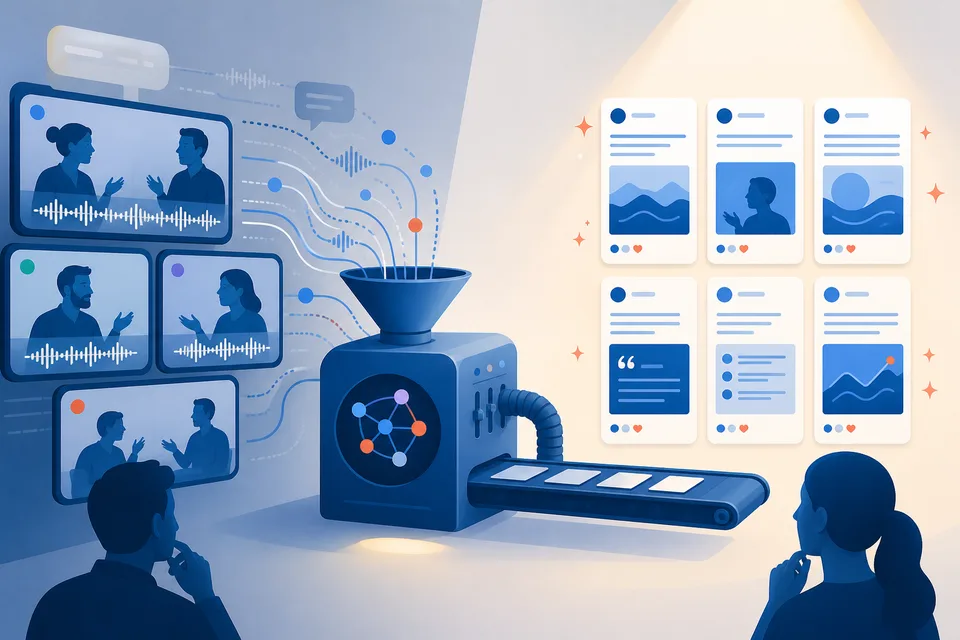
If your sessions are recorded - and most virtual training sessions are, or should be - the workflow is the same as any other recording. Upload it, let SparkVox extract the moments that are worth turning into posts, review your drafts, and approve the ones that meet the bar.
A few adjustments for training content specifically:
- Use speaker diarization to isolate the facilitator's voice. Training sessions often have questions and discussion - you want the frameworks, not the Q&A.
- Edit drafts to remove any internal jargon or acronyms that will not translate outside the company.
- Review with someone from the HR or People team before publishing, especially for content that touches sensitive topics like performance or culture.
The payoff is a LinkedIn feed that demonstrates your culture through specific, credible evidence - not through claims. Prospective clients see an organisation that invests in its people. Prospective hires see somewhere they actually want to work.
For more on turning different types of recordings into LinkedIn content, how to turn a 1-hour interview into 30 pieces of content covers the framework that applies across content types. Route employer-brand drafts to your company page when hiring. And if your organisation uses multiple speakers or facilitators, speaker diarization explains how SparkVox handles multi-party recordings cleanly.