On this page
This is one of the most common questions I get on demos, and it is a fair one. If a tool turns your call recordings into LinkedIn content, you are handing it transcripts of real conversations. Some of those conversations touch on pricing, strategy, or things a client said in confidence. So people ask, reasonably: is it safe to put my sales call transcripts into an AI tool?
Here is the honest, practical answer, including the part most vendors skip.
The uncomfortable starting point: it is already recorded
Before we talk about any content tool, look at where your calls already live. If you use Zoom, Fireflies, Fathom, Otter, or Google Meet, your meetings are already being recorded and transcribed. That transcript already sits in a third-party system, and it is already being processed by AI to generate summaries and action items.
So the decision about confidentiality does not start when you paste a transcript into a content tool. It starts the moment you hit record. The real question is not "should this touch AI at all," because for most modern teams it already does. The question is which specific conversations are appropriate to turn into public content.
The rule that actually protects you: the human decides
My position on this is simple and I say it on every call. The onus of confidentiality is on the person, not the software. There is no filter that can reliably know which sentence in your call is a public-ready insight and which is a client's private business decision. Only you know that.
So the protection is procedural, not magical:
- If a call is genuinely confidential, do not process it. A tool cannot leak what you never give it.
- If a draft references something private, do not publish it. Nothing goes live automatically. A human reviews and approves every post.
- Post the insight, not the incident. The valuable part of a sales call is usually the general lesson, not the specific account details. You can share the framework without naming the client.
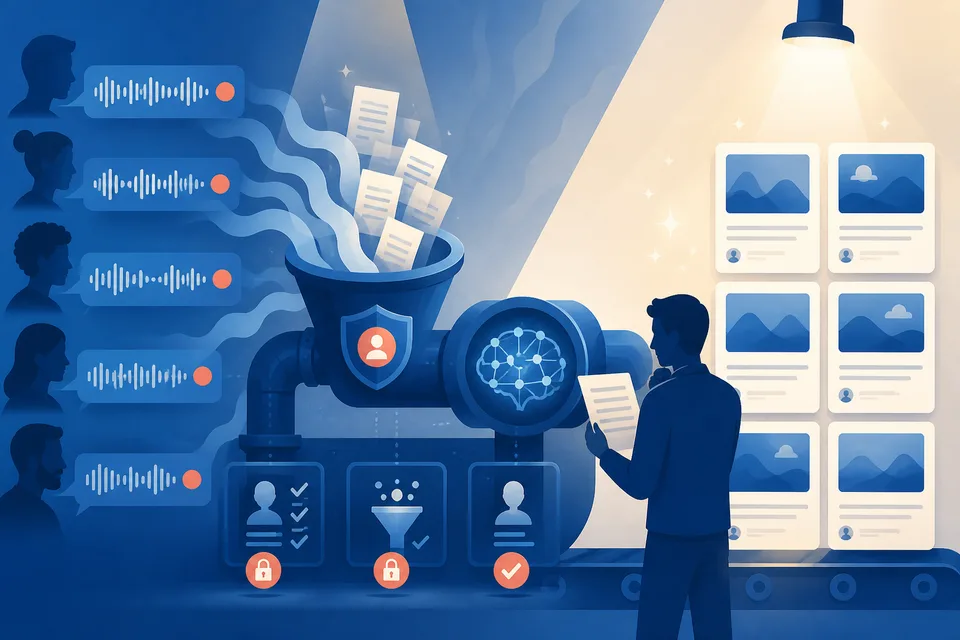
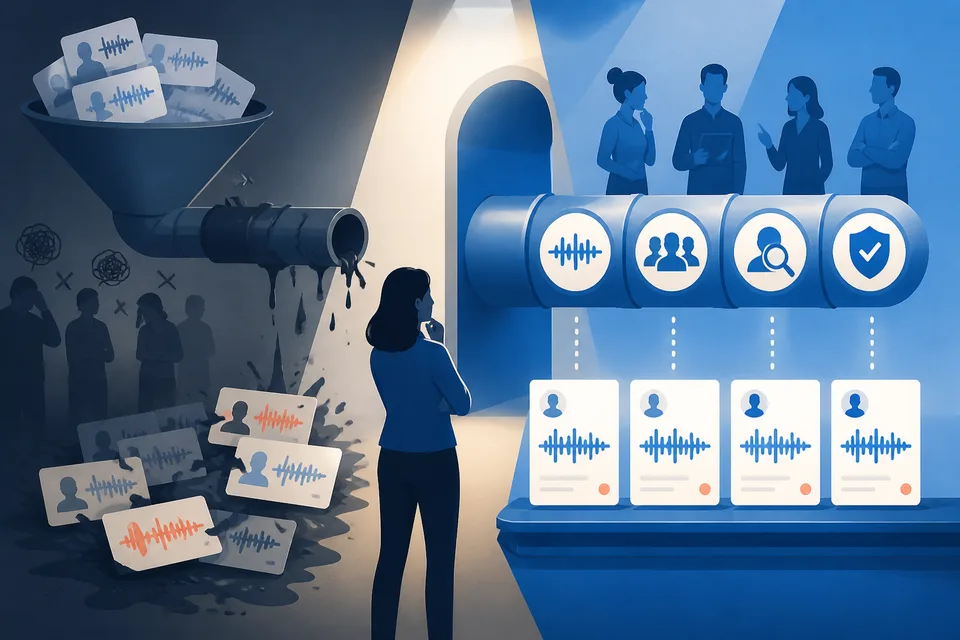
This is why SparkVox keeps a human in the loop by design. The system drafts, you review, you edit, and only then do you approve. There is no path where a private detail publishes itself while you are not looking.
What to check before you trust any content tool
Being responsible for what you upload does not let the vendor off the hook. Before you put real transcripts into anything, it is reasonable to confirm:
- Human-in-the-loop publishing. Does the tool ever post without your explicit approval? It should not.
- Official integrations, not scraping. Tools that hack around platform rules put your accounts at risk. See why automated LinkedIn engagement gets accounts banned.
- Clear data handling. Read the privacy policy and security details so you know how transcripts are stored and used.
- Your control over deletion. You should be able to remove a transcript or project you no longer want in the system.
A simple mental model for what to share
If you remember the call well enough to want to post about it, it is probably a good candidate. If you would hesitate to repeat a moment from it out loud at a conference, keep that moment out of the tool. The best content usually comes from your own frameworks, your own stories, and the patterns you have seen across many conversations, none of which require exposing a specific client's confidential information.
Putting a transcript into an AI content tool is as safe as you make it, because you stay in control of two things that matter most: what goes in and what goes out. Choose which conversations to process, review every draft, and never publish something that reveals what was meant to stay private. Do that, and you get the upside, which is turning the work you are already doing into visibility, without the risk.
For a look at how that workflow turns everyday calls into content responsibly, see how to turn sales calls into LinkedIn content. For the short direct answer format, see is it safe to put sales call transcripts into AI.