On this page
Most LinkedIn advice treats every post the same way: write a good hook, add a story, end with a question. That advice is not wrong, but it is missing the layer that actually ties content to revenue. A post is not just a post. It is a piece that does one specific job at one specific stage of the relationship between you and the people who might eventually buy from you.
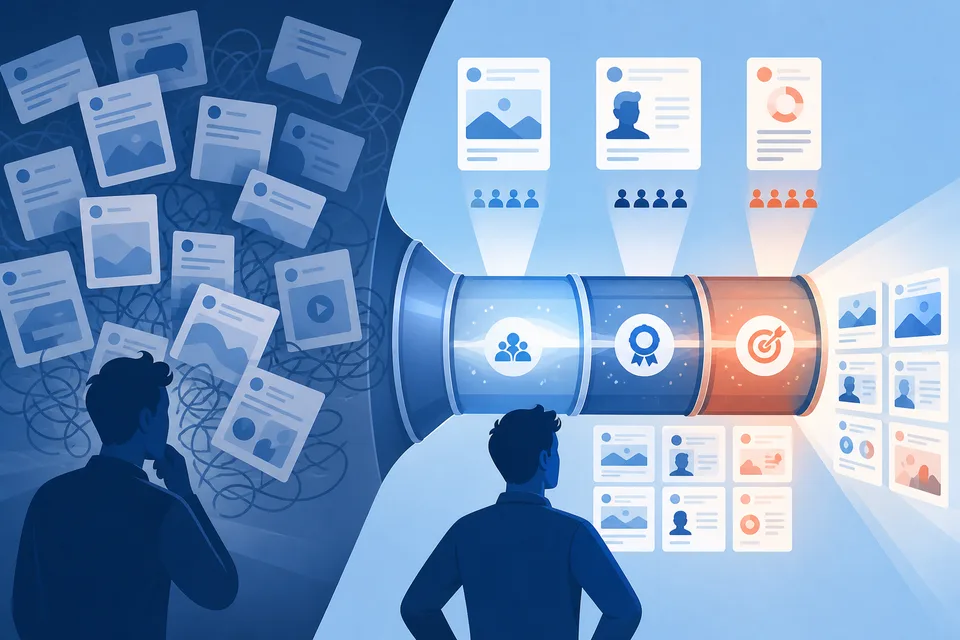
The framing that changed how we build content is simple: every LinkedIn post belongs to a funnel stage. Awareness at the top, authority in the middle, conversion at the bottom. When you structure your content this way, you stop posting at random and start building a pipeline you can actually see.
The mistake: posting without a job for each post
When SparkVox first generated content, it produced a flat list of good posts. People liked the output, but a friend who had been building businesses for thirty years cut straight to the problem: "You have a really great product, but you are not solving a revenue problem. You are creating a content strategy. You have to tie it to something that generates revenue."
That was the turning point. A list of ten strong posts is not a strategy. It is a pile. The strategy is knowing which of those posts pulls a stranger in, which one earns their trust, and which one gives them a reason to reach out. Without that structure, you tend to post five deep "authority" pieces in a row, wonder why nobody new is finding you, and blame the algorithm.
The three stages, and the job each one does
Think of your content the way you think of a sales funnel, because it is one. Each stage has a different reader and a different goal.
- Awareness (top of funnel). These posts expand reach. They take a contrarian position, ask a sharp question, or tell a short story that hooks someone who has never heard of you. The job is not to sell. The job is to get the right stranger to stop scrolling and notice you exist. These are the posts that travel outside your network.
- Authority (middle of funnel). These posts build trust. They go deep on a framework, walk through a real process, or share a lesson learned the hard way. The reader already knows you a little. Now they are deciding whether you actually know what you are talking about. These posts get saved, not just liked.
- Conversion (bottom of funnel). These posts prompt action. They make the problem you solve concrete, reference what you offer, and create a reason to book a call or send a message. They only work once someone has moved through the first two stages, which is exactly why sequencing matters.
The point is not that conversion posts are better than awareness posts. The point is that you need all three, in balance. If you only post awareness, you build a big audience that never buys. If you only post conversion, you sell to an audience that does not exist yet.
One recording usually contains all three
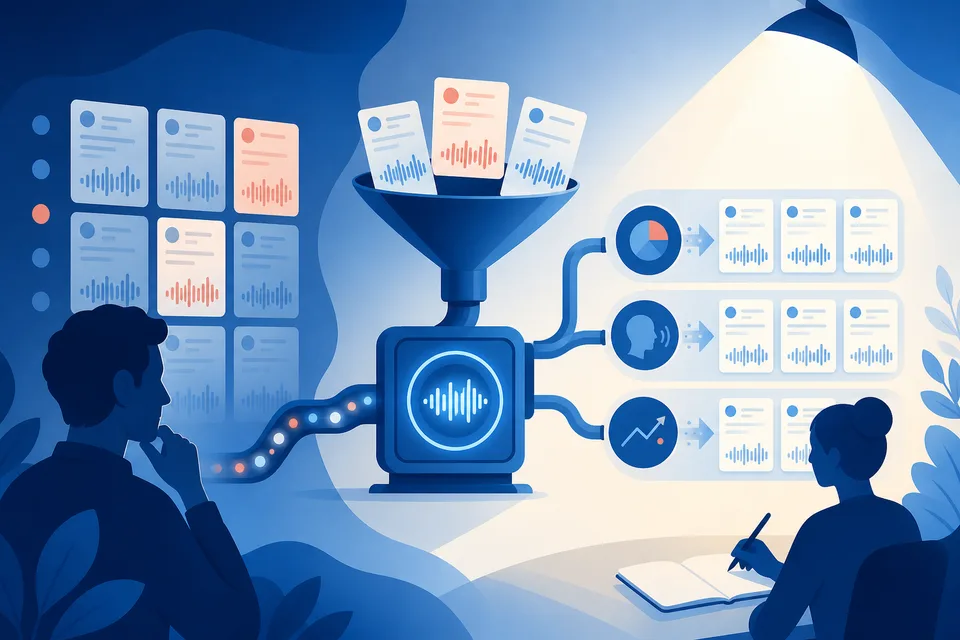
Here is the part that makes this practical instead of theoretical. A single sales call, advisory session, or podcast appearance almost always contains material for all three stages at once.
In the same 45-minute conversation, you will make a contrarian claim (awareness), explain the process behind a result (authority), and describe the exact problem your customers hit before they find you (conversion). You already said all of it. The work is not generating ideas. The work is extracting those moments and labelling them by the job they do. This is the core of repurposing content for LinkedIn without turning it into a bland summary.
How to balance the three stages week to week
Once your posts are sorted by stage, you can plan reach and trust and conversion the way you would plan a budget. A workable default for most founders and consultants:
- Roughly half your posts as awareness, because reach is the constraint most people underinvest in.
- A third as authority, because trust is what turns a follower into a lead.
- The rest as conversion, spaced out so you are not constantly pitching.
The exact ratio matters less than the fact that you are watching it at all. Once you can see that you have published six authority posts and zero awareness posts this month, you know why your reach has stalled, and you know exactly what to publish next.
Why the funnel view also fixes your analytics
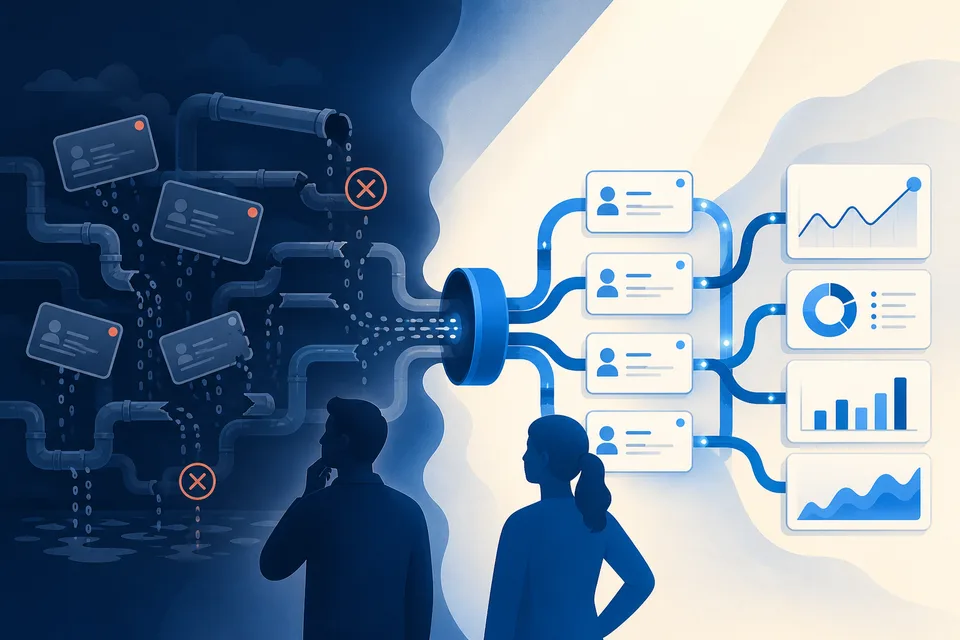
When every post is tagged by stage, your analytics finally mean something. Instead of a single blurry "impressions" number, you can see that your awareness posts are pulling strangers in but your conversion posts are not landing, or the reverse. You stop optimizing one giant average and start optimizing each job separately. That is a much more useful signal than a viral spike you cannot repeat.
How SparkVox builds this in
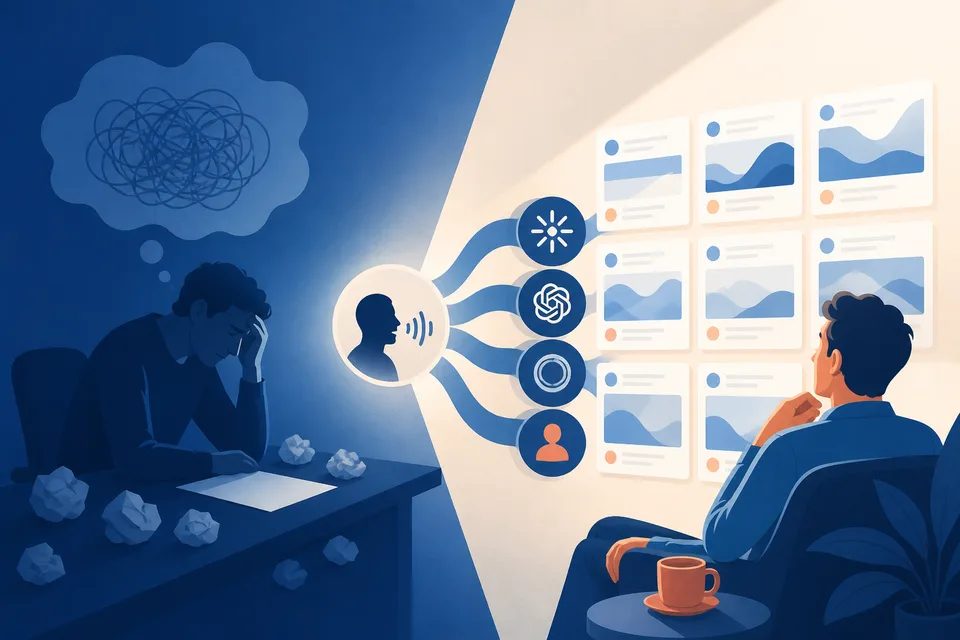
SparkVox takes a recording you already made and splits the output into three columns: awareness, authority, and conversion. Every draft is written in your voice, learned from your voice profile, and grouped by the stage it serves. You can plan a week of content and see at a glance how much reach, trust, and conversion you are building, per channel, before anything goes live.
If you want to see where this content comes from in the first place, read how to turn sales calls into LinkedIn content, or see how founders use the whole workflow to build a pipeline from the conversations they are already having.