


AI ToolsWriting
Voice Confidence Explained: What 0-100% Actually Means
Four slices - Brief Sparky, transcripts, approvals, and Post Analytics - combine into one score. Why transcript credit is now flat +2% and what to do if your number dropped.
How SparkVox curates moments, ranks two hook candidates per post, checks distinctiveness, and compounds voice from approvals, edits, and discards.
Most AI repurposing tools stop at summarization: turn a transcript into posts until you hit a count. SparkVox treats the hard part as editorial judgment - which moments are worth saying publicly, which hook wins, and whether a draft sounds like anyone in your category. That is the pipeline change worth understanding if you care about voice, not volume.
Sparky scores candidate moments (relevance 70+), then keeps a subset for your recording length - roughly eight posts per 30 minutes, cap 15. The ready screen shows moments found vs posts curated so you see the filter in action. See why SparkVox curates fewer posts per project.
Curation also learns from behavior: topics and post styles you often edit heavily or discard can be deprioritized on the next project. Discarding is a stronger signal than a light edit - it means the material should not have been surfaced. How discard signals feed the next project.
For each curated moment, Sparky generates two LinkedIn drafts in parallel and keeps the one with the stronger hook and readiness score. You still review one card per moment - the extra work happens before your queue, not after. Why two drafts per moment.
Awareness and Authority posts can also pass a distinctiveness check so generic category filler is less likely to reach you. Conversion posts lean on proof and buyer recognition; the gate focuses on the stages where sameness hurts most. See distinctiveness check and generic AI.
Every generation still uses Brief Sparky, Project Presets, your compounding voice profile, and top-performing publishes when Post Analytics has data. The optional positioning claim on Brief Sparky adds a one-sentence thesis: Sparky uses it when picking moments and framing transcript lines as evidence, not recap.
Approvals and edits update your voice profile. Voice Health can cluster repeated edits into automatic rules. The Voice Profile drawer Draft Feedback tab and Analytics theme map show what Sparky learned from your decisions - publish vs edit vs discard by topic and funnel column. Voice Confidence explained covers the score; how voice learning works covers the mechanics.
Pipeline reference: how project processing works.
SparkVox
Upload a call, podcast, or interview. SparkVox extracts moments and drafts up to 15 LinkedIn posts in your voice. You review every draft before anything publishes.
Start 14-day Pro trial →Free to sign up. Card required for full access.
No charge until day 15.
Four slices - Brief Sparky, transcripts, approvals, and Post Analytics - combine into one score. Why transcript credit is now flat +2% and what to do if your number dropped.
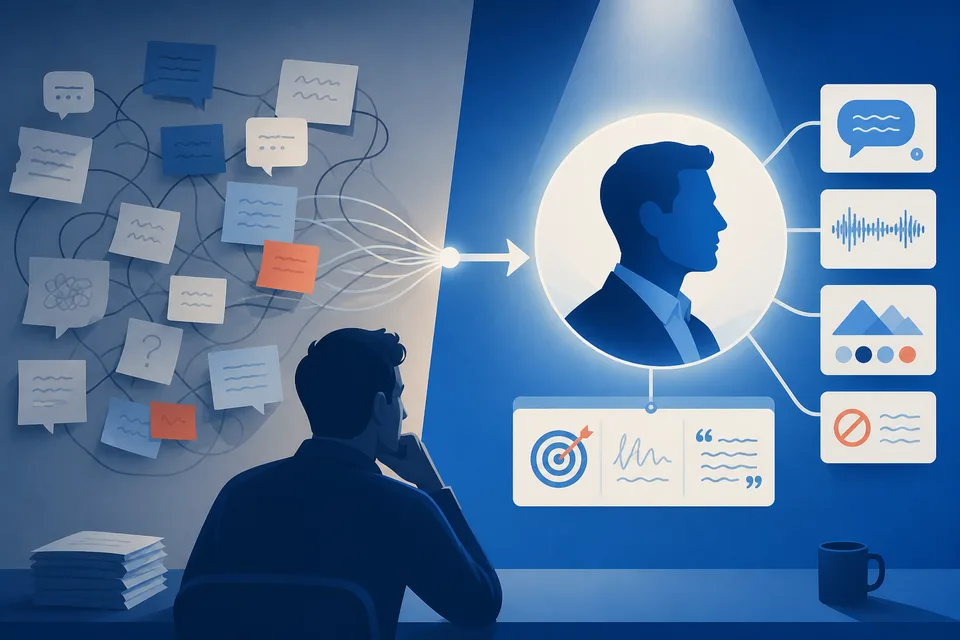
The optional one-sentence claim steers moment pick, evidence framing, and distinctiveness checks - separate from your long Brief Sparky and your voice profile.

Why discarding a post is a stronger signal than a light edit, how topic and style burden shapes the next project, and where to see it in Draft Feedback and the theme map.
Your calls and interviews are already the content. SparkVox writes the posts in your voice - upload one recording and see the drafts before you're charged.
Start 14-day Pro trial →Free to sign up. Card required for full access. No charge until day 15.