On this page
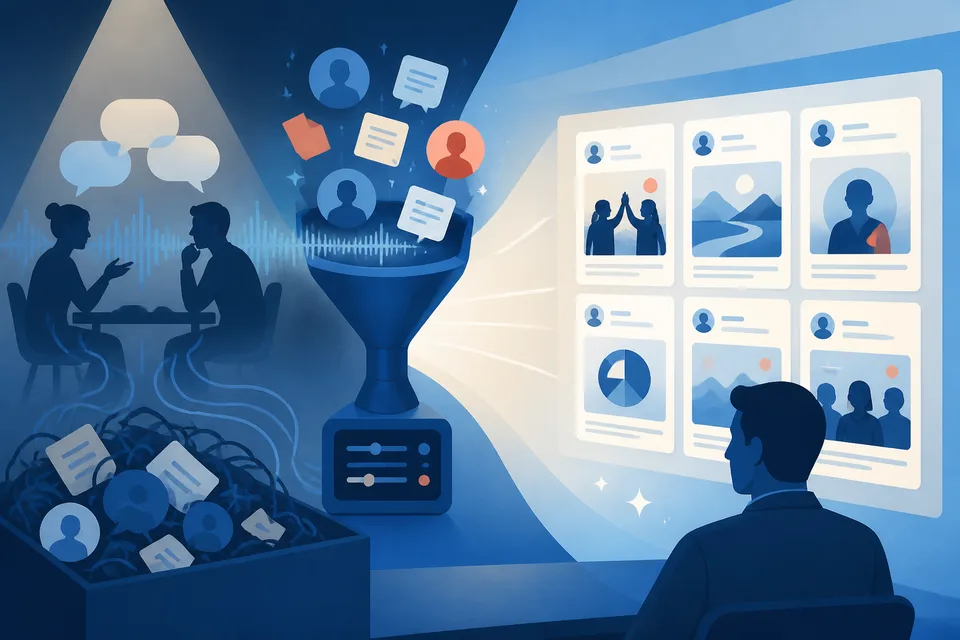
Customer wins are sitting in your sales calls, onboarding sessions, and quarterly reviews - and almost none of them become company page posts. Instead, company feeds fill with product screenshots and "We're thrilled to announce" updates that get twelve likes from employees. The content that would actually convince a prospect is already on a recording somewhere.
Turning wins into company page posts is not about bragging. It is about making the proof that closes deals visible to people who will never get on a call with you.
What makes a win worth posting
A strong company page win post has three parts: a specific problem the customer faced, what changed after they used your product or service, and a result you can stand behind. "Great partnership with Acme Corp" is not a win post. "Acme's onboarding team cut new-hire time-to- productivity from six weeks to ten days after restructuring their manager training" is.
If you cannot name the customer, anonymize: industry, company size, role, and outcome still work. Specificity without a logo beats vague praise with a logo every time.
Where the material already lives
Sales calls. The moment a prospect says "that is exactly our problem" or a customer describes life before and after - that is a post. Sales call repurposing usually targets personal authority posts; the same recording often contains a company-angle outcome story worth extracting separately.
Onboarding and success calls. Implementation stories, unexpected use cases, and metrics customers share in check-ins are company page gold. They sound like customers, not marketing.
Internal win reviews. Weekly sales or CS standups where teams share closed deals and expansions. Record them. One thirty-minute session can yield multiple proof posts.
Structure that does not sound like a press release
Open with the customer's problem in their language, not your positioning statement. Describe the constraint they were under - time, budget, team size, legacy process. Then explain the approach at a high level without a feature laundry list. Close with the outcome and, if appropriate, what they would tell a peer considering the same change.
Skip superlatives. "Thrilled," "excited," and "humbled" are empty on company pages. Let the numbers and the story carry the post.
Personal vs company angle from the same win
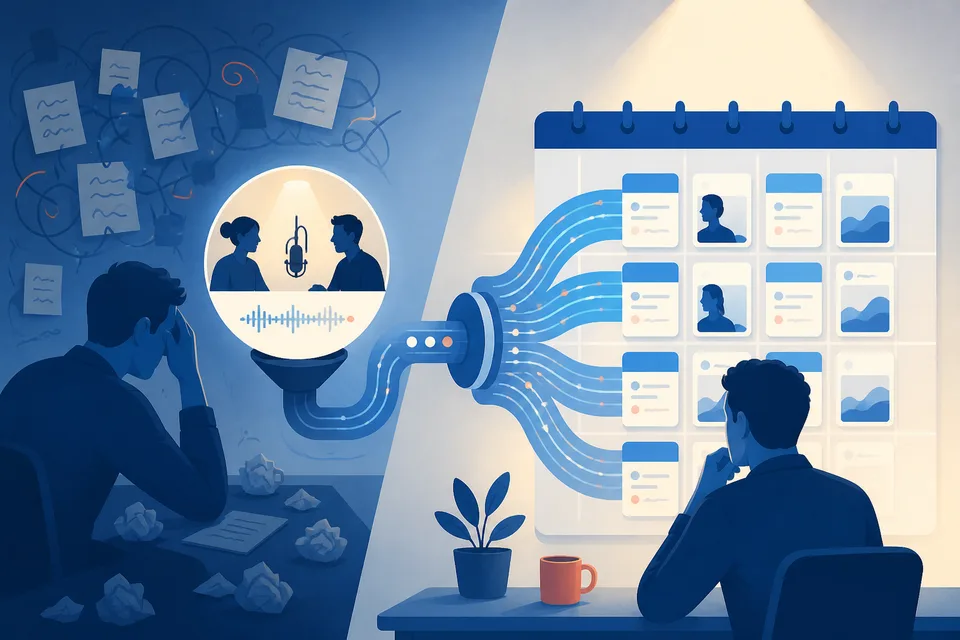
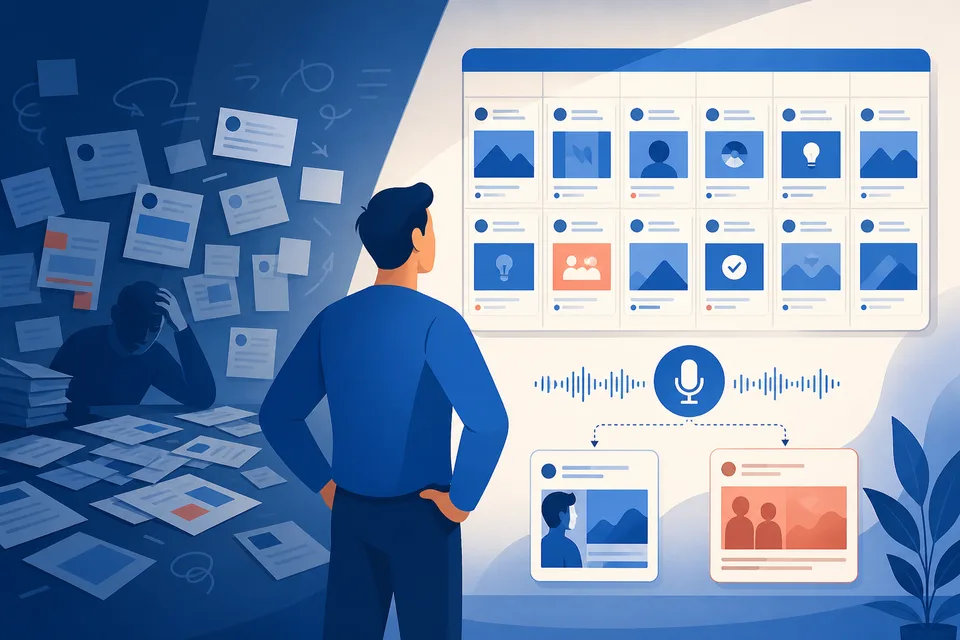
One customer story can produce two posts. Personal: what you learned as a founder selling into that problem. Company: the customer's outcome and how your team delivered it. Different hooks, different audiences, same source recording. One recording, two channels walks through the workflow.
Permissions and trust
Ask before you name customers. Many will say yes if you share a draft. When they decline, anonymize and focus on the outcome category. Never fabricate metrics - a vague honest post outperforms an inflated one that erodes trust when a prospect asks for references.
From recording to company page post
Upload the call or internal review to SparkVox, extract moments, and route the proof-point drafts to your company page in the channel selector before you approve. Edit for anonymization in your project. Post Analytics tracks which proof themes earn engagement on the company channel so the next batch gets sharper.
More company page strategy: what to post on your company page and the LinkedIn company pages topic hub.