

CompareLinkedIn
SparkVox vs Postwise vs AuthoredUp Compared
Postwise writes from a prompt. AuthoredUp lives inside LinkedIn's composer. Neither sources the idea itself. Here's how all three fit into a full LinkedIn content pipeline.
Tone presets reset every session. A compounding voice profile from your transcripts creates switching cost competitors cannot copy on day one.
 Sean Weisbrot- Founder, SparkVox
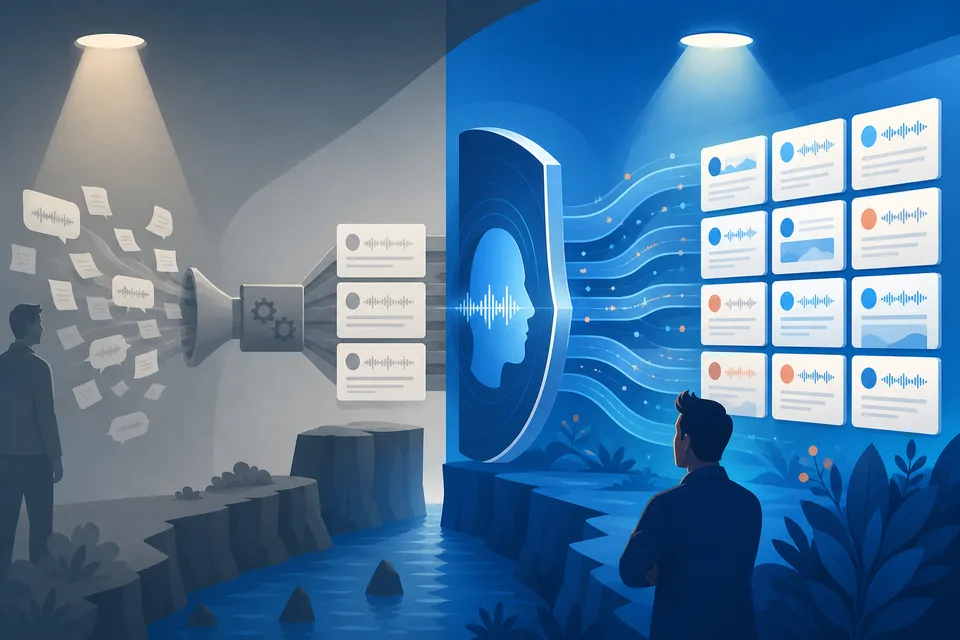
Most AI writing tools treat every user the same on day one and day one thousand. You pick a tone: formal, casual, witty. That is a dropdown menu with extra steps, not personalization. The product gap most founders are ignoring is compounding voice: a model that gets closer to how you actually think with every transcript you feed it.
Presets are easy to copy. Any competitor can add five adjectives and call it voice matching. Users switch tools because nothing accumulates. Every session starts from zero. There is no switching cost beyond habit, and habit breaks the first time output quality dips.
When we built SparkVox, the bet was different. The system profiles how you structure ideas from your transcripts. Every new recording, every approved post, every edit before publish adds signal. Output after ten transcripts reads genuinely different from output after one. Not because the model changed. Because the product knows more about you.
This is not sentiment analysis or tone detection. It is building a model of how a specific person thinks: which stories you return to, how you set up a contrast, where you put the punchline, what you leave implicit. That lives in recordings of you talking, not in a style guide you typed once.
The moat is switching cost that builds invisibly. A cheaper tool starts from zero. SparkVox starts from everything you already taught it. The question worth asking when you design or buy any AI product is not what it does on day one, but what it knows by day ninety that it did not know on day one, and why that matters to the person paying.
For how the score surfaces this in the product, see voice confidence explained. For why transcripts beat prompts architecturally, see why AI LinkedIn posts sound fake.
LinkedIn punishes generic AI patterns and rewards posts that sound like a specific person with a point of view. A compounding voice profile is how you post at volume without drifting into template land. The first drafts need more editing. By month three, you are approving faster because the system has seen how you fix hooks, shorten stories, and route posts to awareness versus authority versus conversion.
Post Analytics closes the outer loop: what your audience engages with feeds the next batch of projects. Voice profile handles how you sound. Analytics handles what topics earn reach. Together they are harder to replicate than either alone.
If you are evaluating AI content tools, ask whether personalization compounds or resets. If every new user starts from the same blank slate, you are buying a feature. If every transcript makes the next draft harder to distinguish from you, you are buying a moat.
SparkVox is built on that second model. Upload recordings you already have. Review drafts in your project. Approve what sounds like you. The product that wins is not the one with the flashiest day-one demo. It is the one that is unmistakably yours by day ninety.
Voice matching
SparkVox builds a compounding voice profile from every upload and edit. By project five, drafts sound like you on your best day without starting from a blank prompt.
Free to sign up. Card required for full access.
No charge until day 15.
Postwise writes from a prompt. AuthoredUp lives inside LinkedIn's composer. Neither sources the idea itself. Here's how all three fit into a full LinkedIn content pipeline.

Jasper and Copy.ai have both moved deeper into enterprise marketing and GTM automation. SparkVox stayed built for one person: a founder turning recordings into LinkedIn posts.

Taplio and Supergrow both start from a text prompt. SparkVox starts from a recording you already made. Here's how all three compare on features, pricing, and who each one actually fits.
Your calls and interviews are already the content. SparkVox writes the posts in your voice - upload one recording and see the drafts before you're charged.
Free to sign up. Card required for full access.
No charge until day 15.