On this page
Content repurposing is the practice of taking something you have already said, recorded, or written and reformatting it for a different context, audience, or platform. The goal is not to copy and paste. It is to extract the ideas from one format and express them in a way that works somewhere else.
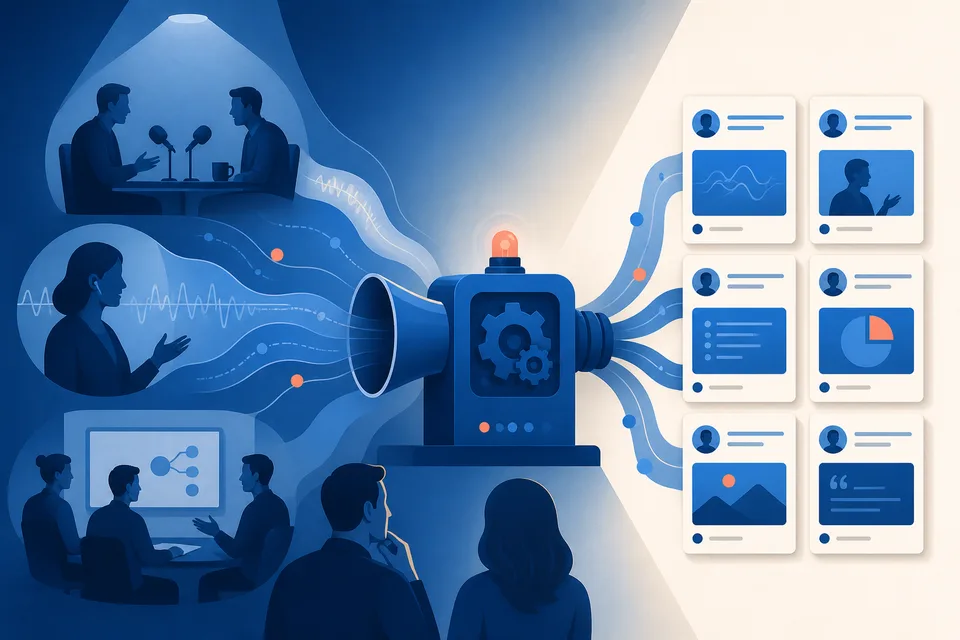
For B2B founders and consultants, this usually means taking recordings - podcast appearances, sales calls, workshops, client advisory sessions - and turning specific moments from those recordings into LinkedIn posts. Not summaries. Not recaps. Individual ideas that stand on their own.
What repurposing is not
Most definitions of content repurposing are either too abstract or describe something that does not actually work in practice. A few clarifications:
- Repurposing is not copying. Pasting a blog post into a LinkedIn text box is not repurposing - it is reformatting for a platform that does not reward that format. Real repurposing extracts ideas from one form and expresses them differently for a different context.
- Repurposing is not summarizing. A summary of your podcast appearance is not a post from your podcast appearance. Summaries compress; repurposing extracts and expands individual moments.
- Repurposing is not cross-posting. Sharing the same LinkedIn post to Twitter, Instagram, and Facebook is distribution, not repurposing. Each platform has a different audience, format, and content grammar. A LinkedIn post almost never works on Instagram without significant changes.
- Repurposing is not an excuse to skip fresh creation. A healthy content strategy includes new material. Repurposing makes the ratio of writing time to distribution significantly better, but it is not a substitute for having original things to say.
Content repurposing is often taught as a media strategy - something podcasters and YouTube creators do to build audiences across platforms. That framing is accurate but limited.
For B2B founders and consultants, the stakes are different. You are not building an audience for its own sake. You are building trust with a specific set of people: prospects, potential investors, future hires, referral partners. LinkedIn is where many of those people spend professional time. Your ability to show up there consistently with ideas worth reading has a direct effect on deal flow, hiring pipelines, and inbound referrals.
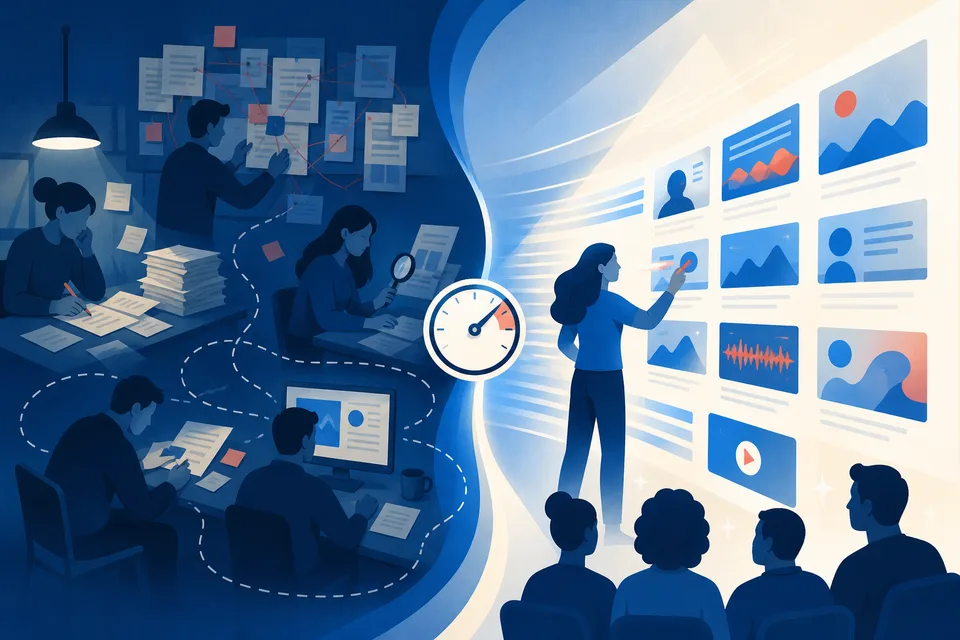
The problem is time. Founders are on back-to-back calls. Consultants are in delivery. You are not going to block three hours a week to write LinkedIn posts from scratch. Repurposing works because the content already exists - it happened on a sales call, or a podcast appearance, or a client workshop. The work is extracting and formatting it, not generating it from nothing.
Where the content actually lives
Most founders and consultants dramatically underestimate how much content they produce every week without publishing any of it. A short list:
- Sales and discovery calls. Every call where you explain your approach, push back on a prospect's assumptions, or articulate why most people get a problem wrong is a content moment. You probably have ten of these a week.
- Podcast guest appearances. One hour on someone else's show typically contains eight to twelve distinct ideas, each one a standalone LinkedIn post. See how to repurpose a podcast episode into LinkedIn posts for a detailed breakdown of this workflow.
- Client workshops and advisory sessions. You explain frameworks on these calls that you have developed over years. They are more valuable as LinkedIn posts than anything you could write from a blank page.
- Internal strategy meetings. If you are articulating company direction, market perspective, or a position on an industry trend, that is content.
- Zoom recordings. Meetings recorded via Zoom sit in your cloud library accumulating dust. Many contain exactly the material a strong LinkedIn post is made of.
Knowing that content lives in your recordings and knowing how to extract it are different things. The extraction step is where most repurposing attempts fail.
The core error is treating the source material as a unit rather than a container. A podcast episode is not "one piece of content to repurpose." It is a container holding eight to fifteen individual moments, each of which can become its own post. A sales call is not one post about the sales process. It is the explanation you gave to that prospect about why everyone solves the problem wrong, plus the short story you told about a client outcome, plus the framework you sketched on a whiteboard.
Manual extraction requires re-listening or skimming a transcript with a highlighter mindset. You're not summarizing. You're looking for moments that could stand entirely on their own if someone who had never heard the original recording read the post.
Funnel-aware repurposing: matching moments to stages
Not every post from a recording should do the same job. A recording typically contains material that serves different points in your audience's relationship with you:
- Awareness-stage content reaches people who do not know you yet. It earns shares and comments from outside your immediate network. Contrarian takes, surprising statistics, and short provocations work here.
- Authority-stage content builds trust with people who have started following you. Deep frameworks, process explanations, and lessons from real situations work here. These posts get saved and come up in searches.
- Conversion-stage content prompts action from people who already trust you. These posts make the specific problem you solve concrete, describe who you work with, and give a reason to reach out. They should be less frequent than the other two.
Repurposing without funnel awareness tends to produce imbalanced content - too many authority pieces, not enough reach-building, or too many conversion posts before you have earned enough trust with your audience for them to land.
The voice problem and why it is harder than it looks
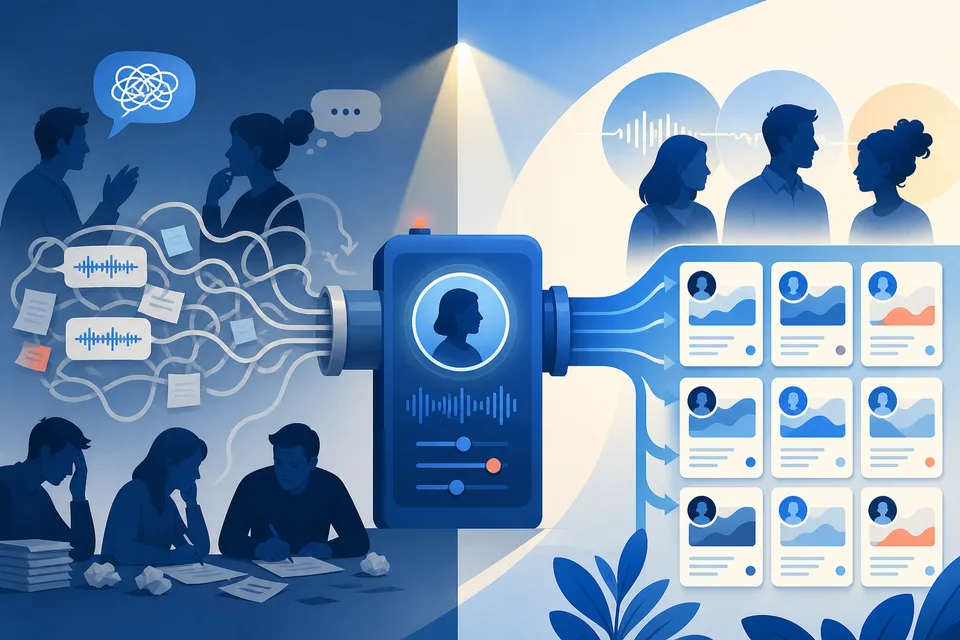
Founders and consultants often try AI-assisted repurposing and abandon it after a few projects because the output does not sound like them. This is a real problem and it has a specific cause: the AI has no model of your voice.
General-purpose AI tools take your transcript and produce something that reads like a competent but generic LinkedIn post. It is accurate to the source material, but it uses the average LinkedIn post's structure, cadence, and phrasing - not yours. Your network can tell. Buyers who follow you because they like how you think can tell immediately.
Voice-accurate repurposing requires the AI to have learned from a body of your actual output: how you open posts, what topics you return to, whether you lean on data or on story, how direct you are. That requires intentional training rather than a one-time transcript dump.
What a practical repurposing workflow looks like
For founders and consultants who want a repeatable system rather than an occasional project:
- Record consistently. If you are not already recording your calls and guest appearances, start. Fathom, Fireflies, and Zoom all offer automatic recording. You cannot repurpose what you did not capture.
- Process the recording promptly. The moment you upload a recording is the moment the insights are freshest - for you and for your audience. Content repurposed from a podcast that dropped yesterday performs better than content from a show that aired six months ago.
- Extract multiple posts per recording. A 45-minute call should yield at least five post ideas. If you are only getting one, you are compressing rather than extracting.
- Review before publishing. Every draft needs a human pass. AI extraction will occasionally misattribute a quote, flatten a nuance, or miss the edit that makes a post yours. Five minutes of review protects the voice accuracy that your audience expects.
- Track what lands. LinkedIn analytics tell you which posts earned profile views, which ones got reshared, and which days drive traffic. Use that feedback to understand what your audience actually wants to read more of.
How SparkVox fits into this workflow
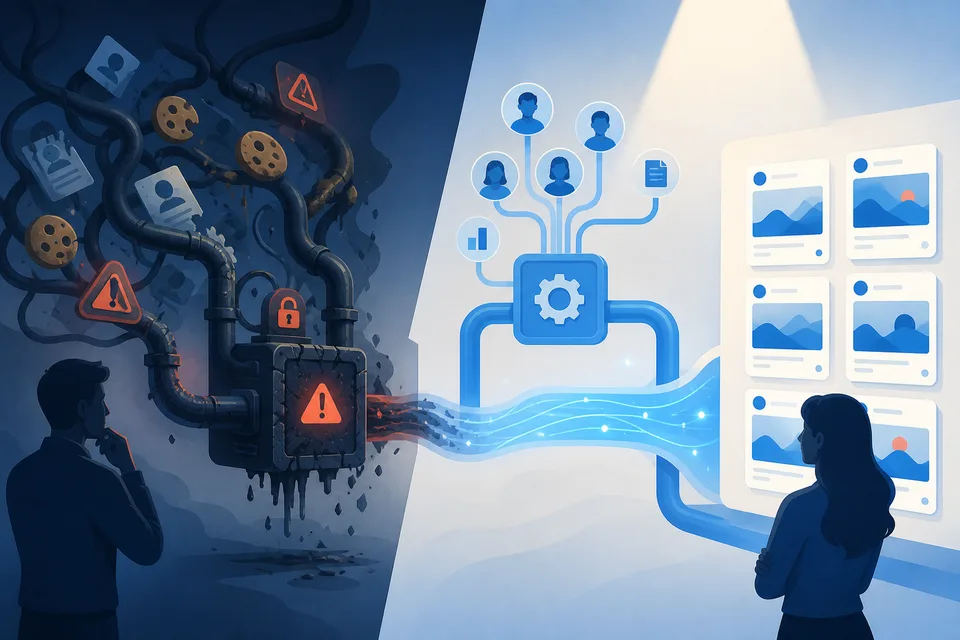
SparkVox is a recording-first LinkedIn repurposing tool. Upload a recording from a call, a podcast appearance, a workshop, or a Zoom session - or paste a YouTube link, or drop in a transcript file. Sparky reads the full source, extracts moments worth sharing, and drafts LinkedIn posts grouped by funnel stage. Review and approve takes about five to ten minutes per project. Edits you make before approving teach Sparky your style, so the voice gets more accurate with every project you run.
For founders with active call schedules, a single week of recordings is enough to build a month of LinkedIn posts. For expert guests and consultants who appear on podcasts regularly, one appearance becomes two weeks of content.
The rest of the content strategy - deciding which posts to prioritize, which ideas to hold back, which audiences to target - stays with you. Repurposing handles the gap between the ideas you already have and the posts that reach the people who need to read them.