
Social SellingSales
Why Social Selling Programs Die in Week Three
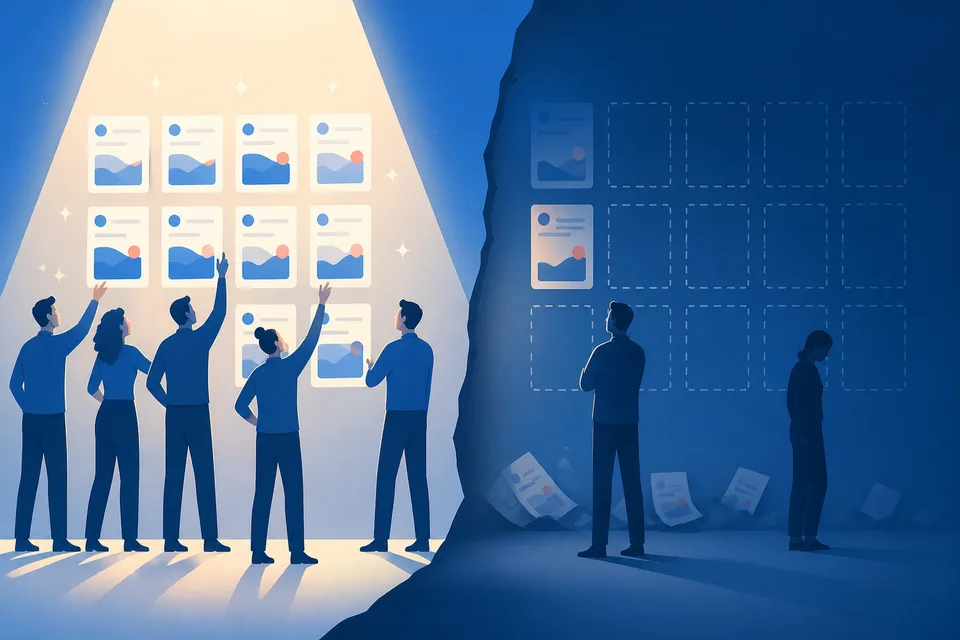
Week one looks great. By week three, only the reps who already liked writing are still posting. Here's why capacity, not buy-in, is what actually kills social selling programs.
Social selling is not posting sales pitches or automating connection requests. It's building trust before the pitch - and most company programs skip the part that actually works.
 Sean Weisbrot- Founder, SparkVox

Social selling gets defined two very different ways. LinkedIn's own materials describe it as "using your professional brand to fill your pipeline with the right people." Most sales teams hear that and translate it into: post something, connect with everyone, comment on prospects' updates, repeat. That translation is why most programs fail. Social selling is not a volume tactic bolted onto outbound. It is trust-building that happens before a prospect will take a cold call at all.
Social selling is the practice of using your LinkedIn presence - posts, comments, profile, connections - to build enough credibility and familiarity with a buyer that outreach lands differently. A cold message from a stranger gets ignored. A message from someone whose posts a prospect has already seen twice gets opened. The mechanism is not persuasion inside a single message. It is repeated, low-pressure visibility that removes the "who is this" friction before you ever ask for time.
That means the content has to be real. A prospect can tell the difference between a post that came from an actual conversation a rep had this week and a template pulled from a "50 LinkedIn post ideas for sales reps" listicle. The second kind erodes trust faster than posting nothing.
The pattern repeats across almost every rollout: leadership announces the initiative, reps get a LinkedIn Learning course and a content calendar template, and there is a burst of activity in week one. By week three, two reps are still posting - usually the two who already enjoyed writing - and the program quietly becomes a line item nobody reports on.
The reason is not lack of buy-in. It is that writing is a second job. A rep who is already carrying a quota does not have twenty minutes a day to research a topic, draft a post, and edit it into something that does not read like everyone else's LinkedIn feed. Ask them to do it consistently and the ask loses to whatever is actually on their calendar.
The reps whose social selling content works are not better writers. They are pulling from a source most reps ignore: the discovery calls, demos, and customer conversations they already have every week. Every one of those calls contains an objection the rep handled well, a framework they explained clearly, or an outcome a customer described in their own words. That material is more credible than an invented "thought leadership" post, because it actually happened.
See how to turn sales calls into LinkedIn content for the mechanics of extracting posts from a recording without exposing deal-specific or confidential details.
A sustainable social selling cadence balances three types of posts, not five of the same kind. See the LinkedIn content funnel for the full breakdown - in short: Awareness posts reach people who do not know the rep yet, Authority posts build category trust with people who do, and Conversion posts prompt the reply that turns a warm connection into a booked call.
Same rep, same week, same underlying deal. Here is the difference between a templated social selling post and one pulled from an actual call.
Templated: "Excited to share that objections are actually opportunities in disguise! 🚀 The best sales reps don't fear pushback, they lean into it. What's the toughest objection you've ever overcome? #sales #socialselling"
From a real call: "A prospect told me last week our price was '$8k more than we budgeted for' - and thanked us for it. Here's why: their last vendor quoted low, then added implementation, training, and support as separate line items until the real number was higher than ours. We just quote the real number up front. Being '$8k more' than a lowball is not the same as being $8k more than the true cost."
The first post could have been written by any rep at any company about any product. The second could only have been written by someone who was on that specific call. A prospect scrolling past can tell the difference in about two seconds - and the second kind is what earns a reply, not just a like.
Social selling works on a repetition pattern, not a single high-impact moment. A prospect who has seen a rep's name in their feed two or three times before a connection request arrives treats that request differently than one from a total stranger - the friction of "who is this" is already gone. The sequence that tends to work: the prospect sees a post (no action taken), sees a second post a week or two later (starts to recognize the name), then receives a connection request or message that references something specific, not a generic pitch. Skip the first two steps and the message reads exactly like every other cold outreach in their inbox - because functionally, it is.
Impressions are the easiest number to point to and the least useful one. Better signals: profile views from people at accounts on your target list, reply rates on outreach sent to someone who has already engaged with a post, and inbound messages that reference something the rep posted. None of these show up in week one - social selling is closer to compounding interest than a campaign with a launch date and an end date. See why the right audience matters more than raw impressions for the fuller argument against optimizing for reach alone.
This is the single most common pushback to any social selling initiative, and it is a reasonable one - most reps did not take the job to write LinkedIn posts. The answer is not a writing workshop. It is removing the writing step entirely: start from a transcript of something the rep already said out loud, on a call, to a real person, and shape that into a post rather than asking anyone to generate an idea from nothing. A rep who can talk through an objection on a call already has the content. They just need it moved from a transcript to a draft.
If you own the social selling initiative rather than carry a quota yourself, the failure mode looks different: you cannot report on a program with no volume. Sustainable adoption and per-rep analytics matter more than any individual post. See social selling for growth marketers for how to structure a program reps actually keep running.
SparkVox turns a rep's discovery call, demo, or customer conversation into LinkedIn post drafts in that rep's own voice - review takes about five minutes, and nothing publishes without approval. See SparkVox for social selling for the full workflow, or read the best social selling tools in 2026 to see how it compares to Sales Navigator, LinkedIn content suites, and generic AI writers.
SparkVox
Upload a call, podcast, or interview. SparkVox extracts moments and drafts up to 15 LinkedIn posts in your voice. You review every draft before anything publishes.
Free to sign up. Card required for full access.
No charge until day 15.
Week one looks great. By week three, only the reps who already liked writing are still posting. Here's why capacity, not buy-in, is what actually kills social selling programs.

The best rep on a team is often the least excited about a social selling mandate. Here's why sales skill and writing comfort are different muscles, and what that means for program design.
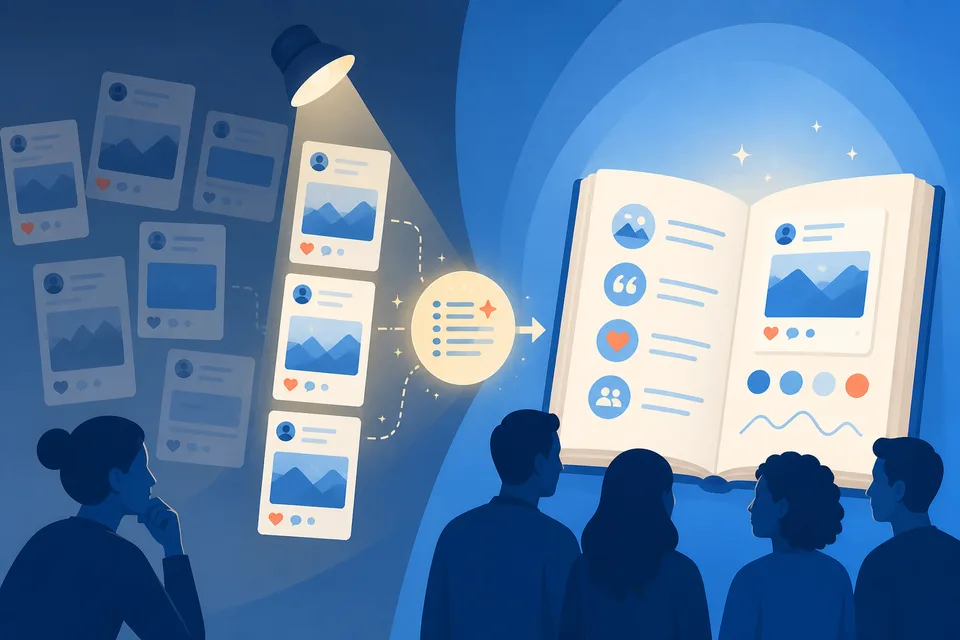
Some reps' posts consistently outperform others - usually because of what they're drawing from, not writing talent. Here's how to turn that pattern into guidance the rest of the team can use.
Your calls and interviews are already the content. SparkVox writes the posts in your voice - upload one recording and see the drafts before you're charged.
Free to sign up. Card required for full access.
No charge until day 15.