


AI ToolsWriting
AI-Generated vs AI-Assisted LinkedIn Content
One produces content that sounds like everyone else. The other produces content that sounds like you, faster - and why AI is material to sculpt, not a finished product to accept.
Your company page is where prospects and candidates decide if the business behind your name is real. Here is what belongs on the company page, what stays on your personal profile, and how to run both without doubling your workload.

Founders are told to build a personal brand. They are rarely told what to do with the company page sitting next to it - empty, or worse, a stream of product screenshots and hiring links that nobody engages with. That is a missed asset. Your company page is where prospects, candidates, and partners go to see whether the organization behind your name is real, active, and worth trusting.
The mistake is treating the company page as a second personal profile, or ignoring it entirely. The fix is a clear split: people follow founders for perspective; they follow company pages for proof that the business is building something worth watching. Both need content. They need different content.
Personal posts build trust in you. Company posts build trust in the entity that signs contracts, ships product, and hires people. When a prospect clicks your name, they often check your company page next. If the last update was six months ago, the subtext is that the business might be quiet too.
Company pages also reach a different slice of LinkedIn. Employees, alumni, and people who engage with your brand but would not follow a founder's hot take on management all show up here. Hiring gets easier when candidates see culture and craft, not just a careers link. Partnerships get warmer when your page documents how you work, not only what you sell.
This is complementary to keeping personal and company brands separate. Separation is not neglect. It is giving each channel a job.
Customer and product proof. Case studies, before-and-after outcomes, implementation stories, and specific results (with permission). Not feature dumps - stories about problems solved.
Team and craft. How you build, how you hire, how you run meetings, what you learned shipping something hard. Internal training and culture sessions are often goldmines for employer-brand posts stripped of confidential detail.
Milestones with context. Funding, launches, and awards work when you explain what changed for customers, not when you post a logo and "We're thrilled to announce." One paragraph of honest context beats a press-release tone.
Educational content at the category level. Teach something your market cares about without making every post a product pitch. The company page is allowed to be useful on its own. That usefulness is what earns follows from people who are not ready to buy yet.
Employee and partner spotlights. Celebrate people who made the outcome possible. Tag them when it is genuine. It extends reach into their networks and reinforces that real humans work here.
Opinion, founder journey, contrarian takes, lessons from failure, and narrative that only you can own. If the post would sound odd coming from a logo, it belongs on your personal profile. If removing your name would make the post meaningless, it is personal content.
Your personal posts can mention the company. Your company page should not sound like one person's diary. Readers follow founders for voice; they follow companies for evidence.
A workable split for most small teams: personal profile two to three times a week, company page one to two times a week. Quality beats symmetry. One strong company post that shows customer impact beats five thin updates.
Repurpose the same source material differently. A founder call might become a personal post about a lesson learned and a company post about how that lesson changed your product roadmap or customer onboarding. Same recording, two angles, two audiences. That is more efficient than inventing separate ideas from scratch.
Treat the company page profile with the same seriousness as your personal one. Logo and banner should match how you show up in market. About section: who you serve, what problem you solve, proof points, careers link. Featured: best case study, flagship content, or hiring campaign. Services and specialties filled in completely. Incomplete company pages read like incomplete businesses.
The bottleneck is rarely strategy. It is volume. Founders who publish to both channels use a pipeline: one recording or internal session becomes multiple drafts, reviewed once, then routed to the right identity before publish.
SparkVox supports per-post channel selection - personal profile or any company page you administer - so you can approve a founder-angle draft for yourself and a proof-point draft for the company page from the same project. Post Analytics includes a channel filter so you can see which identity is moving profile views and engagement. See features for direct publishing and company page management.
Company page content is not a vanity extra. It is how strangers decide whether your business is alive. Give it proof, people, and consistency - and keep your personal profile for the perspective only you can offer.
Go deeper: LinkedIn company pages topic hub, company page profile checklist, what performs where, and one recording, two channels, weekly content calendar, and SparkVox for company pages.
SparkVox
Upload a call, podcast, or interview. SparkVox extracts moments and drafts up to 15 LinkedIn posts in your voice. You review every draft before anything publishes.
Start 14-day Pro trial →Free to sign up. Card required for full access.
No charge until day 15.
One produces content that sounds like everyone else. The other produces content that sounds like you, faster - and why AI is material to sculpt, not a finished product to accept.
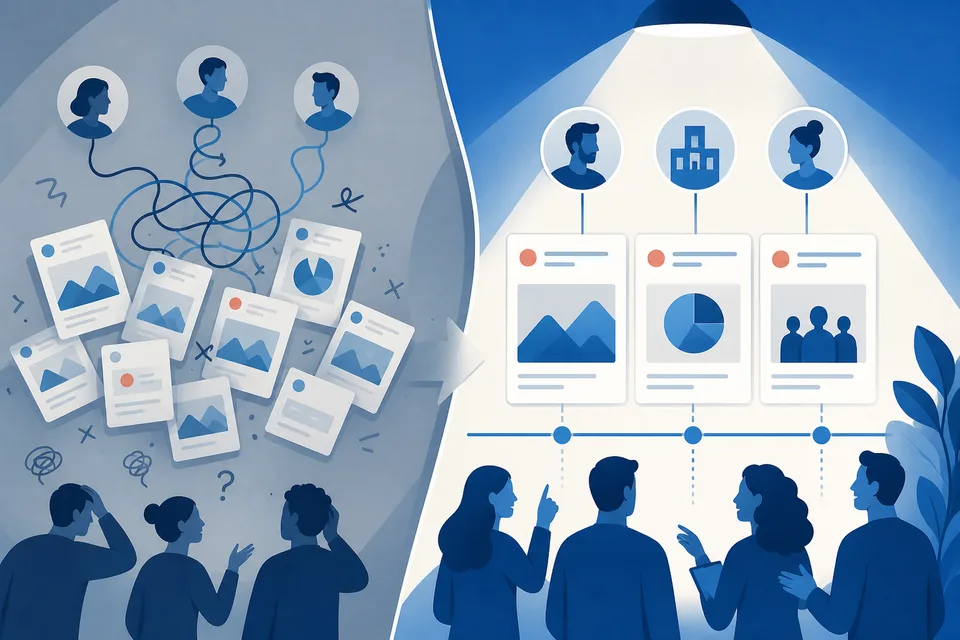
Stop duplicate posts and dead company pages. What founders post personally, what belongs on the company page, and who creates vs approves - a role split for startup teams.
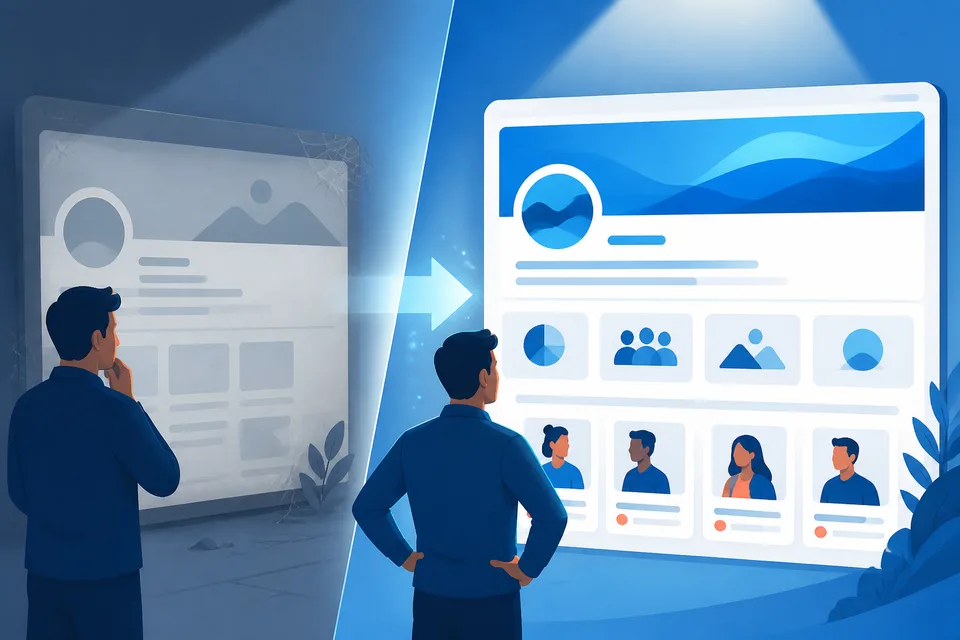
Logo, banner, About, Services, Featured, and Careers - a practical company page profile checklist so prospects and candidates see an active business, not a dormant logo.
Your calls and interviews are already the content. SparkVox writes the posts in your voice - upload one recording and see the drafts before you're charged.
Start 14-day Pro trial →Free to sign up. Card required for full access. No charge until day 15.