On this page
Most people spend every day trying to add LinkedIn followers. One afternoon, I removed 200 of mine on purpose. My follower count went down, one of my channels showed a dip in the analytics, and it was one of the best things I did for my reach all month.
This sounds backwards, so let me explain the mechanic, because once you understand how the algorithm actually decides who sees your posts, cutting the wrong followers stops feeling reckless and starts feeling obvious.
Followers are not the asset. The right followers are.
The instinct to grow your follower number comes from treating followers as a scoreboard. But a follower is not a trophy. A follower is a signal you are sending to the algorithm about who your content is for. When a large chunk of your audience has nothing to do with what you post about, you are sending a confused signal, and the algorithm acts on it.
I had picked up a couple hundred followers who were simply not my ideal customer profile. They followed for reasons that had nothing to do with the content I create now. On paper they made my audience look bigger. In practice they were quietly hurting me.
How irrelevant followers suppress your reach
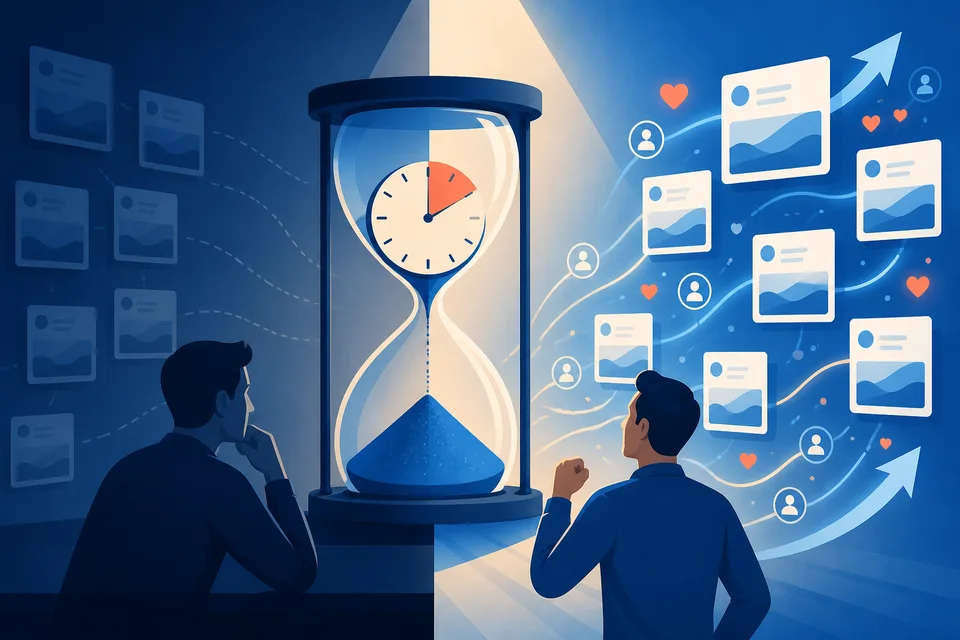
LinkedIn does not show your post to everyone who follows you at once. It shows it to a small slice first, watches how that slice reacts, and decides whether to push it further based on early engagement. That first slice is heavily weighted toward your existing network and followers.
Now imagine a meaningful part of that first slice is people who do not care about your topic. They scroll past. They do not comment, they do not react, they do not dwell. The algorithm reads that flat early response as "this post is not resonating," and it stops promoting it, including to the people who would have loved it.
In other words, the wrong followers do not just fail to help. They actively lower the early engagement rate that decides whether your post lives or dies. If you want the deeper version of that mechanic, see the three things that silently suppress your posts and the 90-minute window that decides a post's fate.
Pruning is quality control for your audience
Removing a follower on LinkedIn is quiet. They are not notified, and it is not a block. It simply means the next time you post, the algorithm is not testing your content on someone who was never going to engage with it. You are cleaning the sample.
The goal is not a smaller audience for its own sake. The goal is a more coherent one, so that when LinkedIn runs its early test, it runs it on people who actually want what you publish. Better early engagement means broader distribution, which means the right new strangers see you. A tighter audience often reaches more of the right people than a bloated one.
How to prune without overthinking it
- Start with obvious mismatches. Followers with no connection to your industry, spam-adjacent accounts, and people who followed during an unrelated phase of your career.
- Do it in small batches. You are not trying to shrink your audience by half. You are trimming the clearly irrelevant tail.
- Watch who is actually reading you. If your analytics show your viewers are mostly the wrong titles, that is the same problem showing up on the demand side.
This pairs with a broader principle: measure the quality of your reach, not just the volume. A post seen by 200 of the right founders is worth more than a post seen by 25,000 random people, which is exactly why impressions on their own are a vanity metric.
The compounding payoff
Once your audience is coherent, everything downstream gets easier. Your posts get a cleaner early test, your distribution improves, and the strangers who discover you are more likely to be the exact people you want, because the algorithm is now learning from a signal that actually represents your customer. That is the whole game: get the right people to see you consistently, and stop optimizing for a number that does not pay you.
If you want your content to attract the right audience in the first place, it has to sound like you and speak to them, which is where a recording-based voice profile and a clear funnel-based content strategy do the heavy lifting.