
AI ToolsContent Strategy
Your Recording Is Not 'Past Output'
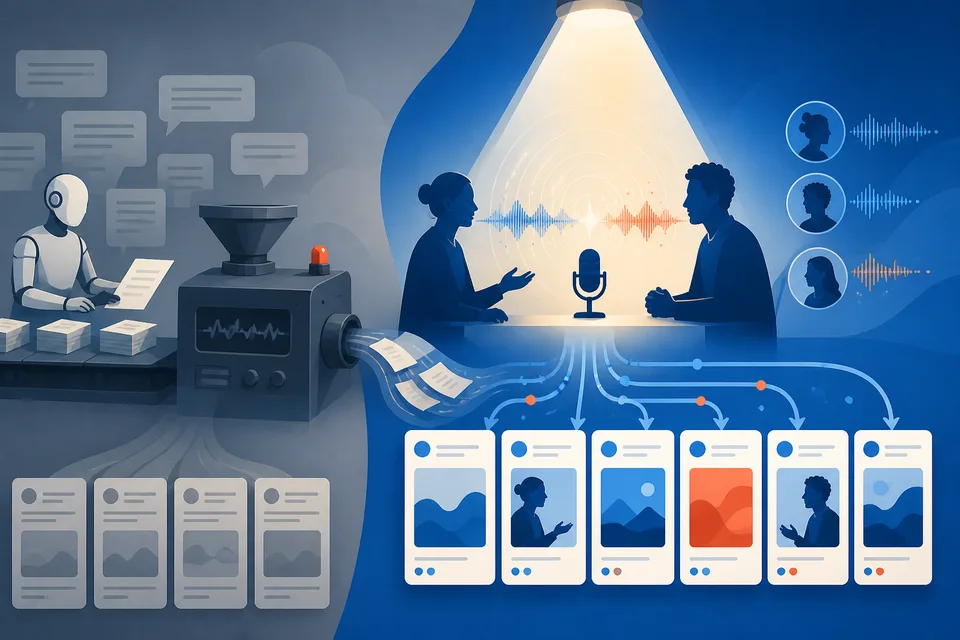
A newer wave of LinkedIn tools argues that recording-based content just recycles your past output. Here's why a real conversation is harder to fake than a scripted AI interview.
AI-written LinkedIn posts have specific, spottable tells - and they come from the input, not the model. Here's why content sourced from real recordings avoids them structurally.
 Sean Weisbrot- Founder, SparkVox
LinkedIn readers have gotten good at spotting AI-written posts, and not because of some mystical sixth sense. The patterns are specific and repeatable: hedge phrases instead of commitments, transitions that could belong to any topic, a moral lesson bolted onto the end, and a conspicuous absence of anything a person could not have made up. Once you notice the pattern, you cannot unsee it.
The interesting question is not "how do I avoid sounding like AI." It is "why does AI writing sound like that in the first place." The answer explains why the input a tool starts from matters more than the model doing the writing.
Strip away the mystique and the tells are mechanical:
None of these tells are really about the model. They are about what the model had to work with. A model asked to write "a LinkedIn post about overcoming a sales objection" has nothing to reach for except the average of every sales post it has ever seen. It fills the gap with the only material available: cliché.
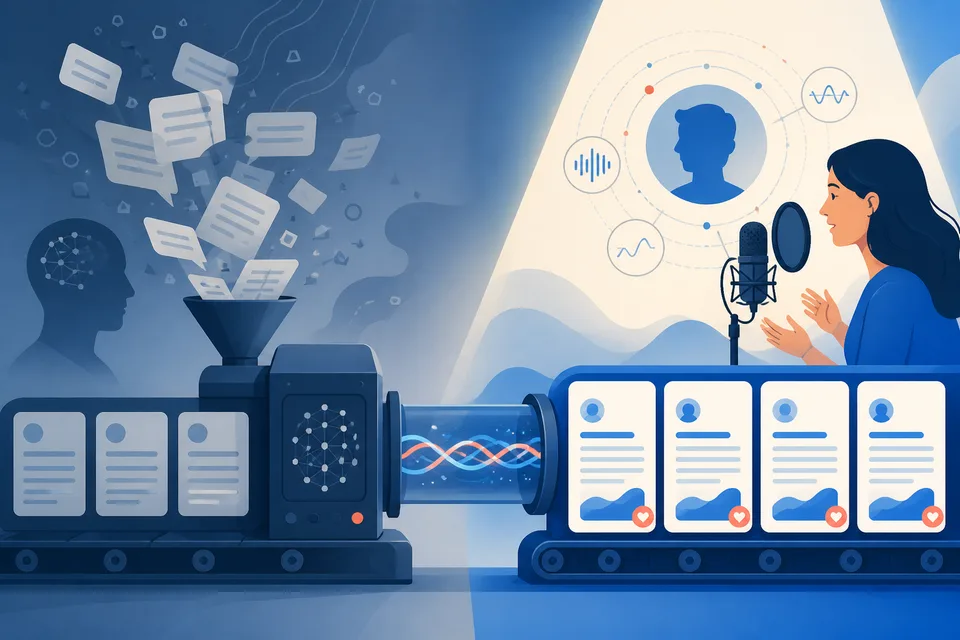
Now compare that to a model working from an actual transcript of a sales call. The prospect is named, or at least their role and company are. The objection is the real one that came up, in the real words the prospect used. The number that changed their mind is a specific number, not a rounded-off placeholder. The model is not inventing detail to fill space - it is selecting from detail that already exists.
This is the structural reason recording-first content tends to avoid the generic tells. It is not that the underlying model is smarter or better instructed. It is that specificity was never optional - the source material forced it in from the start. You cannot write a vague version of a story that already has a name, a number, and a direct quote attached to it without actively removing the details that make it good.
A tool that starts from a topic or a headline is, by construction, starting from an abstraction. "Write about leadership lessons from a hard quarter" is a category, not an event. The model has to invent the specifics, and invented specifics regress toward the most statistically likely version of a leadership-lessons post - which is the exact homogenized tone everyone recognizes and scrolls past.
This is also why heavier prompting only helps so much. You can instruct a model to "be more specific" and "avoid clichés," and it will comply in the way models comply with vague instructions - by producing a different flavor of generic, not a genuinely specific story it does not actually have.
If the goal is content that does not read as AI-written, the highest-leverage move is not a better prompt or a longer style guide. It is starting from source material that already contains the specific, named, quotable detail a generic prompt can never manufacture. That is what a real recording gives you and a topic prompt does not.
SparkVox extracts posts from your actual calls, interviews, and podcasts for exactly this reason - the specificity is already in the transcript, not something Sparky has to invent. Read more on the difference between AI-generated and AI-assisted content or why the loudest AI takes on LinkedIn miss the point.
SparkVox
Upload a call, podcast, or interview. SparkVox extracts moments and drafts up to 15 LinkedIn posts in your voice. You review every draft before anything publishes.
Free to sign up. Card required for full access.
No charge until day 15.
A newer wave of LinkedIn tools argues that recording-based content just recycles your past output. Here's why a real conversation is harder to fake than a scripted AI interview.

Is it cheating to publish AI-assisted LinkedIn posts? The honest answer depends entirely on where the ideas came from - and ghostwriting has answered this question for decades.

Advice written cold for LinkedIn often comes out softer than it did in the actual client conversation. Here's why the room and the feed produce different versions, and what that costs.
Your calls and interviews are already the content. SparkVox writes the posts in your voice - upload one recording and see the drafts before you're charged.
Free to sign up. Card required for full access.
No charge until day 15.