On this page
Short answer: to turn Zoom recordings into LinkedIn posts, import the cloud recording or transcript into SparkVox, review up to 15 theme-grouped drafts in your voice, and publish to your personal profile or company page. Connect Zoom under Settings → Integrations to pick calls from New Project → Meetings without downloading files.
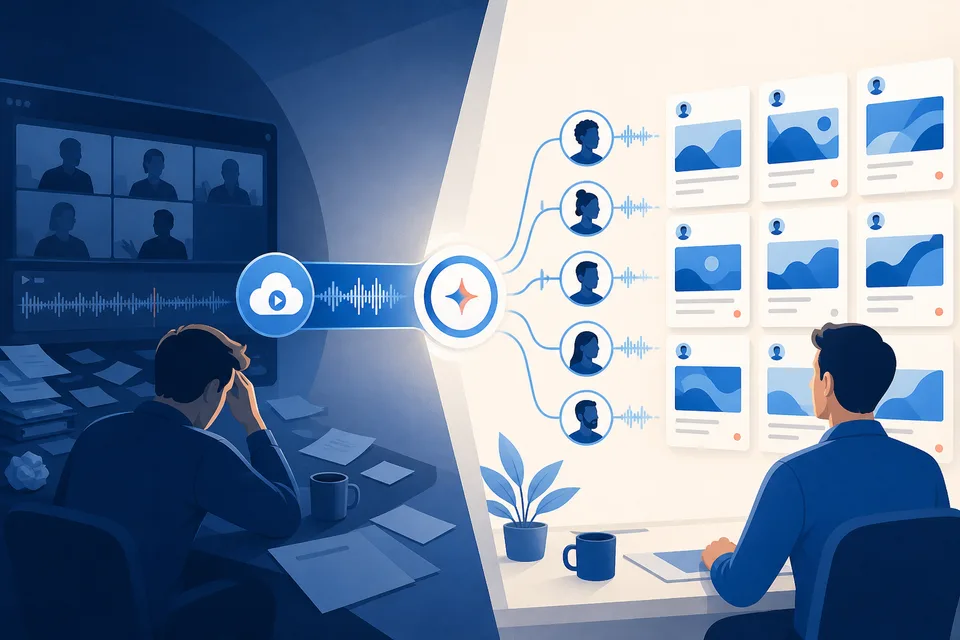
If you record calls on Zoom, you have a library of content you are not publishing. Most professionals with Zoom recording enabled never go back to watch them - they pile up in the cloud and stay there. This post is about extracting the LinkedIn content that is sitting in that library.
How many LinkedIn posts can you get from one Zoom recording?
One 45-minute Zoom call usually contains six to ten publishable LinkedIn moments when you extract ideas instead of writing a single recap post. SparkVox drafts up to 15 posts per project - grouped by theme so you can approve a week of content from one recording.
Sales calls, advisory sessions, workshops, and podcast interviews recorded on Zoom tend to produce the most posts because you were articulate under pressure and explained frameworks in plain language.
What is hiding in your Zoom library
Zoom recordings accumulate fast. Over a few months of calls, a typical founder or consultant has dozens of hours of recordings. In those recordings:
- Sales calls where you explained your approach in ways a prospect found compelling
- Advisory sessions where you worked through a client's problem and named a framework
- Team discussions where you articulated a position on a market or product question
- Webinars and workshops where you taught something to an audience
- Investor or board meetings where you sharpened your narrative under pressure
Each of these contains moments that work as LinkedIn posts. The challenge is that they are buried in unedited video, and nobody has time to re-watch 45 minutes to find the three good ideas inside.
Which Zoom calls make the best LinkedIn content
Not all Zoom calls are worth processing. Some clear winners:
- Sales and discovery calls where you explain why the problem is usually being solved wrong, tell a client story, or outline your approach. These calls contain your best articulation of your value under conditions where you are being tested by a skeptical audience.
- Podcast and video interviews where you appeared as a guest. Even if the interview was recorded on Zoom, the content quality is typically high - you were prepared, you were articulate, and the host asked questions that drew out your best thinking.
- Client workshops and training sessions where you teach a framework to a group. The best posts from these are process explanations that stand on their own without any setup about the workshop context.
- Keynotes and conference presentations often recorded as Zoom webinars. If you prepared a talk, it contains structured arguments that transfer well to LinkedIn.
Calls that usually do not produce good content: quick status updates, scheduling logistics, technical support calls, and any call where most of the conversation is about things specific to one client relationship that you cannot generalize.
Step-by-step: Zoom transcript to LinkedIn post
Whether you use SparkVox or a manual workflow, the underlying steps are the same:
- Get the transcript. Enable Zoom cloud recording with transcripts, or export the MP4 and run it through a transcription tool.
- Find moments, not topics. A moment is one insight that works as a standalone LinkedIn post. Skip logistics and client-specific details you cannot generalize.
- Draft one post per moment. Write for the feed: strong first line, short paragraphs, clear ending.
- Review before publishing. Strip names, deal terms, and anything that should stay private - even when the underlying idea is public.
If you want to extract LinkedIn content from Zoom recordings manually:
- Get a transcript. Zoom generates transcripts automatically if you have cloud recording enabled with the transcript add-on. If not, export the video and run it through Otter or Descript.
- Read the transcript looking for moments, not topics. A moment is a specific thing you said that would work as a LinkedIn post if you never mentioned it came from a call. A topic is a general subject area. You are looking for moments.
- Pull each moment into its own document. Give it a working title. Write the post around the insight, not around the call.
- Edit for LinkedIn format. First line must work before "see more." Short paragraphs. A clear ending - not a soft fade.
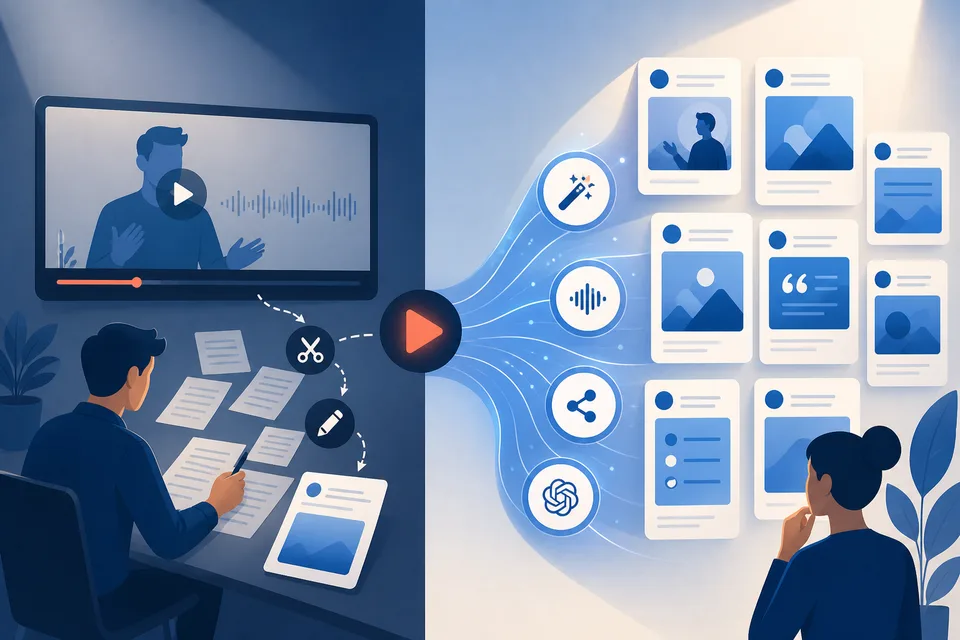
This works. It is also time-consuming enough that most people do it once or twice and then stop. The bottleneck is not skill - it is the hours required per recording.
Why this breaks down at scale
For a founder with ten Zoom calls a week, the manual process requires more time than it saves. Each 45-minute call takes 20-30 minutes to transcript-skim and post-extract manually. Five calls a week is two hours of extraction work before you write a single post.
The other problem is consistency. The manual process depends on you being in the right headspace to read transcripts and generate post ideas. That is not guaranteed. Some weeks it happens. Most weeks it does not.
Content strategies that require consistent creative work at the end of a long week do not scale for founders and consultants. The capture-first model - record the call, process the recording, review drafts - removes the creative work from the equation and replaces it with a review step that takes five to ten minutes.
How SparkVox imports and processes Zoom recordings
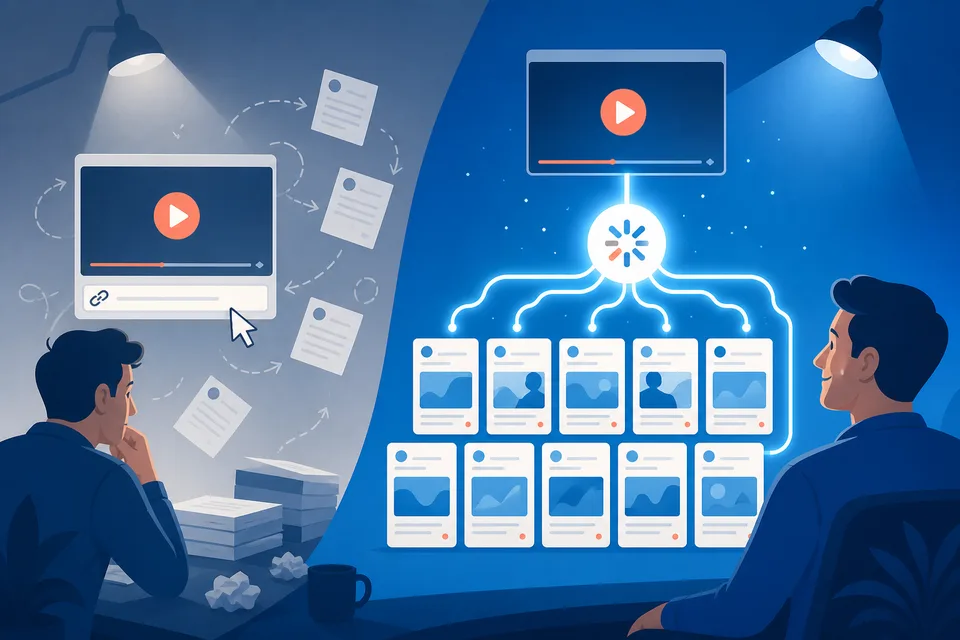
SparkVox connects directly to Zoom. Once connected under Settings → Integrations, your recent Zoom recordings appear in the Meetings tab when you create a new project. Select the call, choose a source kind and perspective, and SparkVox imports server-side without requiring you to download and reupload the file. See the SparkVox + Zoom integration page for the full workflow.
Sparky reads the full transcript, extracts moments worth sharing as LinkedIn posts, and groups drafts by funnel stage. Review takes five to ten minutes. Approve the posts that sound like you, skip anything that references sensitive specifics, and publish directly to LinkedIn from the app.
You can also upload a Zoom recording manually - download the MP4 or the transcript from your Zoom cloud and upload it directly. If you have the Zoom transcript file (a .vtt file), you can convert it to .txt and upload that instead of the video to skip reprocessing.
A note on confidential call content
The obvious concern with processing sales and client calls is confidentiality. Two things worth knowing:
First, SparkVox does not publish automatically. Every draft lives in your project for review. You read each one and decide whether it reveals anything that should stay private before approving. Anything referencing a specific client name, deal term, or sensitive detail can be edited or skipped.
Second, the posts that work best from these calls are usually the ones that generalize. The insight from a specific client conversation - the framework you explained, the objection you answered, the mistake you helped them avoid - works as a LinkedIn post precisely because you strip the context and keep the idea. That is not only good LinkedIn practice, it is how you protect confidentiality while still publishing.
Start with what is already recorded
The fastest way to build a LinkedIn content habit is to start from content you have already created. Your Zoom library is a ready source. Pick one call from the last two weeks where you said something worth sharing, process it, and see what comes out.
For more on extracting content from recordings, see what is content repurposing and how to repurpose a podcast episode into LinkedIn posts. For the founder workflow specifically, see the founders page. Comparing tools? Read SparkVox vs ChatGPT for LinkedIn.