

AgenciesRepurposing
How to Build a Client Voice Library Without a Full-Time Writer
Keeping ten or fifteen client voices straight doesn't require hiring a writer per account. Here's how a per-client voice library compounds without new headcount.
A new client mid-cycle shouldn't slow down the rest of your roster. Here's the actual five-step setup, and why setup speed and voice-profile maturity are two different timelines.
 Sean Weisbrot- Founder, SparkVox
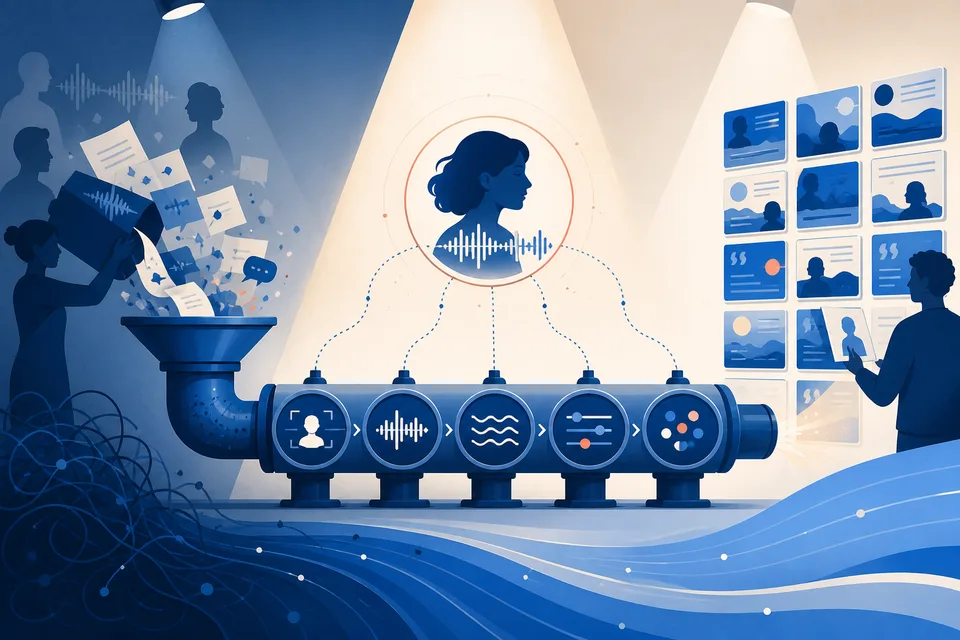
A new client mid-cycle shouldn't mean a multi-day setup slowing down the rest of your roster. The actual setup work is short - most of the perceived friction is uncertainty about what's required, not the work itself.
The account, brief, and folder setup is genuinely fast - the thirty-minute estimate covers all of it comfortably for someone who's done it once before. What isn't instant is the voice profile itself; the first upload's drafts will need real editing, same as any new client relationship. Setup speed and voice-profile maturity are two different timelines - get the setup out of the way fast, and let the profile compound naturally from there.
The five-step checklist above covers the mechanics, but step two - the brief - is where quality varies most. A thin brief ("marketing consultant, works with B2B SaaS") gives the profile little to work with beyond generic positioning. A useful brief names specific things: the client's actual point of view on their space, a phrase or framing they use repeatedly, what they'd never say even if it's technically on-topic. Five extra minutes writing a sharper brief tends to pay back across every draft that account produces afterward.
A client coming off a prior agency relationship sometimes has an existing LinkedIn history written by someone else. That prior content doesn't feed the new voice profile automatically - the profile builds forward from recordings processed under the new account, the same way it would for a brand-new client. Setting that expectation with the client upfront avoids a false assumption that the switch will feel seamless from post one; the transition follows the normal maturity curve, just like onboarding a client with no prior LinkedIn presence at all.
See what that compounding curve looks like over the following weeks in what changes in an agency's first 30 days on SparkVox, or start the setup on SparkVox for agencies.
SparkVox
Upload a call, podcast, or interview. SparkVox extracts moments and drafts up to 15 LinkedIn posts in your voice. You review every draft before anything publishes.
Free to sign up. Card required for full access.
No charge until day 15.
Keeping ten or fifteen client voices straight doesn't require hiring a writer per account. Here's how a per-client voice library compounds without new headcount.

The bottleneck in agency LinkedIn work isn't creative capacity, it's the round trip from what a client said to a post that sounds like them. Here's how per-author voice profiles collapse that round trip.

Clients and teammates approve LinkedIn drafts from a no-login link - LinkedIn preview, passage comments, suggested edits, and Approve or Request changes - without a SparkVox seat.
Your calls and interviews are already the content. SparkVox writes the posts in your voice - upload one recording and see the drafts before you're charged.
Free to sign up. Card required for full access.
No charge until day 15.