A PR firm with a growing client roster eventually hits the same wall: keeping ten or fifteen distinct client voices straight, consistently, without hiring a dedicated writer for every account. The instinct is to hire more - the actual fix is building a voice library that compounds without new headcount.
What a voice library actually is
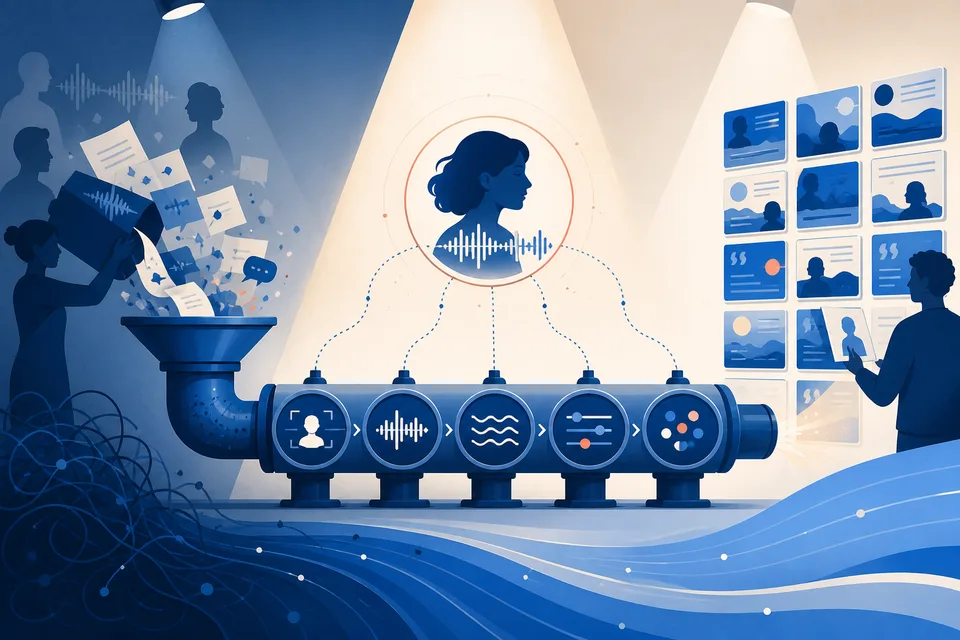
Not a style guide anyone wrote down - a per-client account that accumulates real examples of how that client phrases things, sourced from every placement processed for them. Each account's profile is fully isolated, so client three's phrasing never bleeds into client eleven's, and it grows automatically with every recording processed and every edit approved.
Why this scales better than a writer roster
A writer assigned to a client has to relearn that client's voice from scratch if they leave the agency, or split attention across too many accounts to stay sharp on any one. A voice profile has no such limit - it keeps compounding regardless of which account manager is reviewing drafts this month, and it doesn't require dedicating a person to a client to maintain quality.
Load each client's Sparky Brief once - background, audience, positioning - and every future placement drafts with that context already in place, so a new account manager picking up a client mid-relationship inherits a working voice profile instead of starting over. Add a positioning claim per client when you want a single argumentative line to steer moment pick across placements.
What account manager turnover looks like with and without this
Without a voice library: an account manager leaves, and whoever inherits their five clients starts from the same blank slate the previous person did on day one - re-learning each client's tone from old posts and guesswork, with a visible dip in draft quality until they catch up. Every departure resets progress for every client that person touched.
With a voice library, the profile lives with the client's account, not with a person. A new account manager picking up those same five clients inherits five voice profiles that already know each client's phrasing, argument structure, and level of directness - the transition is a handoff of review responsibility, not a rebuild of institutional knowledge. That's a meaningful difference for any agency where account assignments shift as the team grows or people leave.
Where this compounds fastest
The clients worth prioritizing for this are the ones with the highest placement frequency - a client doing one guest spot a quarter won't build much of a profile either way, but a client on a monthly podcast circuit accumulates real voice data fast, and the review-time savings show up correspondingly sooner on that account than on a lower-frequency one.
See how this fits the full multi-client workflow on SparkVox for PR firms, and how speaker selection keeps each client's voice isolated to begin with in how PR firms turn a placement into two weeks of LinkedIn content.