On this page
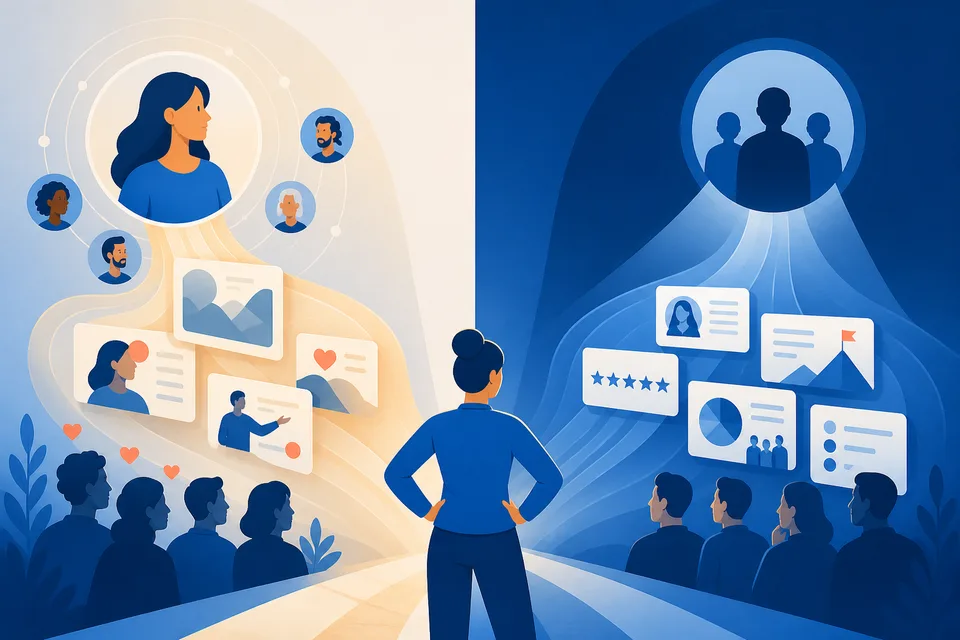
Founders often ask which channel "works better" on LinkedIn - personal profile or company page. The question assumes one winner. In practice they do different jobs for different audiences. Personal profiles build trust in a person. Company pages build trust in an organization. The founders who win use both deliberately instead of posting everything personally or ignoring the company page entirely.
Where personal profiles win
Thought leadership and opinion. Contrarian takes, lessons from failure, frameworks from experience - these perform best from a named human. People follow founders for perspective, not logos.
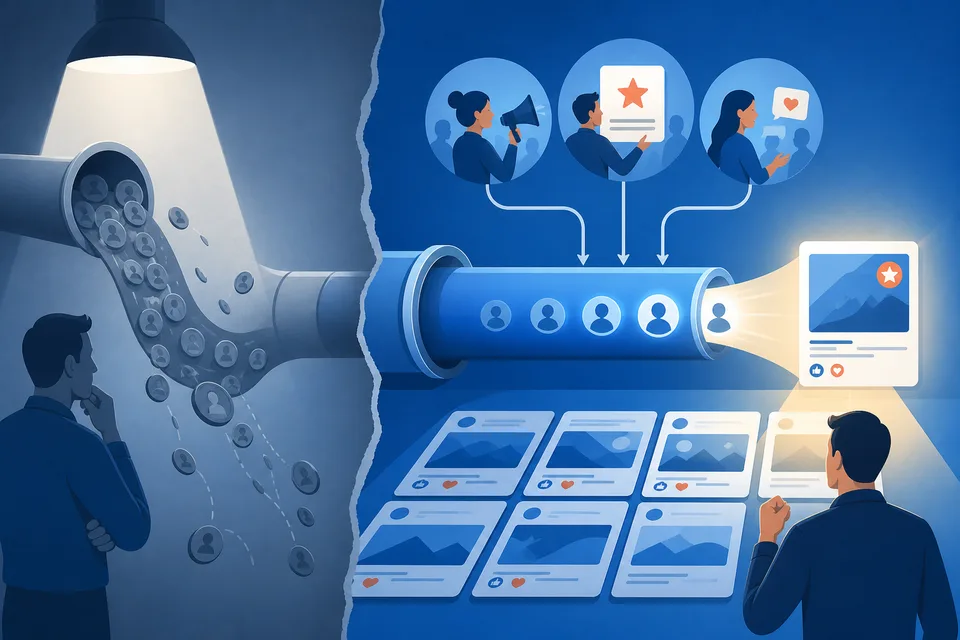
Early-stage reach when you have a small company following. Your personal network is usually larger and warmer than your company page's follower count in year one. Founder posts often get faster early engagement, which matters for the 90-minute distribution window.
Relationship-driven discovery. Comments, tags, and collaboration posts naturally center on people. Your personal profile is where commenting strategy and collaboration formats compound.
Investor and peer visibility. Other founders, operators, and investors follow people, not company pages. Personal posts keep you in those networks.
Where company pages win
Hiring and employer brand. Candidates check the company page before they apply. Culture posts, team spotlights, and "how we work" content belong here. See what to post when you are hiring.
Customer proof at organization scale. Case studies, implementation stories, and customer outcomes feel natural from the company. A founder sharing a win can work, but the company page version emphasizes the customer's result, not the founder's journey.
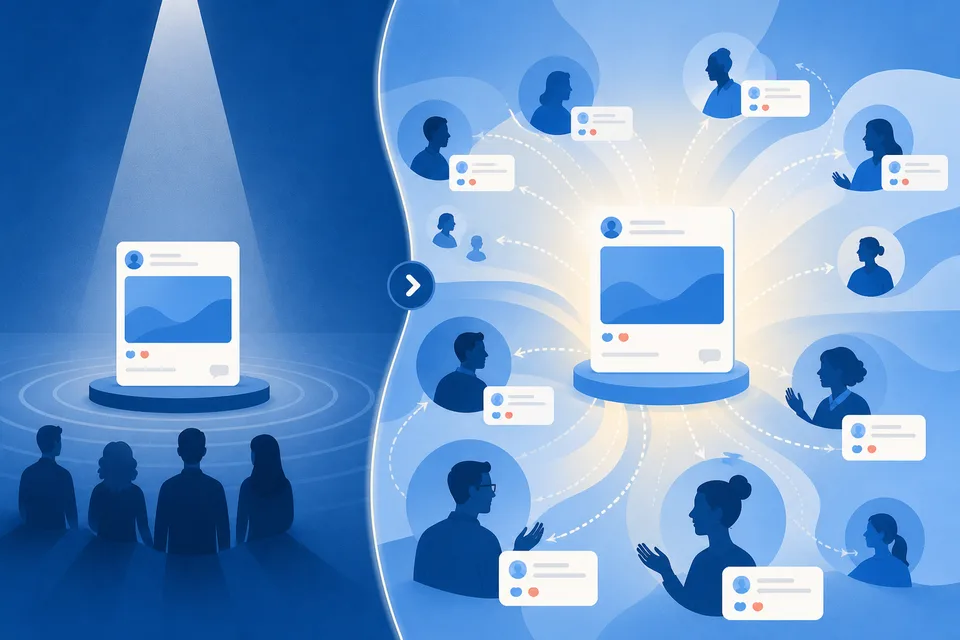
Employee amplification. When employees engage with company posts, reach extends into their networks in ways personal posts cannot replicate at org scale. Strong company content gives employees something worth sharing.
Prospect due diligence. After a founder post catches attention, buyers often visit the company page to confirm the business is active. A living feed closes the trust gap.
Personal posts can use first person, informal rhythm, and opinion. Company posts should sound like the organization - still human, but less "I learned this the hard way" and more "here is how we solved this for customers." Avoid press-release tone on either channel; on company pages it is the most common failure mode.
Personal posts tolerate more narrative arc. Company posts should get to the proof faster: problem, approach, outcome. Shorter hooks, clearer stakes.
Analytics: compare channels, not just posts
Impressions on a founder post and impressions on a company post are not directly comparable without context. Follower bases differ. Engagement patterns differ. If you publish to both, use channel-scoped analytics to see which identity moves profile views, which earns comments, and which drives link clicks.
SparkVox Post Analytics includes a channel filter on Posting Impact, What's Working, and Weekly reports when you publish to both personal and company identities. That lets you answer "what performs where" from your own data instead of generic advice.
A practical split
Personal (2-3x/week): opinion, lessons, market takes, founder journey.
Company (1-2x/week): customer proof, team and craft, hiring, category education.
Same recording can feed both - see one recording, two channels. The strategic split is covered in why company and personal brands need to be separate.
Browse the full cluster at LinkedIn company pages or publish to either channel from SparkVox with per-post identity selection.