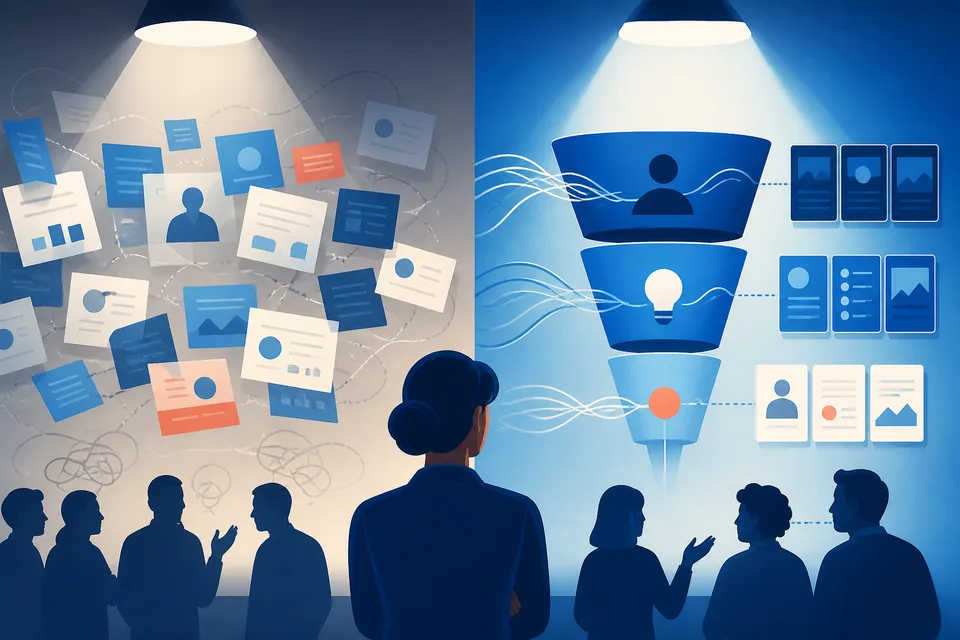
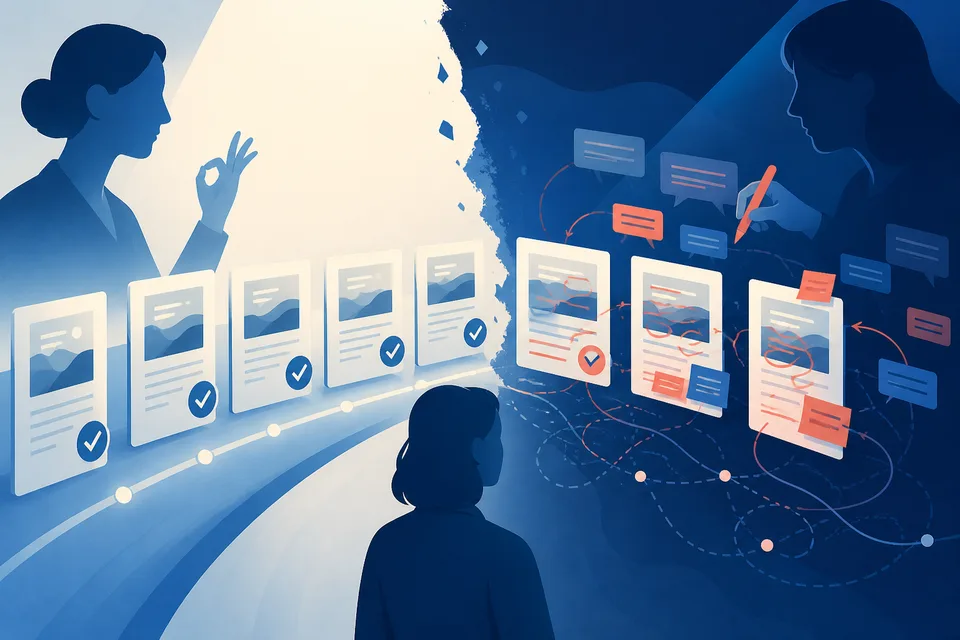
A list of good posts isn't automatically a strategy - it's possible to publish consistently and still have every post doing the same job, which leaves real gaps in what a consultant's content is actually accomplishing.
Three different jobs a consultant's content needs to do
Awareness content earns reach - the post that gets shared and puts a consultant in front of people who've never heard of them. Authority content builds trust with people who already know they exist, demonstrating depth rather than just visibility. Conversion content prompts action - a specific offer, a clear next step for someone already considering working together. A feed built entirely from one of these types leaves the other two jobs undone.
A single client call or workshop tends to produce all three types without anyone planning it that way - a broadly relevant insight (awareness), a deeper framework (authority), and occasionally a moment that naturally invites a next step (conversion). Grouping drafts by which job they're actually doing, rather than publishing everything in whatever order it was drafted, is what turns raw extraction into an intentional content plan.
What an unbalanced feed actually looks like
A consultant posting exclusively deep, technical authority content might build real respect among peers while staying invisible to anyone who's never heard of them - no awareness content means no new audience finding that authority content in the first place. The reverse also happens: broad, shareable awareness posts with no follow-through into deeper material leave an engaged reader with nowhere to go to actually evaluate whether this consultant knows what they're talking about.
A simple way to check the balance without overthinking it
Looking back at the last ten posts and sorting them into the three buckets is a quick, honest check - if eight of ten land in one category, that's a real, fixable gap, not a style choice. This doesn't require a rigid rotation or a content calendar built around the framework; it's a periodic sanity check, not a rule to follow on every single post.
Conversion content deserves special attention, since it's the rarest
Awareness and authority content tend to occur naturally from real conversations. Genuine conversion moments - a clear next step, an explicit offer - are rarer in raw call material, which means they're worth actively watching for rather than assuming they'll show up on their own at the same rate as the other two.
See how funnel-stage structure works generally in how to structure LinkedIn content by funnel stage, and how Post Analytics shows which frameworks are actually attracting the right clients in how Post Analytics shows which frameworks actually attract the right clients, or the full setup on SparkVox for consultants and coaches.