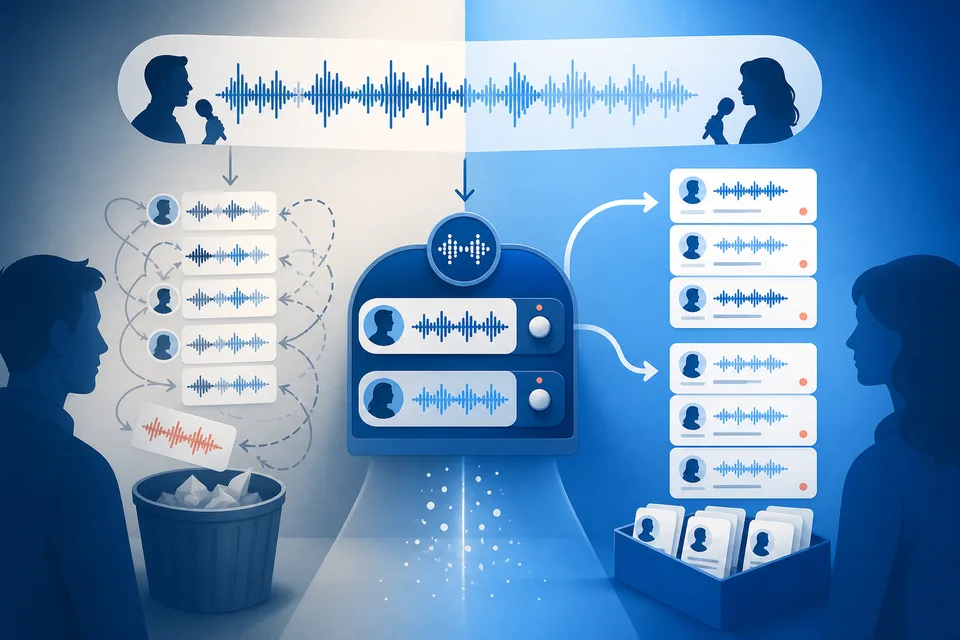
Starting this workflow doesn't mean only future appearances count - most guests have a backlog of past episodes sitting unused. Not all of them are worth going back for, and a quick prioritization pass makes the retroactive catch-up manageable instead of overwhelming.
What makes an old appearance worth revisiting
Episodes where you remember saying something substantive - a specific framework, a strong answer to a hard question - are worth prioritizing over ones you barely remember the content of, since a vague memory of "it was fine" usually means there wasn't much standout material to extract in the first place. Appearances on shows with an active, relevant audience are also worth prioritizing over ones where the show itself has gone quiet, since tagging a still-active host still carries some reach benefit even months later.
Why not to try to process everything at once
A backlog of twenty episodes doesn't need to become twenty simultaneous projects - picking the three or four strongest candidates first, seeing how those perform, and working through the rest gradually avoids the overwhelm of trying to catch up all at once. The goal is starting the habit, not clearing the entire backlog in one sitting.
A simple way to build the shortlist
A quick scroll through a podcast player history or a calendar of past bookings, rating each appearance on a rough one-to-three scale from memory - "barely remember it," "solid," "genuinely one of my best conversations" - takes about ten minutes and produces a real prioritized list without needing to re-listen to anything yet. The two's and three's are the backlog worth actually working through first.
Why starting with the strongest candidates matters beyond efficiency
Processing the strongest episodes first also means the first results from this new habit are genuinely good ones - which builds confidence in the process and makes it easier to keep going, compared to starting with a mediocre episode that produces a thin batch of posts and makes the whole exercise feel like it isn't working.
What to do with the backlog once the top candidates are done
The remaining lower-priority episodes don't need to be abandoned - they can simply become a slow-burn queue, processed opportunistically whenever there's spare time, rather than a project with a deadline attached.
See how one appearance turns into posts on SparkVox for expert guests, what determines whether a given appearance is worth the effort in how many LinkedIn posts should one guest appearance actually produce, and why building this into a standing habit matters more than any single backlog cleanup in why a great podcast interview still produces zero LinkedIn posts without a system.