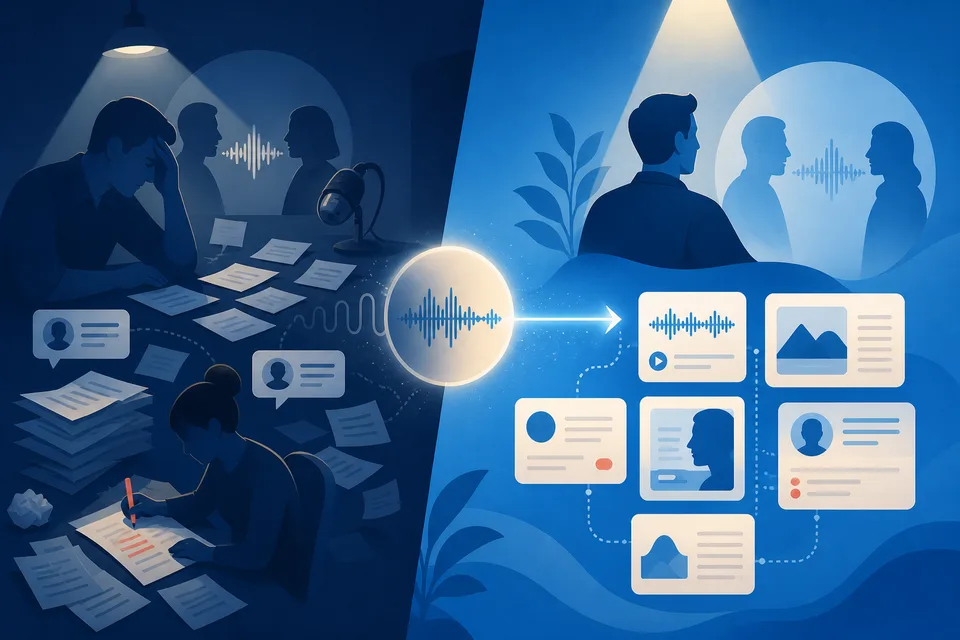
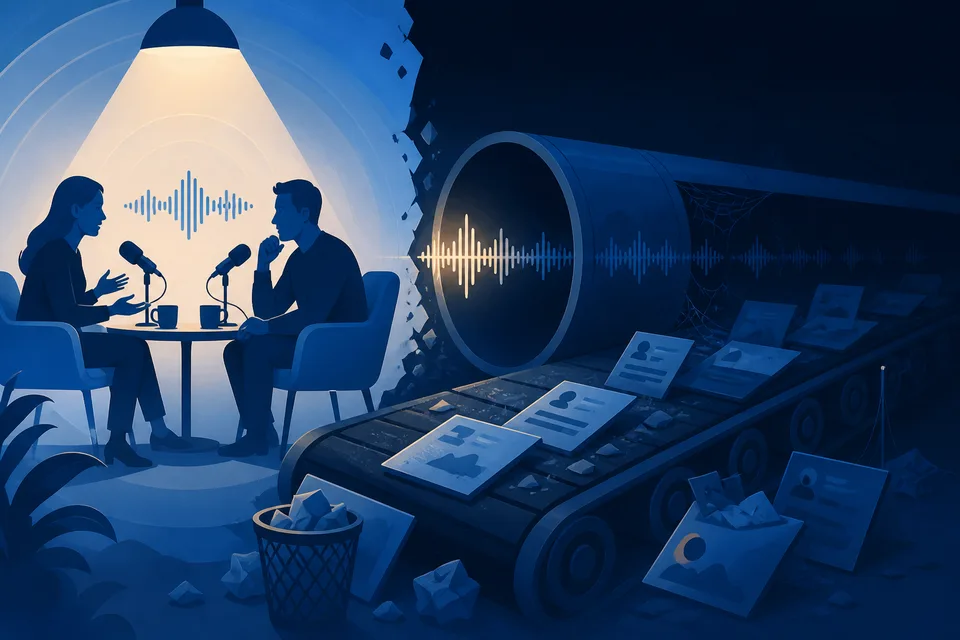
Handing podcast repurposing to an assistant is a common delegation move - it gets the task off the guest's plate, at least in theory. Worth examining what actually happens once the task lands on someone else's desk.
What an assistant still needs from the guest
Unless the assistant was on the call, they're working from a transcript or a listen-back, the same reconstruction problem a ghostwriter faces - they can identify what was said, but not necessarily which moments the guest would consider strongest, or the exact tone they'd want captured. Some back-and-forth with the guest is usually still required to get that judgment right, which reintroduces some of the time cost the delegation was meant to avoid.
Where delegation to an assistant works best
Assistants are well suited to the mechanical parts - getting the episode file from the host, uploading it, doing an initial pass on drafts before the guest's final review. The judgment about which moments actually represent the guest well is harder to fully delegate, which is why the workflow's own review step still matters even when an assistant is handling the earlier steps.
Rather than an assistant reconstructing which moments matter from a raw transcript, extraction that identifies distinct moments from the recording directly gives the assistant a shortlist to work from instead of a blank transcript to interpret. That's a meaningfully lighter task - reviewing and light-editing a set of drafted options, not guessing at what the guest would want captured from scratch.
A realistic division of labor
Assistant handles getting the file from the host and doing a first pass through the drafted options, flagging anything unclear or possibly sensitive. Guest does the final review - the part that genuinely benefits from their own judgment about tone and accuracy - and approves. That split gets real time off the guest's plate without asking the assistant to make judgment calls they're not well positioned to make alone.
Why this division tends to hold up over time
Unlike a division of labor that requires ongoing renegotiation as circumstances change, this split is stable - the mechanical parts stay mechanical and the judgment parts stay with the guest, appearance after appearance, without either person's role creeping into the other's over time.
See how the upload and review steps split naturally on SparkVox for expert guests, and how this compares to the honest DIY alternative in SparkVox vs doing it yourself after every podcast appearance.