The placement used to be the deliverable. Land the podcast guest spot, the byline, the panel invite - send the client the link, screenshot the mention, close the report. For a long time, that was enough to prove PR was working.
It isn't anymore. Clients increasingly expect the placement to be the start of something, not the end of the line item - and the gap between "we got you on the show" and "here's what that show is now doing for your LinkedIn" is where PR retainers quietly lose ground to agencies that close it.
One post is not a strategy
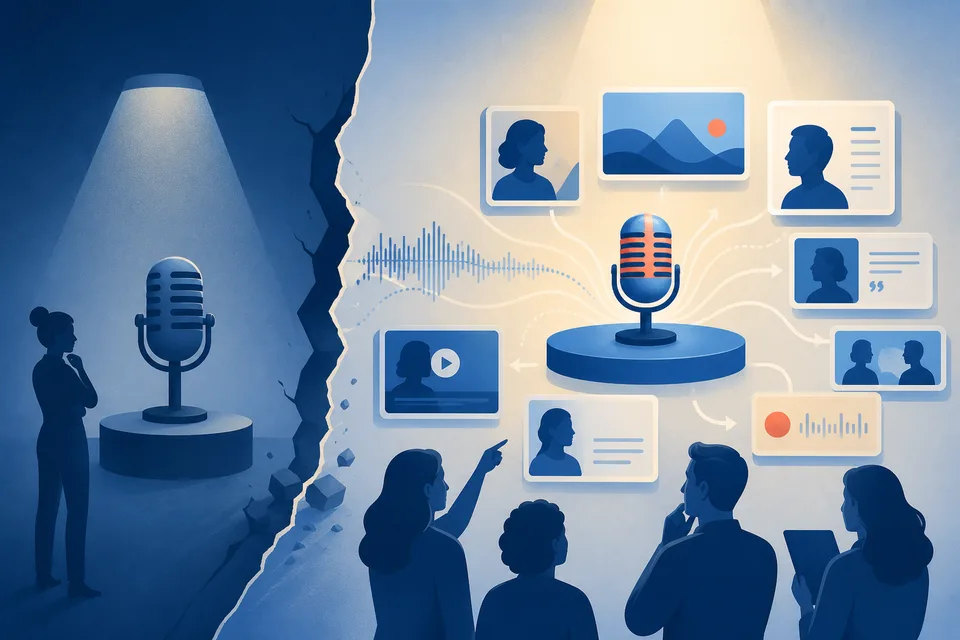
"Listen to my episode" performs worse every quarter. It asks the audience to do work - click away, spend forty minutes, come back - for a return most people were never going to collect on. Meanwhile the actual content of that appearance - the specific claims, the best answer to the hardest question, the framework the client explained off the cuff - sits inside the recording, unused, after the single announcement post goes out.
Clients who've had this pointed out to them - by a competitor's agency, by their own marketing team, by a growth advisor - start asking why the placement produced one post instead of two weeks of them.
What "PR as a channel" now competes against
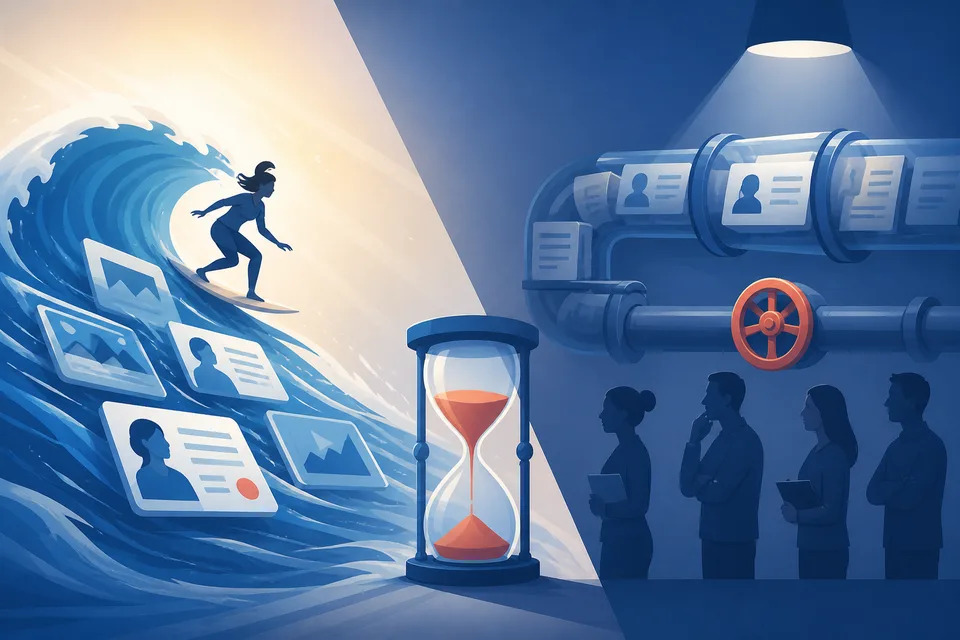
The client isn't only comparing your placements to other PR firms. They're comparing the output of a $10K feature to the output of a $97/month tool a competitor's founder is using to turn every sales call into content. When a placement produces one post and a recording habit produces fifteen, the math is hard to explain away with "earned media is different."
It is different - reach, credibility, and SEO value from a real publication don't come from a LinkedIn post. But that's an argument for treating the placement as the highest-value recording your client made all month, not a reason to stop at one post about it.
What the retainer conversation looks like when this is fixed
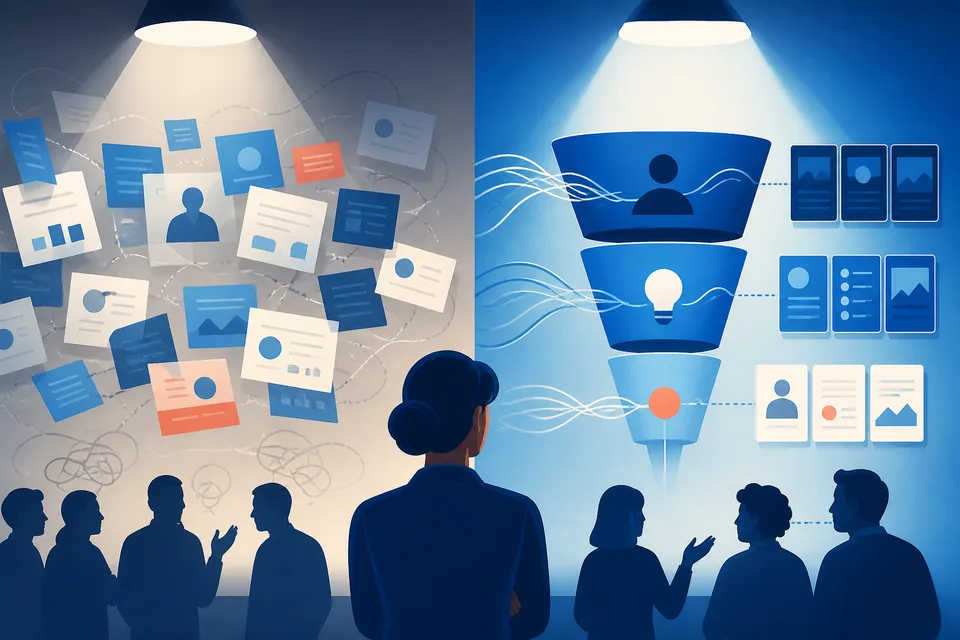
Agencies that have already closed this gap don't sell "we got you on the show" anymore. They sell the full arc: secure the placement, then extract two weeks of LinkedIn content from the actual conversation while the appearance is still recent enough to reference. The placement becomes the headline event in a content plan, not a one-line report entry.
That shift is mechanical, not creative - it's about what you do with the recording after the interview ends. We cover the actual workflow in how PR firms turn a placement into two weeks of LinkedIn content.
What this looks like on a real placement
Say the client just did a 35-minute interview on a mid-size B2B podcast. The old workflow: the account lead listens back, picks the best soundbite, drafts one post - "Excited to have joined [show] to talk about [topic]" - the client approves it in a day or two, it publishes, and that's the placement's entire LinkedIn footprint. Total output: one post, maybe 40 minutes of team time, most of it spent re-listening to find something worth quoting.
The same interview, treated as source material instead of a single quote to extract: the client explained a framework around minute eight, told a specific client story around minute nineteen, and gave a contrarian take in response to the host's hardest question near the end. That's three distinct, standalone posts sitting in one recording - none of them the "I was on a podcast" announcement, all of them the actual expertise the client was booked to share in the first place.
Why this isn't obvious until someone points it out
Most PR teams aren't skipping this because it's a bad idea - it's that "the interview" and "the LinkedIn post about the interview" get treated as two separate tasks, with the second handled as an afterthought once the placement itself is secured. Once a team starts treating the recording as the actual deliverable, the "one link post" habit stops making sense on its own terms.
See how this fits a multi-client PR workflow on SparkVox for PR firms, and how the reporting side backs it up in reporting placement impact to clients who ask what did that interview actually do.