
AgenciesIntegrations
Connection Links vs Sharing Logins for Client LinkedIn
Why password vaults and screen-share OAuth do not scale for agency LinkedIn — and how SparkVox connection links keep clients in control of their credentials.
At three clients, keeping every voice distinct is manageable. At twelve, the mental model quietly stops working. Here's why this creeps up instead of arriving all at once, and why hiring more writers doesn't fix it.
 Sean Weisbrot- Founder, SparkVox
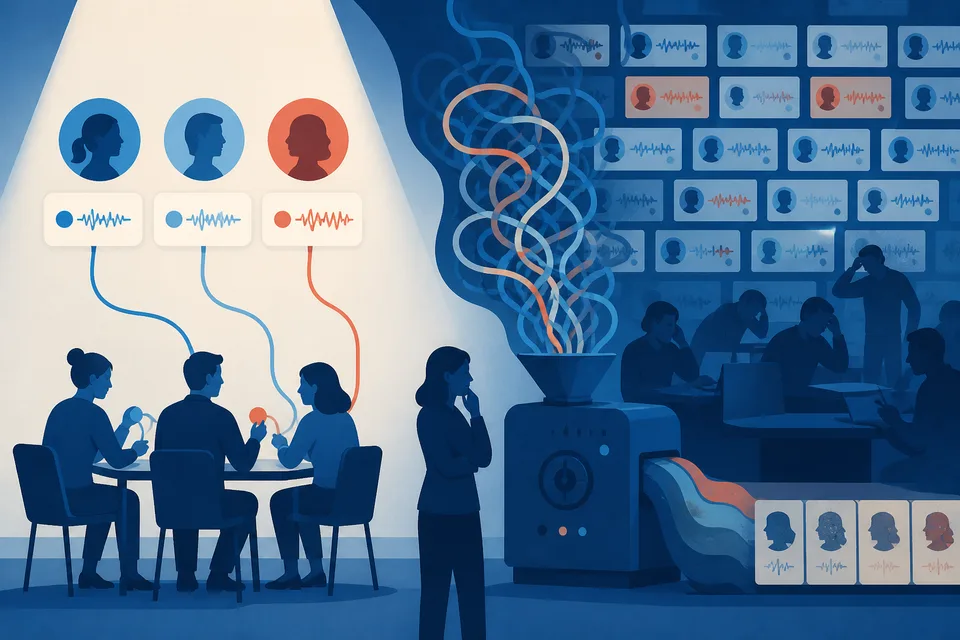
At three clients, keeping every voice distinct is manageable - the account lead remembers who talks how without much effort. At twelve clients, that same mental model quietly stops working, and nobody notices until a client says a post "doesn't sound like me" and the team can't immediately say why.
No single new client breaks the system. Each one is manageable in isolation. What breaks is the cumulative load on whoever's holding all those voices in their head - a writer juggling eight distinct tones inevitably starts blending them, especially under deadline pressure, without any single moment where the failure becomes obvious.
By the time a client notices and says something, the drift has usually been happening for weeks.
Adding headcount spreads the load across more people, but each new writer has to build their own mental model of each client's voice from scratch - and now there are multiple people's interpretations of the same client's tone circulating, which can drift from each other even if neither drifts from the client individually.
The actual fix isn't more people holding voices in their heads - it's not requiring anyone to hold them there at all. See how per-client, per-account voice isolation handles this in how PR firms turn a placement into two weeks of LinkedIn content.
It rarely shows up as one client's post sounding like another's outright - it's subtler. A writer who spent the morning on a blunt, no-nonsense founder's account and the afternoon on a more formal operator's account starts unconsciously borrowing rhythm from one into the other. Neither client would recognize their own voice being copied; both would recognize their post reading slightly off, without being able to say exactly why.
That's what makes this specific failure mode hard to catch in review - it's not wrong, it's just not quite right, which is a much harder thing to flag than an outright mistake.
The instinct once this problem is named is to write down each client's voice - a style guide, a one-pager of dos and don'ts. That helps at the margin, but a style guide describes voice in the abstract; it doesn't give a writer the same instinctive feel that comes from actually having internalized dozens of real examples. Voice profiles built from real transcripts and real edits capture that instinctive layer directly, which a written description of tone can only approximate.
See how account-level voice isolation prevents this drift from the start in how to build a client voice library without a full-time writer, and the full setup on SparkVox for PR firms.
SparkVox
Upload a call, podcast, or interview. SparkVox extracts moments and drafts up to 15 LinkedIn posts in your voice. You review every draft before anything publishes.
Free to sign up. Card required for full access.
No charge until day 15.
Why password vaults and screen-share OAuth do not scale for agency LinkedIn — and how SparkVox connection links keep clients in control of their credentials.

The kickoff call always goes well. Churn risk shows up around month two, once the honeymoon period's forgiving conditions are gone. Here's what actually determines whether month two goes well.

One account manager becomes the only person who really understands a client's voice. It works fine until they're out sick, on vacation, or gone - here's the risk that creates and how to remove it.
Your calls and interviews are already the content. SparkVox writes the posts in your voice - upload one recording and see the drafts before you're charged.
Free to sign up. Card required for full access.
No charge until day 15.