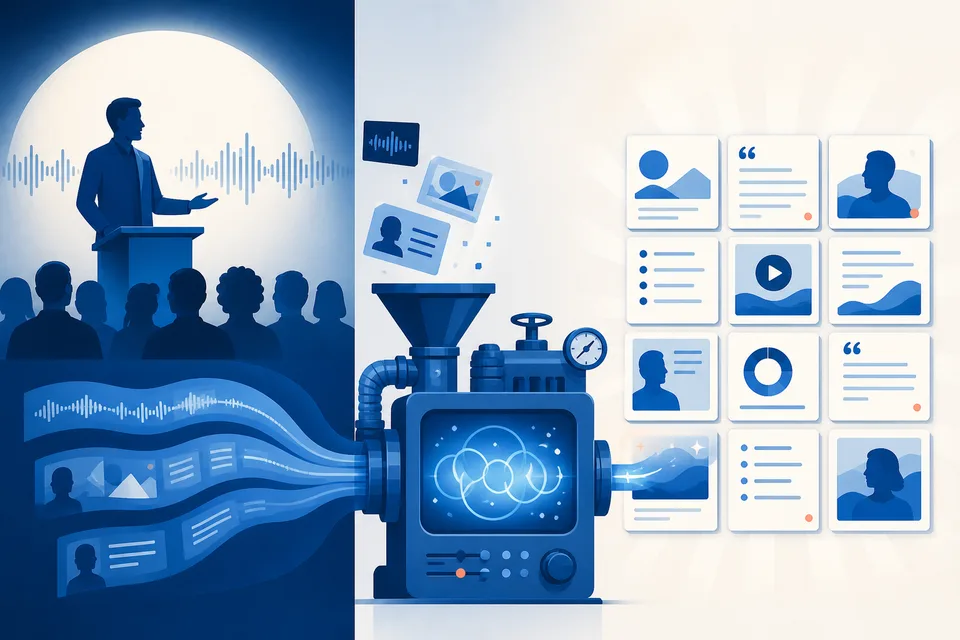
A keynote is one of the densest recordings a consultant produces - a prepared talk, refined ahead of time, delivered to an audience that's actually there to learn from it. Most of that density goes unused once the talk ends and the slides get filed away.
Why a keynote yields more than a typical call
Unlike an off-the-cuff client conversation, a keynote is usually structured around several deliberate points - which means the frameworks and stories are already organized into distinct, extractable pieces rather than scattered through a free-flowing conversation. A 45-minute keynote commonly produces close to a month's worth of posts once every distinct point is treated as its own moment instead of one talk-recap post.
Why "share the slides" undersells the material
Posting a slide deck or a single recap post captures the structure of a talk but loses the actual delivery - the specific phrasing, the aside that got a laugh, the story that made an abstract point concrete. That delivery is what a transcript-based extraction preserves that a slide deck never could.
What "structured around several deliberate points" looks like in practice
A well-built keynote typically moves through a clear arc - a problem statement, two or three supporting arguments each with their own example or story, and a closing takeaway. Each of those beats was already designed to stand somewhat on its own within the talk, which is exactly what makes them easy to lift out individually rather than needing to be artificially separated the way a free-flowing conversation would.
Why the same keynote is worth repurposing even after the event is over
Unlike a placement or a news-tied announcement, a keynote's content doesn't lose its value once the event ends - the framework explained on stage is just as true and just as useful a month later. That means a backlog of past keynote recordings is genuinely worth going back through, not just recordings from events happening this week.
What to do with the Q&A portion, if there was one
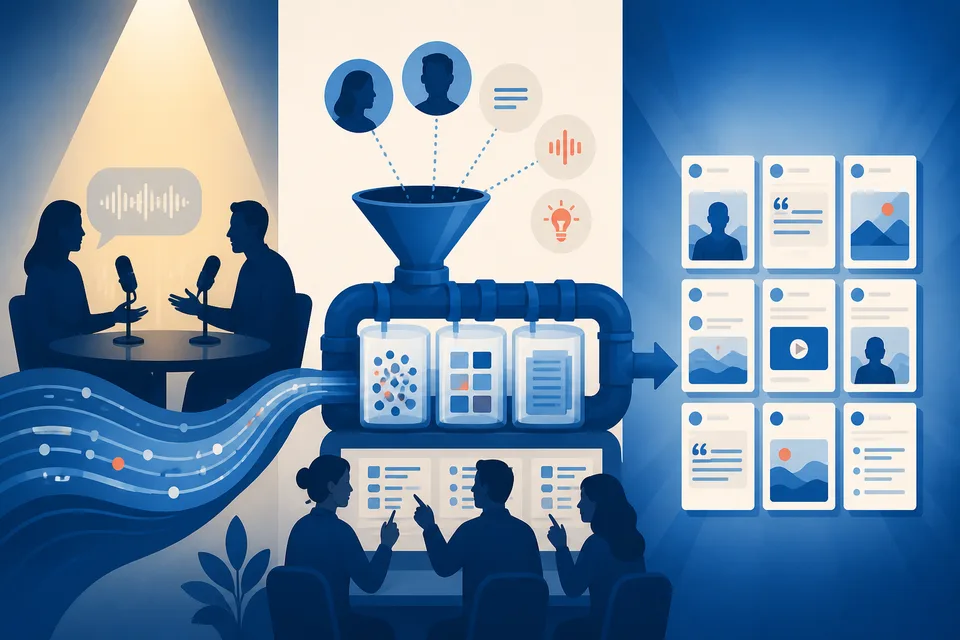
A keynote followed by audience Q&A technically becomes multi-speaker once questions come in, even briefly - worth keeping in mind since it shifts which perspective mode fits best for that portion of the recording, separate from the solo prepared talk that preceded it.
See how Expert perspective handles a solo recording like this in how Expert perspective differs from Advisor perspective for solo trainings, and how to prioritize which past recordings are worth revisiting first in how to prioritize which past appearances are worth repurposing retroactively, or the full setup on SparkVox for consultants and coaches.