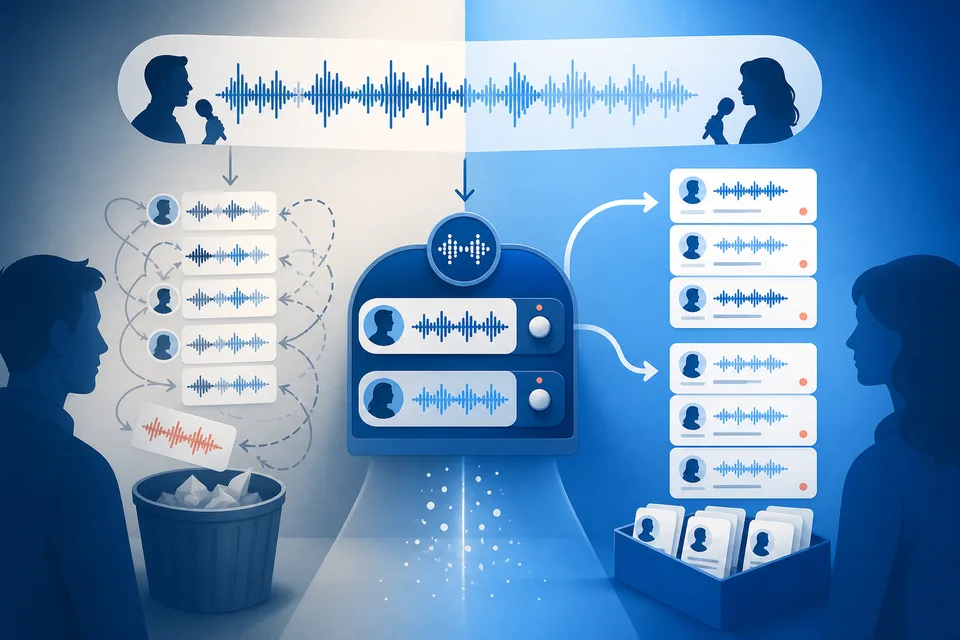
A panel booking is a harder repurposing case than a one-on-one interview - three or four speakers instead of two, all mixed into one transcript. Getting a client's content out of that requires isolating their contributions specifically, not just their general topic area.
Why panels are riskier to repurpose carelessly
Without explicit speaker selection, a panel transcript risks attributing another panelist's point to your client, or blending two speakers' answers into one confused post. That's a worse outcome than posting nothing - it's factually wrong about who said what, in public, under your client's name.
How speaker selection handles more than two voices
Diarization identifies each speaker in the recording regardless of how many there are, and shows sample lines from each before drafting starts. Selecting the client's specific voice means only their turns in the conversation feed the drafts - the other panelists' points, even adjacent or similar ones, stay out of the client's content entirely.
One caveat worth setting expectations on: a panel gives each speaker less airtime than a solo interview of the same length, so a panel appearance typically yields fewer usable moments per client than a one-on-one interview would - still worth processing, just with a smaller expected output.
Why a panel is still worth booking, even with a smaller yield
The lower per-guest output doesn't make panels a bad placement choice - a panel often puts a client alongside other credible voices in a way a solo interview doesn't, which carries its own reputational value beyond the content it produces. The realistic expectation is just different: plan for a handful of strong moments per client rather than the full two-week yield a solo appearance might produce, and set that expectation with the client upfront so a smaller batch of posts doesn't read as underdelivery.
What to watch for in the diarized sample lines
With four voices in a recording instead of two, double-checking the sample lines shown before selecting a speaker matters more than it does for a simple two-person interview - a brief overlap or crosstalk moment can occasionally make diarization less clean with more speakers involved. A quick confirmation that the selected samples genuinely match the client, not a similar-sounding co-panelist, is worth the extra thirty seconds on a panel specifically.
See how speaker selection works in how PR firms turn a placement into two weeks of LinkedIn content, the same isolation problem for meetings rather than panels in how multi-speaker meetings get turned into a single executive's voice, or the full setup on SparkVox for PR firms.